Brimijoin W Owen, Boyd Alan W, Akeroyd Michael A
MRC Institute of Hearing Research (Scottish Section), Glasgow, United Kingdom.
PLoS One. 2013 Dec 2;8(12):e83068. doi: 10.1371/journal.pone.0083068. eCollection 2013.
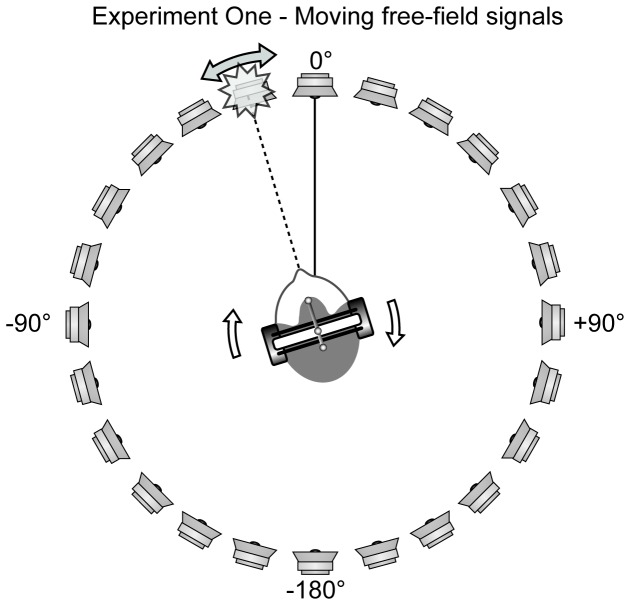
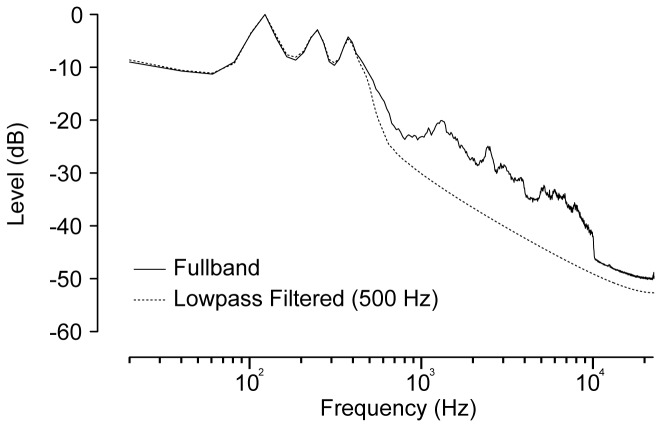
When stimuli are presented over headphones, they are typically perceived as internalized; i.e., they appear to emanate from inside the head. Sounds presented in the free-field tend to be externalized, i.e., perceived to be emanating from a source in the world. This phenomenon is frequently attributed to reverberation and to the spectral characteristics of the sounds: those sounds whose spectrum and reverberation matches that of free-field signals arriving at the ear canal tend to be more frequently externalized. Another factor, however, is that the virtual location of signals presented over headphones moves in perfect concert with any movements of the head, whereas the location of free-field signals moves in opposition to head movements. The effects of head movement have not been systematically disentangled from reverberation and/or spectral cues, so we measured the degree to which movements contribute to externalization.
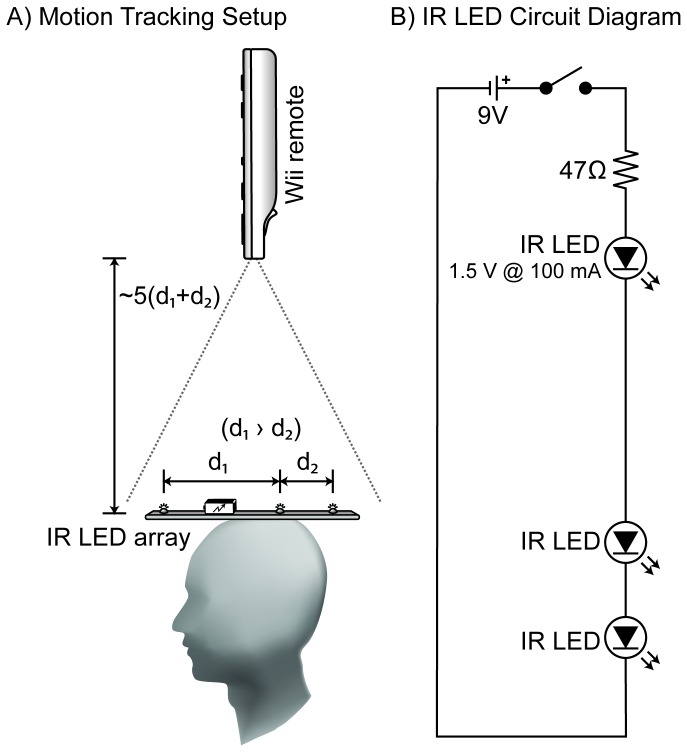
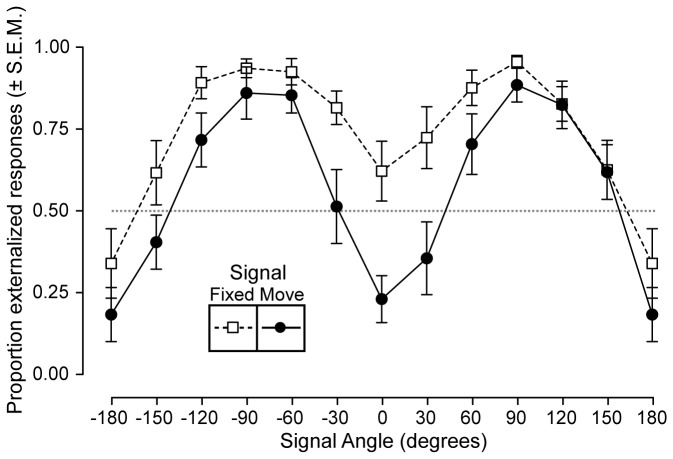
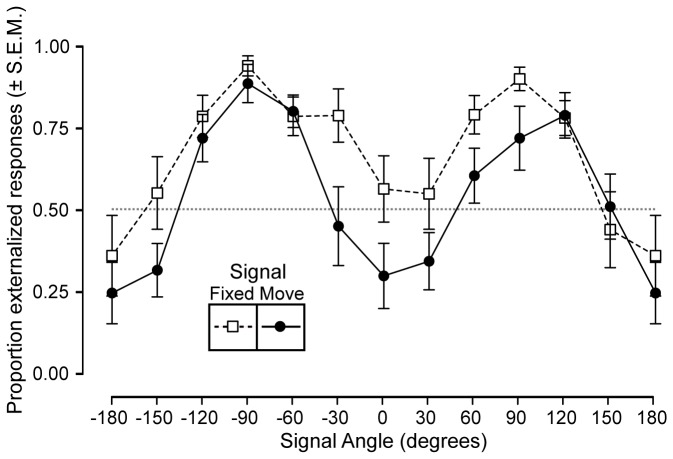
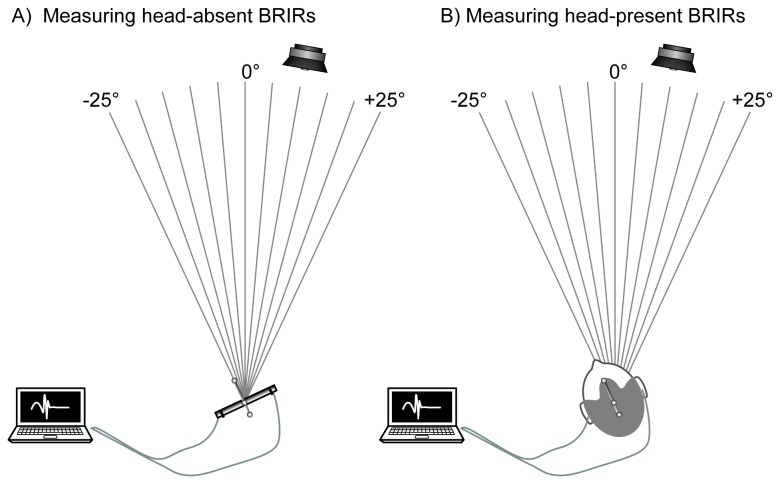
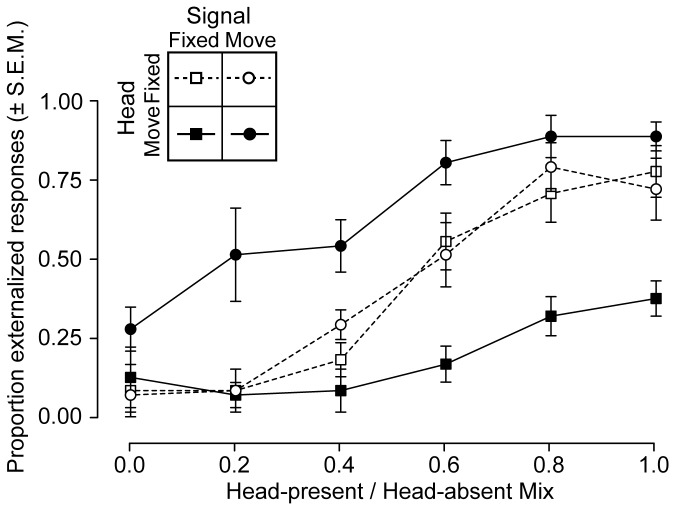
METHODOLOGY/PRINCIPAL FINDINGS: We performed two experiments: 1) Using motion tracking and free-field loudspeaker presentation, we presented signals that moved in their spatial location to match listeners' head movements. 2) Using motion tracking and binaural room impulse responses, we presented filtered signals over headphones that appeared to remain static relative to the world. The results from experiment 1 showed that free-field signals from the front that move with the head are less likely to be externalized (23%) than those that remain fixed (63%). Experiment 2 showed that virtual signals whose position was fixed relative to the world are more likely to be externalized (65%) than those fixed relative to the head (20%), regardless of the fidelity of the individual impulse responses.
CONCLUSIONS/SIGNIFICANCE: Head movements play a significant role in the externalization of sound sources. These findings imply tight integration between binaural cues and self motion cues and underscore the importance of self motion for spatial auditory perception.
当通过耳机呈现刺激时,它们通常被感知为内化的;也就是说,它们似乎是从头部内部发出的。在自由场中呈现的声音往往被外化,即被感知为从世界中的某个源发出。这种现象通常归因于混响和声音的频谱特性:那些频谱和混响与到达耳道的自由场信号相匹配的声音往往更频繁地被外化。然而,另一个因素是,通过耳机呈现的信号的虚拟位置与头部的任何运动完美同步移动,而自由场信号的位置与头部运动相反。头部运动的影响尚未与混响和/或频谱线索系统地分开,因此我们测量了运动对声音外化的贡献程度。
方法/主要发现:我们进行了两项实验:1)使用运动跟踪和自由场扬声器呈现,我们呈现了在空间位置移动以匹配听众头部运动的信号。2)使用运动跟踪和双耳房间脉冲响应,我们通过耳机呈现了相对于世界似乎保持静止的滤波信号。实验1的结果表明,来自前方且随头部移动的自由场信号比保持固定的信号更不容易被外化(23%)(保持固定的信号外化率为63%)。实验2表明,无论个体脉冲响应的保真度如何,相对于世界位置固定的虚拟信号比相对于头部固定的虚拟信号更有可能被外化(65%)(相对于头部固定的虚拟信号外化率为20%)。
结论/意义:头部运动在声源的外化中起重要作用。这些发现意味着双耳线索和自我运动线索之间紧密整合,并强调了自我运动对空间听觉感知的重要性。