Ponomarev Igor
Waggoner Center fsor Alcohol and Addicion Research, College of Pharmacy, University of Texas at Austin, Austin, Texas, USA.
Alcohol Res. 2013;35(1):69-76.
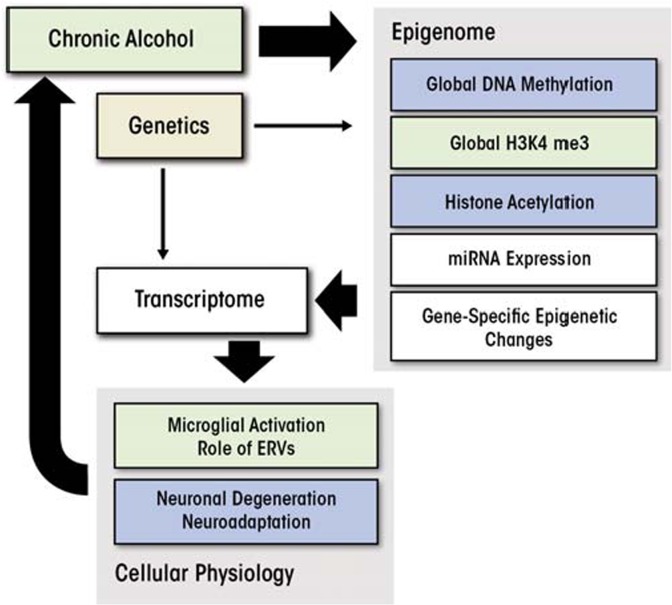
Chronic alcohol exposure causes widespread changes in brain gene expression in humans and animal models. Many of these contribute to cellular adaptations that ultimately lead to behavioral tolerance and alcohol dependence. There is an emerging appreciation for the role of epigenetic processes in alcohol-induced changes in brain gene expression and behavior. For example, chronic alcohol exposure produces changes in DNA and histone methylation, histone acetylation, and microRNA expression that affect expression of multiple genes in various types of brain cells (i.e., neurons and glia) and contribute to brain pathology and brain plasticity associated with alcohol abuse and dependence. Drugs targeting the epigenetic "master regulators" are emerging as potential therapeutics for neurodegenerative disorders and drug addiction.
长期酒精暴露会导致人类和动物模型大脑基因表达发生广泛变化。其中许多变化促成了细胞适应性改变,最终导致行为耐受性和酒精依赖。表观遗传过程在酒精引起的大脑基因表达和行为变化中的作用正日益受到重视。例如,长期酒精暴露会导致DNA和组蛋白甲基化、组蛋白乙酰化以及微小RNA表达发生变化,这些变化会影响各类脑细胞(即神经元和神经胶质细胞)中多个基因的表达,并导致与酒精滥用和依赖相关的脑部病变和脑可塑性。针对表观遗传“主调控因子”的药物正成为神经退行性疾病和药物成瘾的潜在治疗手段。