Bangham Charles R M, Cook Lucy B, Melamed Anat
Section of Immunology, Imperial College, London W2 1PG, UK.
Section of Immunology, Imperial College, London W2 1PG, UK.
Semin Cancer Biol. 2014 Jun;26:89-98. doi: 10.1016/j.semcancer.2013.11.003. Epub 2013 Dec 6.
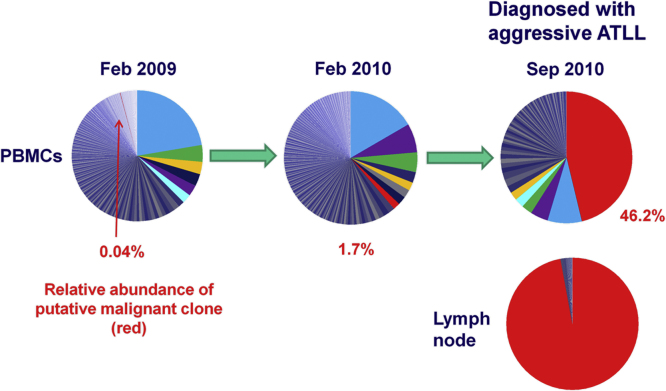
Human T lymphotropic virus type 1 (HTLV-1) causes a range of chronic inflammatory diseases and an aggressive malignancy of T lymphocytes known as adult T-cell leukaemia/lymphoma (ATLL). A cardinal feature of HTLV-1 infection is the presence of expanded clones of HTLV-1-infected T cells, which may persist for decades. A high viral burden (proviral load) is associated with both the inflammatory and malignant diseases caused by HTLV-1, and it has been believed that the oligoclonal expansion of infected cells predisposes to these diseases. However, it is not understood what regulates the clonality of HTLV-1 in vivo, that is, the number and abundance of HTLV-1-infected T cell clones. We review recent advances in the understanding of HTLV-1 infection and disease that have come from high-throughput quantification and analysis of HTLV-1 clonality in natural infection.
人类嗜T淋巴细胞病毒1型(HTLV-1)可引发一系列慢性炎症性疾病以及一种侵袭性的T淋巴细胞恶性肿瘤,即成人T细胞白血病/淋巴瘤(ATLL)。HTLV-1感染的一个主要特征是存在HTLV-1感染的T细胞的扩增克隆,这些克隆可能持续数十年。高病毒载量(前病毒负荷)与HTLV-1引起的炎症性疾病和恶性疾病均相关,并且人们一直认为受感染细胞的寡克隆扩增易引发这些疾病。然而,目前尚不清楚在体内是什么调节了HTLV-1的克隆性,即HTLV-1感染的T细胞克隆的数量和丰度。我们回顾了近期在理解HTLV-1感染和疾病方面取得的进展,这些进展来自对自然感染中HTLV-1克隆性的高通量定量和分析。