Department of Medicine and Bioregulatory Science, Graduate School of Medical Sciences, Kyushu University, Fukuoka 812‑8582, Japan.
Faculty of Pharmaceutical Sciences, Fukuoka University, Fukuoka 814-0180, Japan.
Int J Mol Med. 2014 Feb;33(2):254-62. doi: 10.3892/ijmm.2013.1573. Epub 2013 Dec 3.
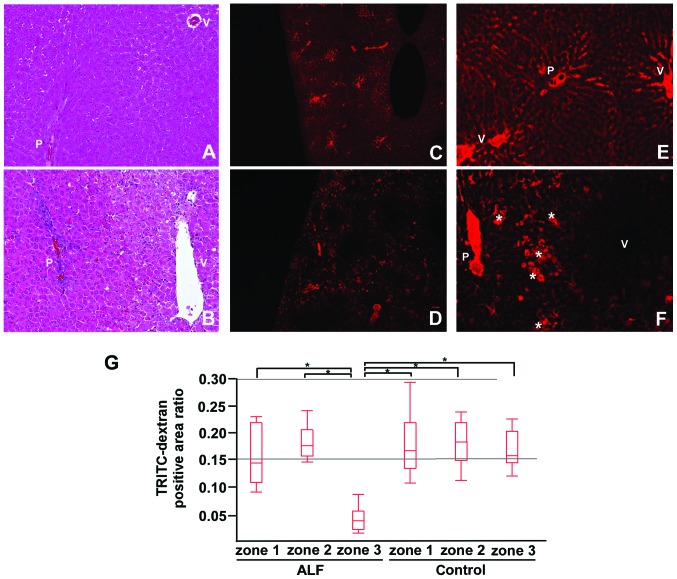
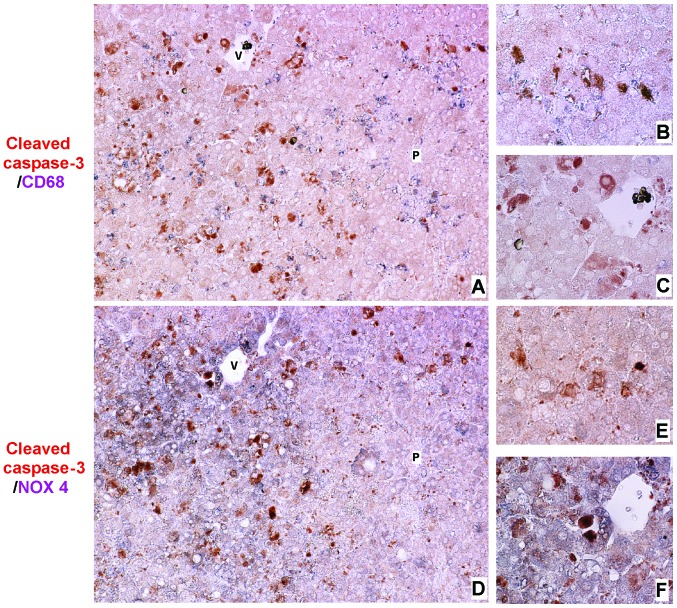
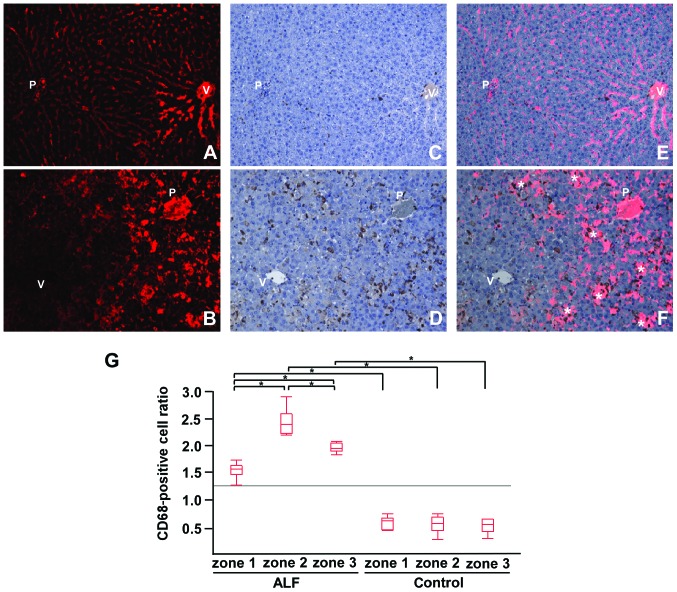
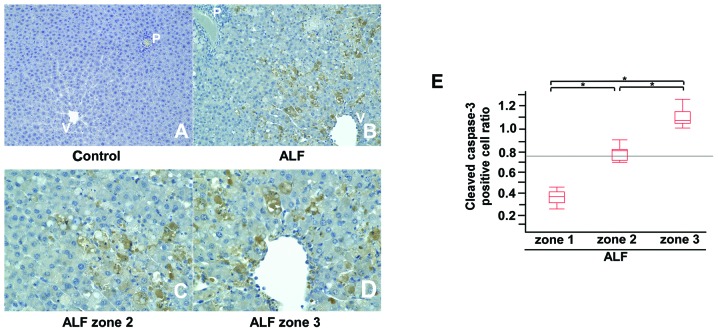
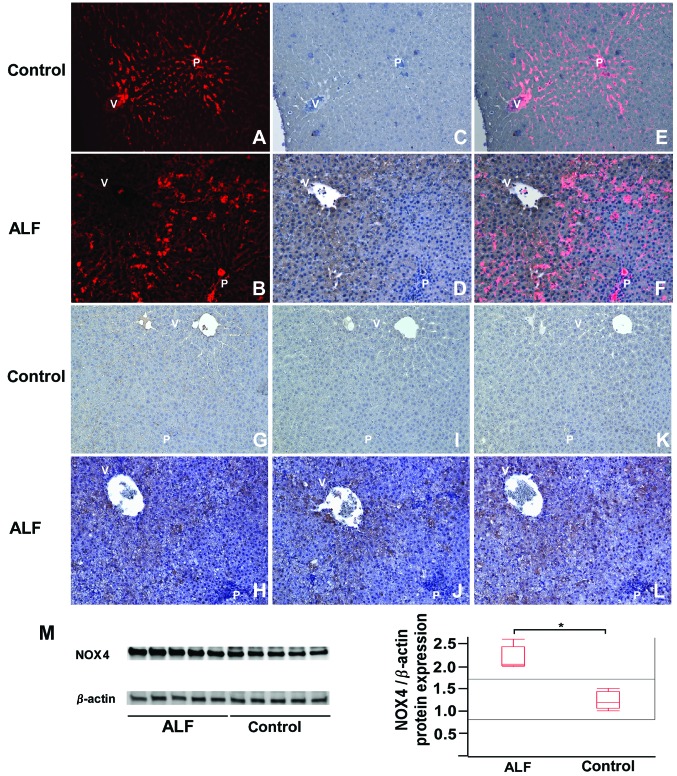
Although the mechanisms responsible for acute liver failure (ALF) have not yet been fully elucidated, studies have indicated that intrahepatic macrophage activation plays an important role in the pathogenesis of ALF through intrahepatic microcirculatory disorder and consequent parenchymal cell death. Intrahepatic microcirculatory disorder has been demonstrated in animal models using intravital microscopy; however, the limitations of this method include simultaneously evaluating blood flow and the surrounding pathological changes. Therefore, in this study, we devised a novel method involving tetramethylrhodamine isothiocyanate (TRITC)-dextran administration for the pathological assessment of hepatic microcirculation. In addition, we aimed to elucidate the mechanisms through which intrahepatic microcirculatory disorder progresses with relation to activated macrophages. ALF was induced in Wistar rats by exposure to lipopolysaccharide and D-galactosamine. Intrahepatic microcirculation and microcirculatory disorder in zone 3 (pericentral zone) of the livers of rats with ALF was observed. Immunohistochemical examinations in conjunction with TRITC-dextran images revealed that the macrophages were mainly distributed in zone 2 (intermediate zone), while cleaved caspase-3-positive hepatocytes, pimonidazole and hypoxia-inducible factor 1-α were abundant in zone 3. We also found that 4-hydroxy-2-nonenal and nicotinamide adenine dinucleotide phosphate oxidase (NOX)4-positive cells were predominantly located in the zone 3 parenchyma. The majority of apoptotic hepatocytes in zone 3 were co-localized with NOX4. Our results revealed that the apoptotic cells in zone 3 were a result of hypoxic conditions induced by intrahepatic microcirculatory disorder, and were not induced by activated macrophages. The increased levels of oxidative stress in zone 3 may contribute to the progression of hepatocyte apoptosis.
虽然导致急性肝衰竭(ALF)的确切机制尚未完全阐明,但研究表明,肝内巨噬细胞的激活通过肝内微循环障碍和随后的实质细胞死亡在 ALF 的发病机制中发挥重要作用。在动物模型中,已经使用活体显微镜证实了肝内微循环障碍;然而,这种方法的局限性在于同时评估血流和周围的病理变化。因此,在这项研究中,我们设计了一种新的方法,涉及四甲基罗丹明异硫氰酸酯(TRITC)-葡聚糖给药,用于肝微循环的病理评估。此外,我们旨在阐明与激活的巨噬细胞有关的肝内微循环障碍进展的机制。通过暴露于脂多糖和 D-半乳糖胺诱导 Wistar 大鼠发生 ALF。观察到 ALF 大鼠肝脏 3 区(中心区周围区)的肝内微循环和微循环障碍。与 TRITC-葡聚糖图像结合的免疫组织化学检查显示,巨噬细胞主要分布在 2 区(中间区),而 cleaved caspase-3 阳性肝细胞、pimonidazole 和缺氧诱导因子 1-α在 3 区丰富。我们还发现 4-羟基-2-壬烯醛和烟酰胺腺嘌呤二核苷酸磷酸氧化酶(NOX)4 阳性细胞主要位于 3 区实质。3 区凋亡的肝细胞大多数与 NOX4 共定位。我们的结果表明,3 区的凋亡细胞是由肝内微循环障碍引起的缺氧条件导致的,而不是由激活的巨噬细胞引起的。3 区氧化应激水平的升高可能导致肝细胞凋亡的进展。