Laboratory of Membrane Biochemistry, Program of Physiology and Biophysics, Faculty of Medicine, University of Chile, Independencia 1027, Correo 7, Santiago 8380000, Chile.
Mar Drugs. 2013 Dec 2;11(12):4751-60. doi: 10.3390/md11124751.
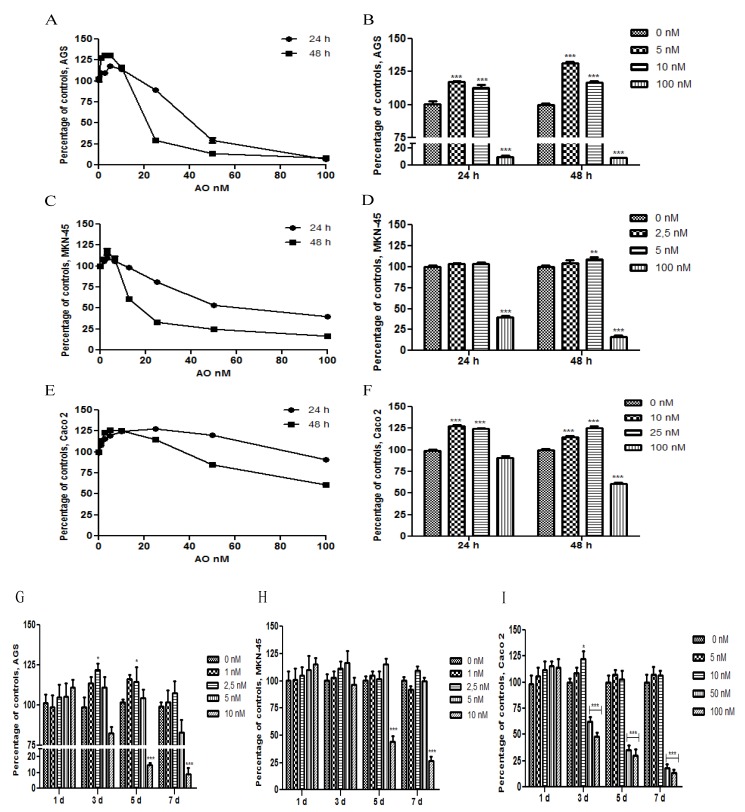
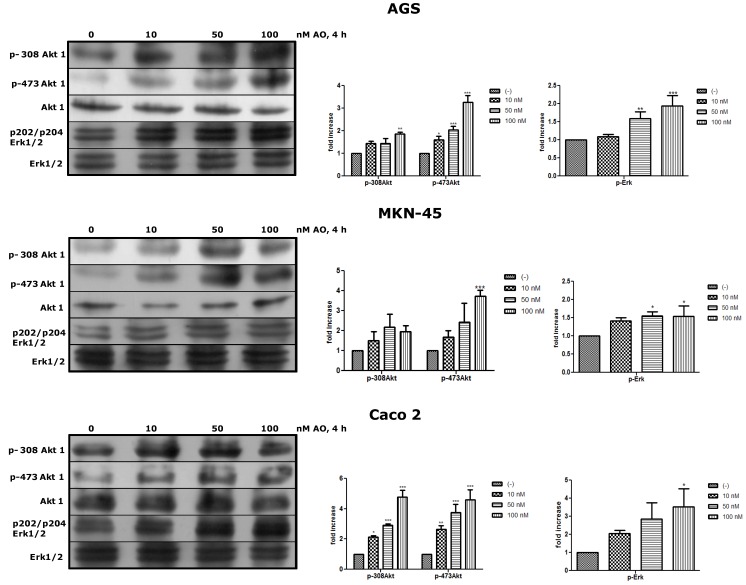
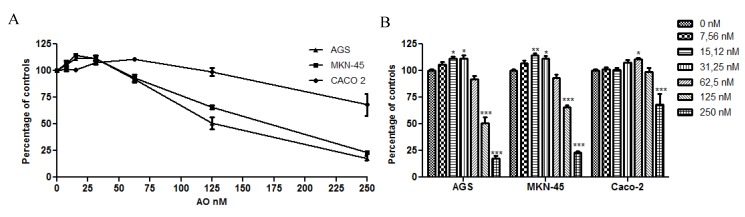
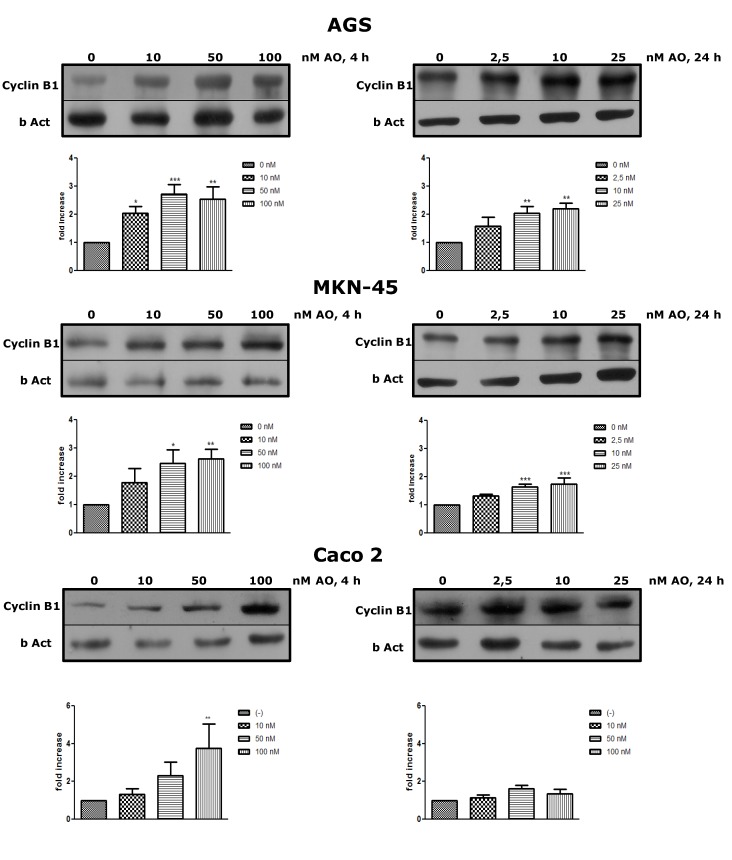
The aim of this study was to analyze the effect of Okadaic Acid (OA) on the proliferation of gastric and colon epithelial cells, the main target tissues of the toxin. We hypothesized that OA, at sublethal doses, activates multiple signaling pathways, such as Erk and Akt, through the inhibition of PP2A. To demonstrate this, we carried out curves of doses and time response against OA in AGS, MKN-45 and Caco 2 cell lines, and found an increase in the cell proliferation at sublethal doses, at 24 h or 48 h exposure. Indeed, cells can withstand high concentrations of the toxin at 4 h exposure, the time chosen considering the maximum time before total gastric emptying. We have proved that this increased proliferation is due to an overexpression of Cyclin B, a cyclin that promotes the passage from G2 to mitosis. In addition, we have demonstrated that OA induces activation of Akt and Erk in the three cells lines, showing that OA can activate pathways involved in oncogenesis. In conclusion, this study contributes to the knowledge about the possible effects of chronic OA consumption.
本研究旨在分析冈田酸(OA)对胃和结肠上皮细胞增殖的影响,这些细胞是毒素的主要靶组织。我们假设 OA 在亚致死剂量下通过抑制 PP2A 来激活多种信号通路,如 Erk 和 Akt。为了证明这一点,我们在 AGS、MKN-45 和 Caco 2 细胞系中进行了 OA 剂量和时间反应曲线,发现亚致死剂量在 24 小时或 48 小时暴露时会增加细胞增殖。事实上,细胞可以在 4 小时暴露时耐受高浓度的毒素,这个时间是在胃排空之前的最大时间考虑选择的。我们已经证明,这种增殖的增加是由于细胞周期蛋白 B 的过度表达,细胞周期蛋白 B 促进了从 G2 期到有丝分裂的过渡。此外,我们还证明了 OA 可以在这三种细胞系中诱导 Akt 和 Erk 的激活,表明 OA 可以激活参与致癌的途径。总之,本研究有助于了解慢性 OA 消费可能产生的影响。