Priyadarshini Madhusmita, Orosco Lori A, Panula Pertti J
Neuroscience Center and Institute of Biomedicine/Anatomy, University of Helsinki, Helsinki, Finland.
PLoS One. 2013 Nov 26;8(11):e81851. doi: 10.1371/journal.pone.0081851. eCollection 2013.
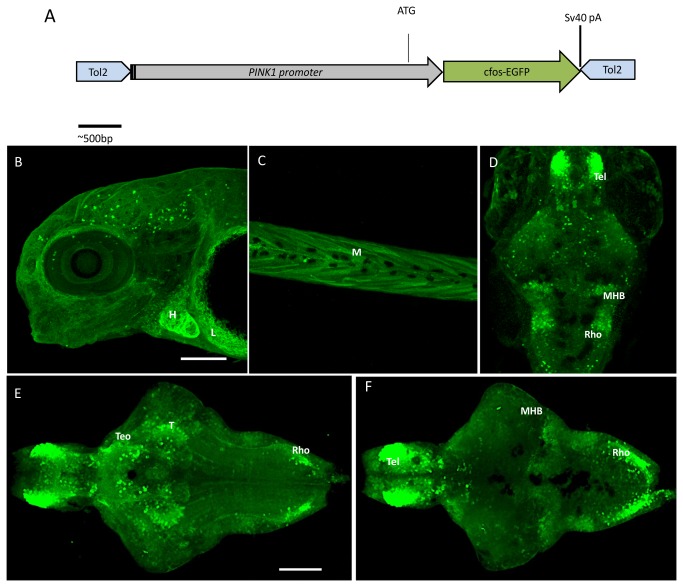
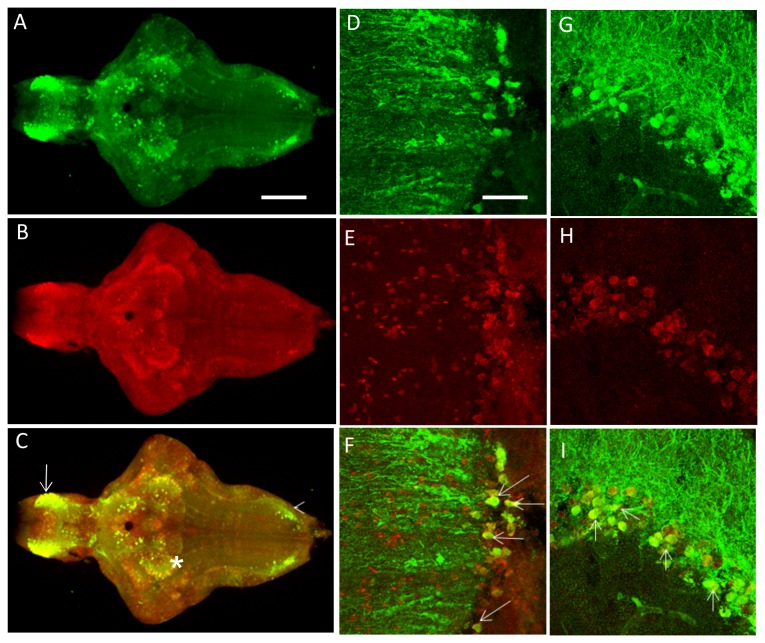
Oxidative stress-mediated neuronal dysfunction is characteristic of several neurodegenerative disorders, including Parkinson's disease (PD). The enzyme tyrosine hydroxylase (TH) catalyzes the formation of L-DOPA, the rate-limiting step in the biosynthesis of dopamine. A lack of dopamine in the striatum is the most characteristic feature of PD, and the cause of the most dominant symptoms. Loss of function mutations in the PTEN-induced putative kinase (PINK1) gene cause autosomal recessive PD. This study explored the basic mechanisms underlying the involvement of pink1 in oxidative stress-mediated PD pathology using zebrafish as a tool. We generated a transgenic line, Tg(pink1:EGFP), and used it to study the effect of oxidative stress (exposure to H2O2) on pink1 expression. GFP expression was enhanced throughout the brain of zebrafish larvae subjected to oxidative stress. In addition to a widespread increase in pink1 mRNA expression, mild oxidative stress induced a clear decline in tyrosine hydroxylase 2 (th2), but not tyrosine hydroxylase 1 (th1) expression, in the brain of wild-type larvae. The drug L-Glutathione Reduced (LGR) has been associated with anti-oxidative and possible neuroprotective properties. Administration of LGR normalized the increased fluorescence intensity indicating pink1 transgene expression and endogenous pink1 mRNA expression in larvae subjected to oxidative stress by H2O2. In the pink1 morpholino oliogonucleotide-injected larvae, the reduction in the expression of th1 and th2 was partially rescued by LGR. The pink1 gene is a sensitive marker of oxidative stress in zebrafish, and LGR effectively normalizes the consequences of mild oxidative stress, suggesting that the neuroprotective effects of pink1 and LGR may be significant and useful in drug development.
氧化应激介导的神经元功能障碍是包括帕金森病(PD)在内的几种神经退行性疾病的特征。酪氨酸羟化酶(TH)催化L-多巴的形成,这是多巴胺生物合成中的限速步骤。纹状体中多巴胺缺乏是PD最典型的特征,也是最主要症状的病因。PTEN诱导的假定激酶(PINK1)基因的功能丧失突变导致常染色体隐性PD。本研究以斑马鱼为工具,探索了pink1参与氧化应激介导的PD病理的基本机制。我们构建了一个转基因品系Tg(pink1:EGFP),并用它来研究氧化应激(暴露于H2O2)对pink1表达的影响。在遭受氧化应激的斑马鱼幼虫的整个大脑中,绿色荧光蛋白(GFP)表达增强。除了pink1 mRNA表达普遍增加外,轻度氧化应激还导致野生型幼虫大脑中酪氨酸羟化酶2(th2)表达明显下降,但酪氨酸羟化酶1(th1)表达未受影响。还原型谷胱甘肽(L-Glutathione Reduced,LGR)这种药物具有抗氧化和可能的神经保护特性。给予LGR可使荧光强度增加恢复正常,这表明在遭受H2O2氧化应激的幼虫中,pink1转基因表达和内源性pink1 mRNA表达增加。在注射了pink1吗啉代寡核苷酸的幼虫中,LGR部分挽救了th1和th2表达的降低。pink1基因是斑马鱼氧化应激的敏感标志物,LGR可有效使轻度氧化应激的后果恢复正常,这表明pink1和LGR的神经保护作用可能在药物开发中具有重要意义且很有用。