Downs C A, McDougall Kathleen E, Woodley Cheryl M, Fauth John E, Richmond Robert H, Kushmaro Ariel, Gibb Stuart W, Loya Yossi, Ostrander Gary K, Kramarsky-Winter Esti
Office of Public Health Studies, John A. Burns School of Medicine, University of Hawaii - Manoa, Honolulu, Hawaii, United States of America ; Pacific Biosciences Research Center, University of Hawaii, University of Hawaii - Manoa, Honolulu, Hawaii, United States of America ; Haereticus Environmental Laboratory, Clifford, Virginia, United States of America.
PLoS One. 2013 Dec 4;8(12):e77173. doi: 10.1371/journal.pone.0077173. eCollection 2013.
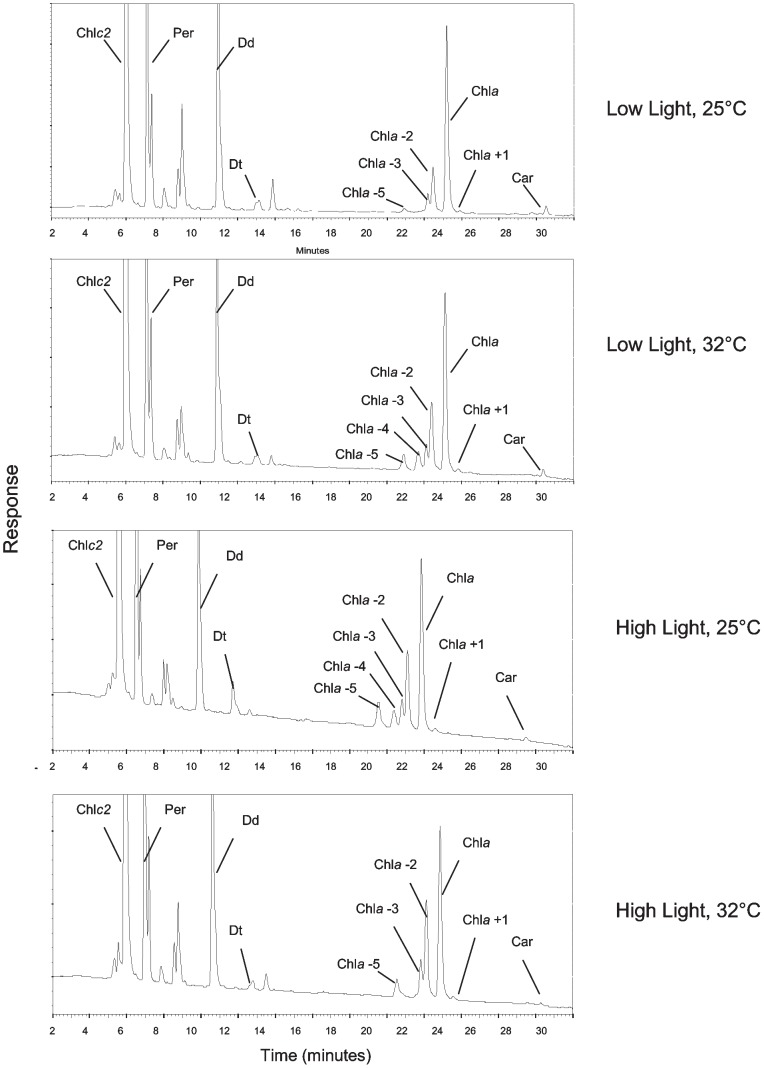
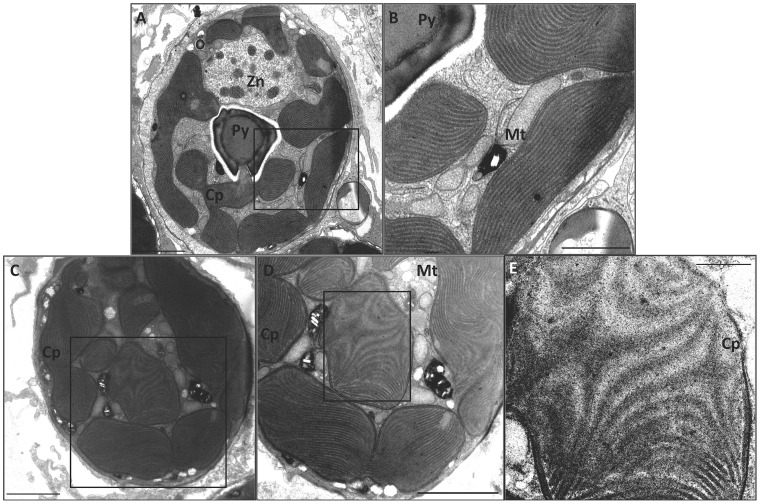
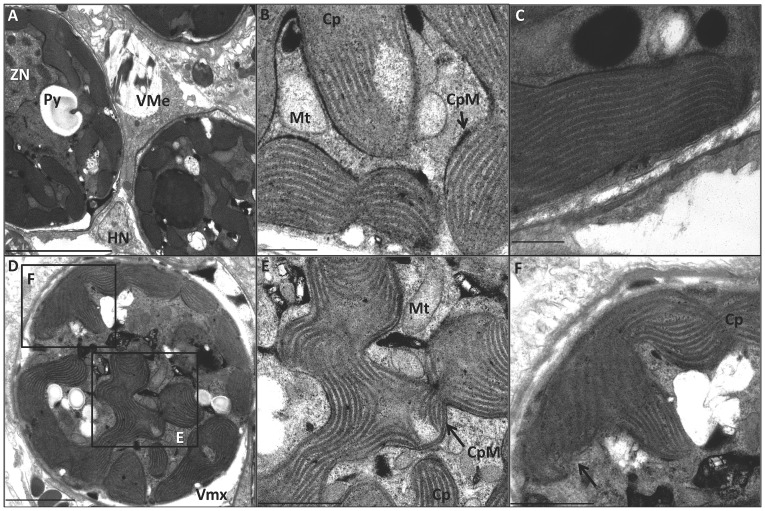
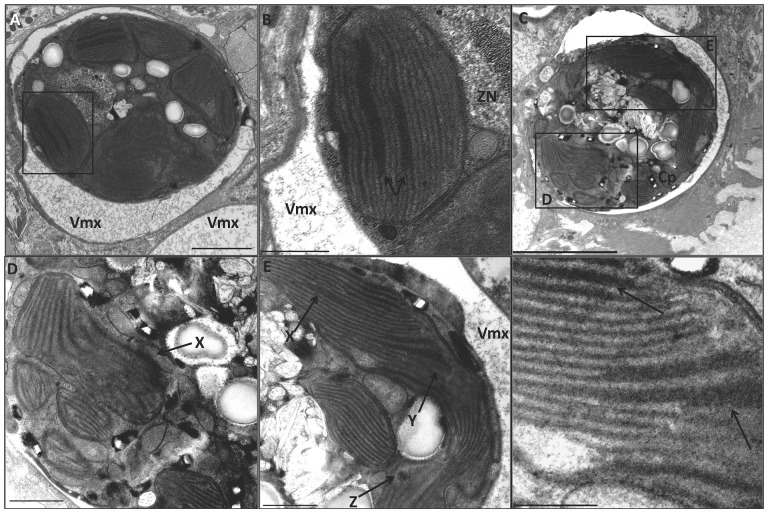
Coral bleaching is a significant contributor to the worldwide degradation of coral reefs and is indicative of the termination of symbiosis between the coral host and its symbiotic algae (dinoflagellate; Symbiodinium sp. complex), usually by expulsion or xenophagy (symbiophagy) of its dinoflagellates. Herein, we provide evidence that during the earliest stages of environmentally induced bleaching, heat stress and light stress generate distinctly different pathomorphological changes in the chloroplasts, while a combined heat- and light-stress exposure induces both pathomorphologies; suggesting that these stressors act on the dinoflagellate by different mechanisms. Within the first 48 hours of a heat stress (32°C) under low-light conditions, heat stress induced decomposition of thylakoid structures before observation of extensive oxidative damage; thus it is the disorganization of the thylakoids that creates the conditions allowing photo-oxidative-stress. Conversely, during the first 48 hours of a light stress (2007 µmoles m(-2) s(-1) PAR) at 25°C, condensation or fusion of multiple thylakoid lamellae occurred coincidently with levels of oxidative damage products, implying that photo-oxidative stress causes the structural membrane damage within the chloroplasts. Exposure to combined heat- and light-stresses induced both pathomorphologies, confirming that these stressors acted on the dinoflagellate via different mechanisms. Within 72 hours of exposure to heat and/or light stresses, homeostatic processes (e.g., heat-shock protein and anti-oxidant enzyme response) were evident in the remaining intact dinoflagellates, regardless of the initiating stressor. Understanding the sequence of events during bleaching when triggered by different environmental stressors is important for predicting both severity and consequences of coral bleaching.
珊瑚白化是导致全球珊瑚礁退化的一个重要因素,它表明珊瑚宿主与其共生藻类(双鞭毛虫;共生藻属复合体)之间的共生关系终止,通常是通过排出或异噬作用(共生体吞噬)其双鞭毛虫来实现的。在此,我们提供证据表明,在环境诱导白化的最早阶段,热应激和光应激会在叶绿体中产生明显不同的病理形态变化,而热应激和光应激联合作用则会诱导两种病理形态;这表明这些应激源通过不同机制作用于双鞭毛虫。在低光照条件下热应激(32°C)的最初48小时内,热应激在观察到广泛的氧化损伤之前就诱导了类囊体结构的分解;因此,正是类囊体的紊乱创造了允许光氧化应激的条件。相反,在25°C下光应激(2007微摩尔光子·米⁻²·秒⁻¹光合有效辐射)的最初48小时内,多个类囊体片层的凝聚或融合与氧化损伤产物的水平同时发生,这意味着光氧化应激导致了叶绿体内的结构膜损伤。热应激和光应激联合作用诱导了两种病理形态,证实了这些应激源通过不同机制作用于双鞭毛虫。在暴露于热应激和 / 或光应激的72小时内,无论起始应激源是什么,在剩余完整的双鞭毛虫中都明显出现了稳态过程(如热休克蛋白和抗氧化酶反应)。了解由不同环境应激源引发的白化过程中的事件顺序,对于预测珊瑚白化的严重程度和后果都很重要。