Cecchini Pansa, Nitta Thomas, Sena Edoardo, Du Zhi-Yan
Department of Molecular Biosciences & Bioengineering, University of Hawai'i at Mānoa, Honolulu, HI, 96822, USA.
Adv Biotechnol (Singap). 2024 Nov 22;2(4):42. doi: 10.1007/s44307-024-00049-1.
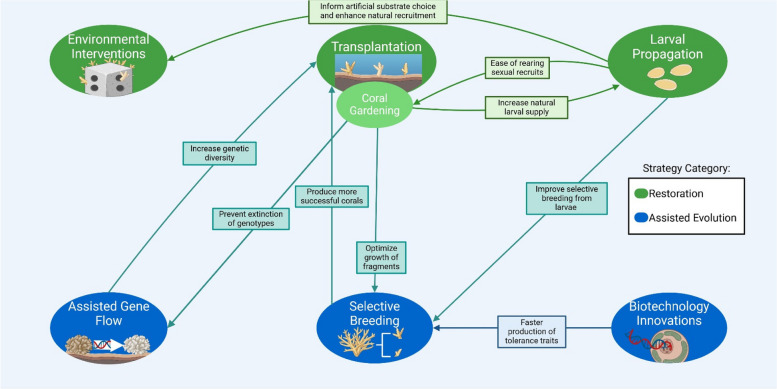
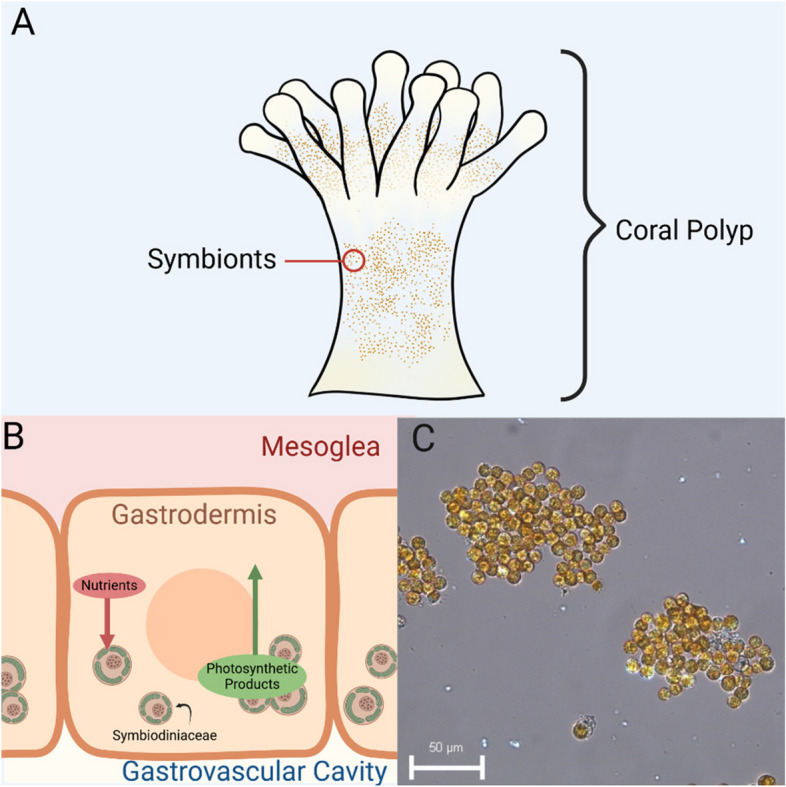
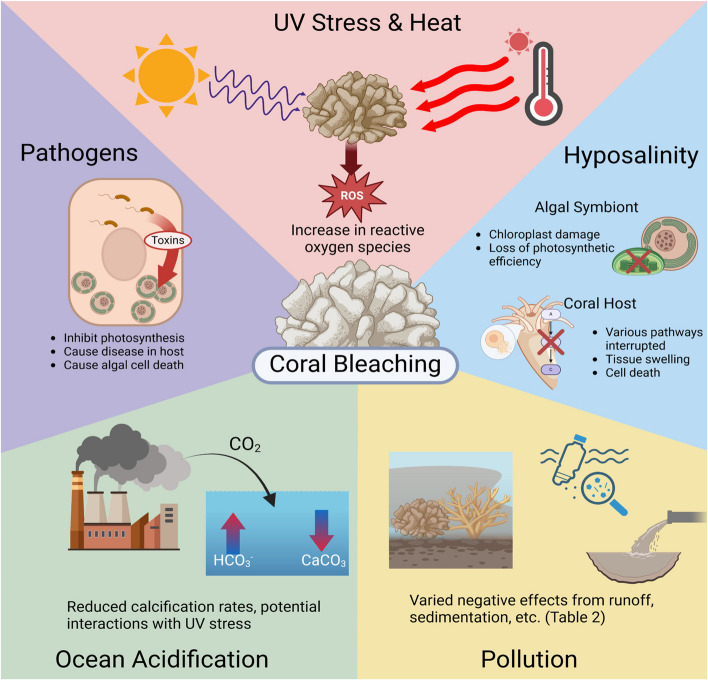
Coral reefs are highly productive ecosystems that provide valuable services to coastal communities worldwide. However, both local and global anthropogenic stressors, threaten the coral-algal symbiosis that enables reef formation. This breakdown of the symbiotic relationship, known as bleaching, is often triggered by cumulative cell damage. UV and heat stress are commonly implicated in bleaching, but other anthropogenic factors may also play a role. To address coral loss, active restoration is already underway in many critical regions. Additionally, coral researchers are exploring assisted evolution methods for greater coral resilience to projected climate change. This review provides an overview of the symbiotic relationship, the mechanisms underlying coral bleaching in response to stressors, and the strategies being pursued to address coral loss. Despite the necessity of ongoing research in all aspects of this field, action on global climate change remains crucial for the long-term survival of coral reefs.
珊瑚礁是高度多产的生态系统,为全球沿海社区提供宝贵的服务。然而,无论是局部还是全球的人为压力源,都威胁着形成珊瑚礁的珊瑚 - 藻类共生关系。这种共生关系的破裂,即白化,通常是由累积的细胞损伤引发的。紫外线和热应激通常与白化有关,但其他人为因素也可能起作用。为了解决珊瑚礁损失问题,许多关键地区已经在进行积极的恢复工作。此外,珊瑚研究人员正在探索辅助进化方法,以使珊瑚对预计的气候变化具有更强的恢复力。本综述概述了共生关系、应激源导致珊瑚白化的潜在机制,以及为解决珊瑚礁损失问题而采取的策略。尽管在该领域的各个方面都需要持续研究,但应对全球气候变化的行动对于珊瑚礁的长期生存仍然至关重要。