Reis-Alves Suiellen C, Traina Fabíola, Harada Guilherme, Campos Paula M, Saad Sara T O, Metze Konradin, Lorand-Metze Irene
Hematology and Hemotherapy Center, University of Campinas - Campinas, Sao Paulo, Brazil.
PLoS One. 2013 Dec 6;8(12):e81048. doi: 10.1371/journal.pone.0081048. eCollection 2013.
myelodysplastic syndromes (MDS) are a heterogeneous group of hematopoietic clonal disorders. So, prognostic variables are important to separate patients with a similar biology and clinical outcome. We compared the importance of risk stratification in primary MDS of IPSS and WPSS with the just described revision of IPSS (IPSS-R), and examined if variables obtained by bone marrow immunophenotyping could add prognostic information to any of the scores.
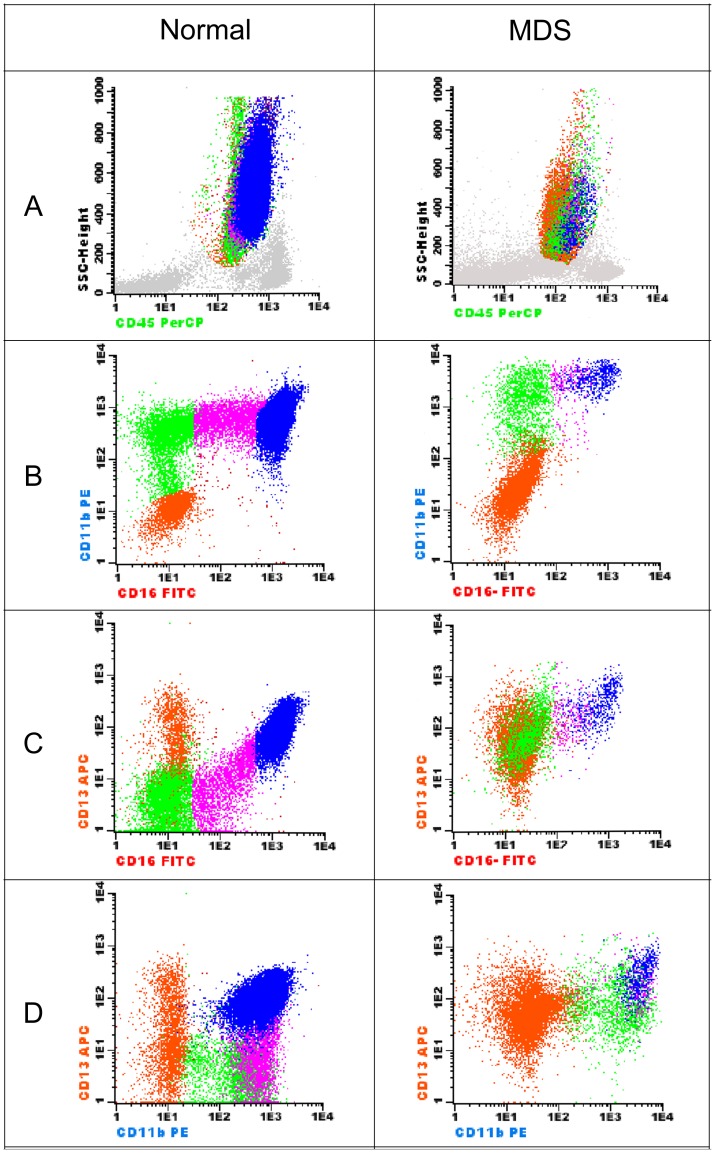
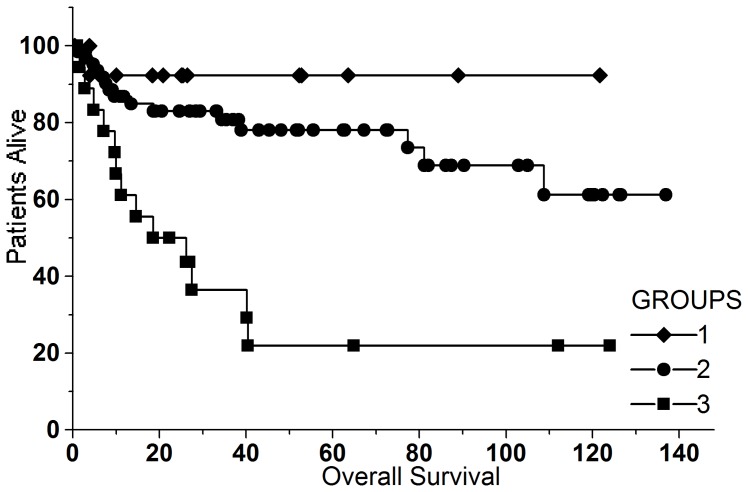
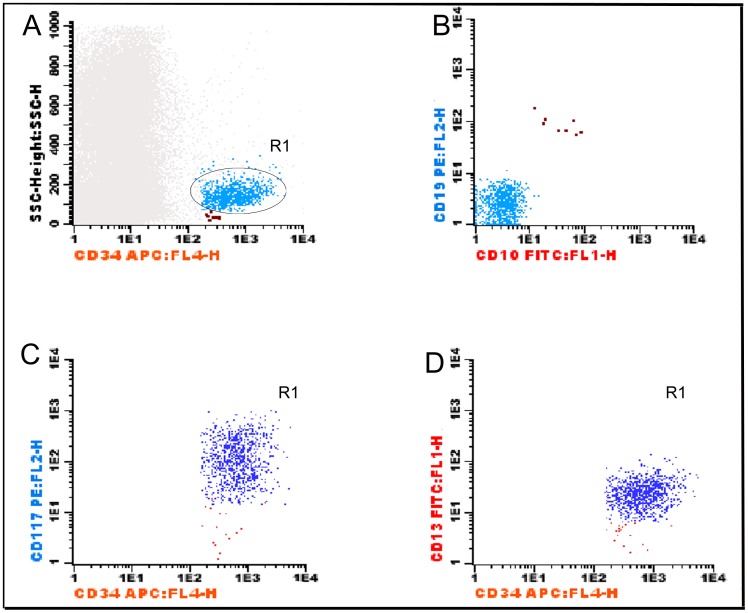
In this prospective study of 101 cases of primary MDS we compared the relation of patients' overall survival with WHO types, IPSS, IPSS-R, WPSS and phenotypic abnormalities of hematopoietic precursors. We examined aberrancies in myelomonocytic precursors and CD34(+) cells. Patients were censored when receiving chemotherapy or BM transplantation. Survival analysis was made by Cox regressions and stability of the models was examined by bootstrap resampling.
MEDIAN AGE: 64 years (15-93). WHO types: 2 cases of 5q- syndrome, 7 of RA, 64 of RCDM and 28 of RAEB. In the univariate Cox analysis, increasing risk category of all scores, degree of anemia, higher percentage of BM blasts, higher number of CD34(+) cells and their myeloid fractions besides increasing number of phenotypic abnormalities detected were significantly associated with a shorter survival. In the multivariate analysis comparing the three scores, IPSS-R was the only independent risk factor. Comparing WPSS with phenotypic variables (CD34(+)/CD13(+) cells, CD34(+)/CD13(-) cells and "total alterations") the score and "CD34(+)/CD13(+) cells" remained in the model. When IPSS was tested together with these phenotypic variables, only "CD34(+)/CD13(+) cells", and "total alterations" remained in the model. Testing IPSS-R with the phenotypic variables studied, only the score and "CD34(+)/CD13(+) cells" entered the model.
Immunophenotypic analysis of myelomonocytic progenitors provides additional prognostic information to all clinical scores studied. IPSS-R improved risk stratification in MDS compared to the former scores.
骨髓增生异常综合征(MDS)是一组异质性造血克隆性疾病。因此,预后变量对于区分具有相似生物学特征和临床结局的患者很重要。我们比较了国际预后评分系统(IPSS)和世界卫生组织预后评分系统(WPSS)在原发性MDS中的风险分层重要性与上述IPSS修订版(IPSS-R),并研究了通过骨髓免疫表型分析获得的变量是否可以为任何一种评分增加预后信息。
在这项对101例原发性MDS患者的前瞻性研究中,我们比较了患者总生存期与世界卫生组织(WHO)分型、IPSS、IPSS-R、WPSS以及造血前体表型异常之间的关系。我们检测了髓单核细胞前体和CD34(+)细胞中的异常情况。患者在接受化疗或骨髓移植时进行截尾。通过Cox回归进行生存分析,并通过自助重抽样检验模型的稳定性。
中位年龄:64岁(15 - 93岁)。WHO分型:2例5q-综合征,7例难治性贫血(RA),64例难治性血细胞减少伴多系发育异常(RCMD),28例难治性贫血伴原始细胞增多(RAEB)。在单变量Cox分析中,所有评分的风险类别增加、贫血程度、骨髓原始细胞百分比升高、CD34(+)细胞数量及其髓系比例增加以及检测到的表型异常数量增加均与较短生存期显著相关。在比较这三种评分的多变量分析中,IPSS-R是唯一的独立危险因素。将WPSS与表型变量(CD34(+)/CD13(+)细胞、CD34(+)/CD13(-)细胞和“总异常”)进行比较时,评分和“CD34(+)/CD13(+)细胞”保留在模型中。当将IPSS与这些表型变量一起检验时,只有“CD34(+)/CD13(+)细胞”和“总异常”保留在模型中。用所研究的表型变量检验IPSS-R时,只有评分和“CD34(+)/CD13(+)细胞”进入模型。
髓单核细胞祖细胞的免疫表型分析为所有研究的临床评分提供了额外的预后信息。与之前的评分相比,IPSS-R改善了MDS的风险分层。