Hospital Maisonneuve-Rosemont Research Center, Montreal, Quebec, Canada ; Department of Microbiology, Infectiology and Immunology, University of Montreal, Montreal, Quebec, Canada.
PLoS One. 2013 Dec 6;8(12):e81573. doi: 10.1371/journal.pone.0081573. eCollection 2013.
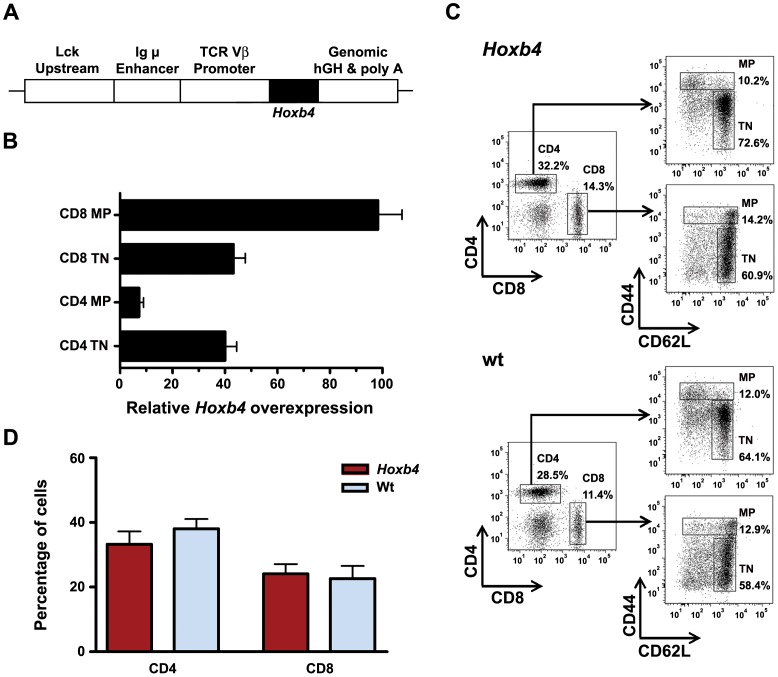
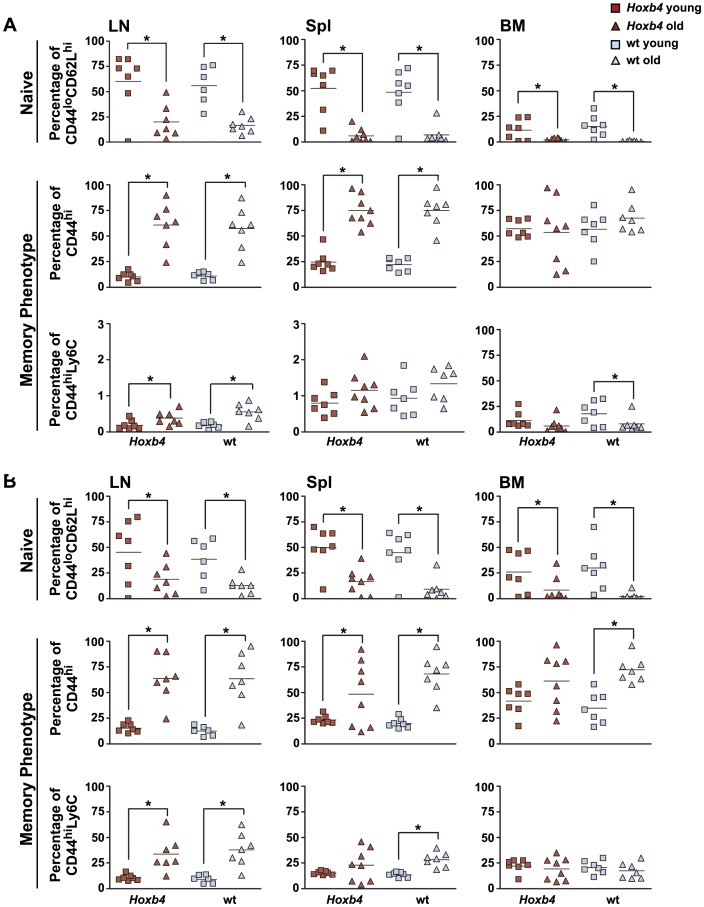
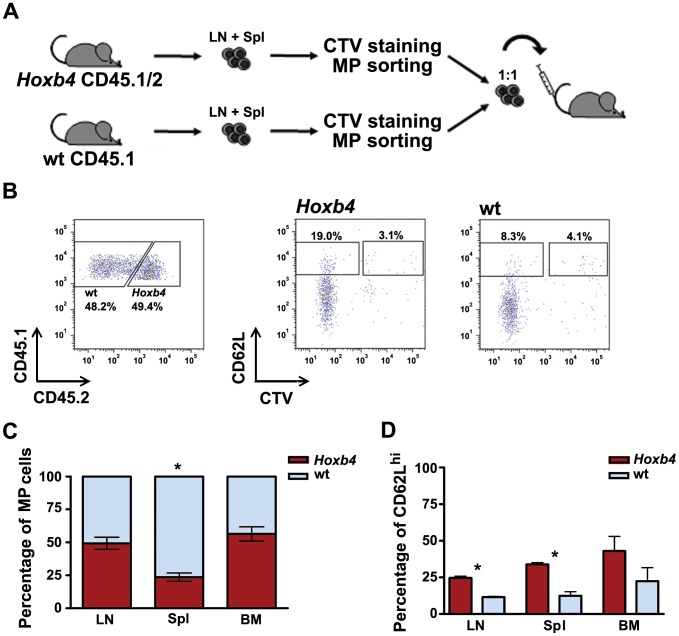
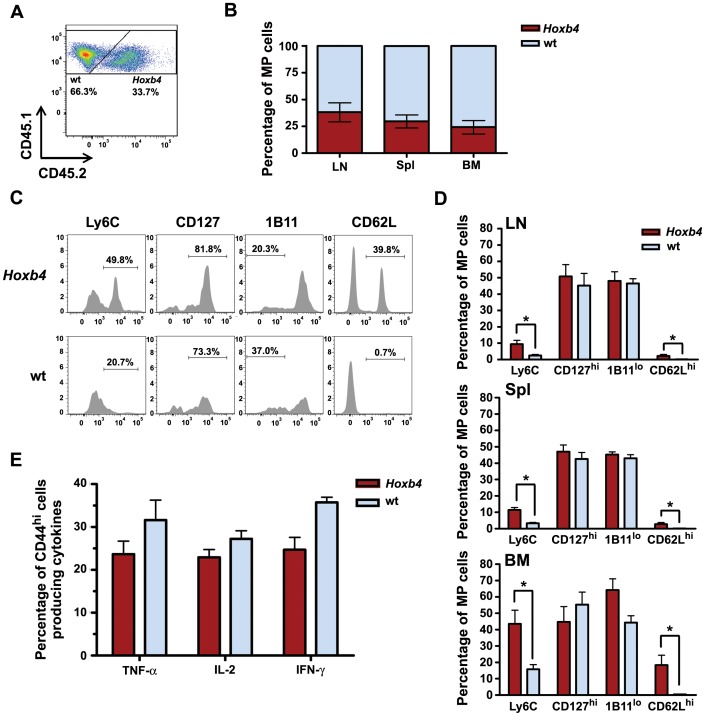
Memory T cell populations allow a rapid immune response to pathogens that have been previously encountered and thus form the basis of success in vaccinations. However, the molecular pathways underlying the development and maintenance of these cells are only starting to be unveiled. Memory T cells have the capacity to self renew as do hematopoietic stem cells, and overlapping gene expression profiles suggested that these cells might use the same self-renewal pathways. The transcription factor Hoxb4 has been shown to promote self-renewal divisions of hematopoietic stem cells resulting in an expansion of these cells. In this study we investigated whether overexpression of Hoxb4 could provide an advantage to CD4 memory phenotype T cells in engrafting the niche of T cell deficient mice following adoptive transfer. Competitive transplantation experiments demonstrated that CD4 memory phenotype T cells derived from mice transgenic for Hoxb4 contributed overall less to the repopulation of the lymphoid organs than wild type CD4 memory phenotype T cells after two months. These proportions were relatively maintained following serial transplantation in secondary and tertiary mice. Interestingly, a significantly higher percentage of the Hoxb4 CD4 memory phenotype T cell population expressed the CD62L and Ly6C surface markers, characteristic for central memory T cells, after homeostatic proliferation. Thus Hoxb4 favours the maintenance and increase of the CD4 central memory phenotype T cell population. These cells are more stem cell like and might eventually lead to an advantage of Hoxb4 T cells after subjecting the cells to additional rounds of proliferation.
记忆 T 细胞群体能够对以前遇到过的病原体做出快速免疫反应,从而为疫苗接种的成功奠定基础。然而,这些细胞的发育和维持的分子途径才刚刚开始被揭示。记忆 T 细胞具有自我更新的能力,就像造血干细胞一样,重叠的基因表达谱表明这些细胞可能使用相同的自我更新途径。转录因子 Hoxb4 已被证明可以促进造血干细胞的自我更新分裂,从而扩大这些细胞的数量。在这项研究中,我们研究了过表达 Hoxb4 是否可以为 CD4 记忆表型 T 细胞在过继转移后植入 T 细胞缺陷小鼠的龛位提供优势。竞争性移植实验表明,来自过表达 Hoxb4 的转基因小鼠的 CD4 记忆表型 T 细胞在两个月后对淋巴器官的再定居的总体贡献低于野生型 CD4 记忆表型 T 细胞。在二级和三级小鼠中的连续移植后,这些比例相对保持不变。有趣的是,在稳态增殖后,Hoxb4 CD4 记忆表型 T 细胞群体中显著更高比例的细胞表达 CD62L 和 Ly6C 表面标志物,这是中央记忆 T 细胞的特征。因此,Hoxb4 有利于 CD4 中央记忆表型 T 细胞群体的维持和增加。这些细胞更类似于干细胞,并且在使细胞经受额外的增殖循环后,最终可能导致 Hoxb4 T 细胞具有优势。