Molecular Immunology, Helmholtz Centre for Infection Research, Braunschweig, Lower Saxony, Germany.
PLoS One. 2013 Dec 6;8(12):e82121. doi: 10.1371/journal.pone.0082121. eCollection 2013.
In the present study we have investigated the comparative switching propensity of murine peritoneal and splenic B cell subpopulations to IgA in presence of retinoic acid (RA) and TGF-β.
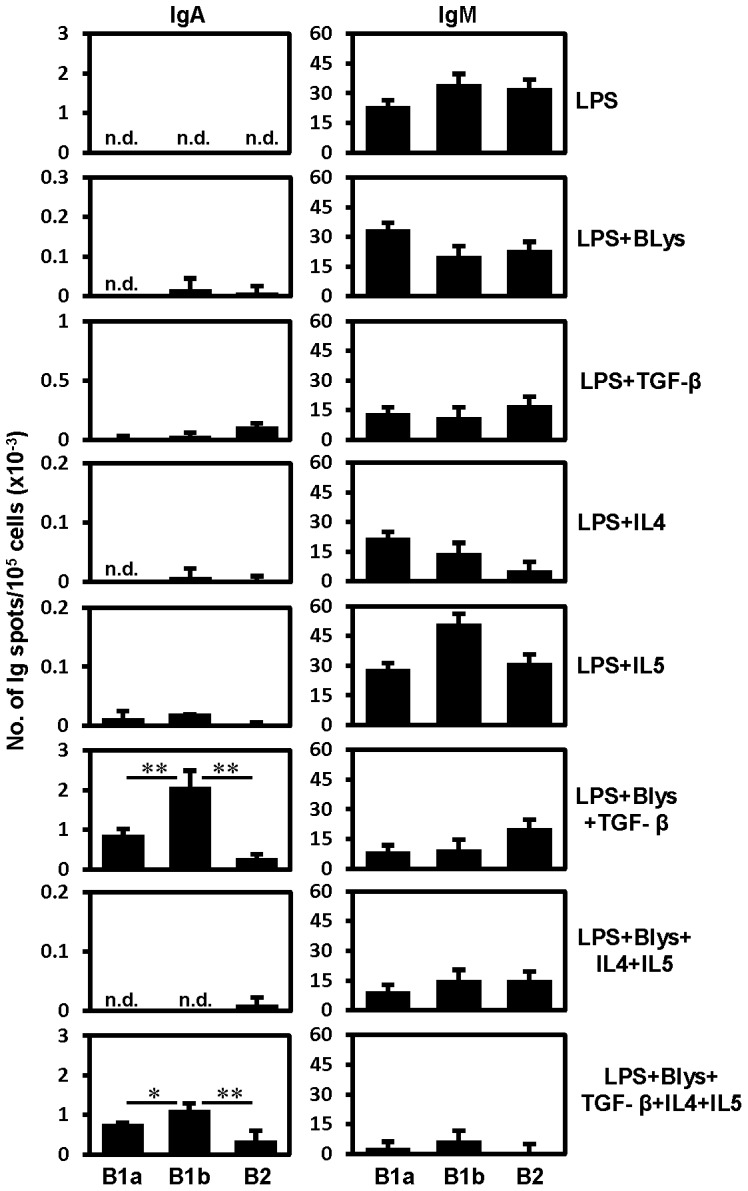
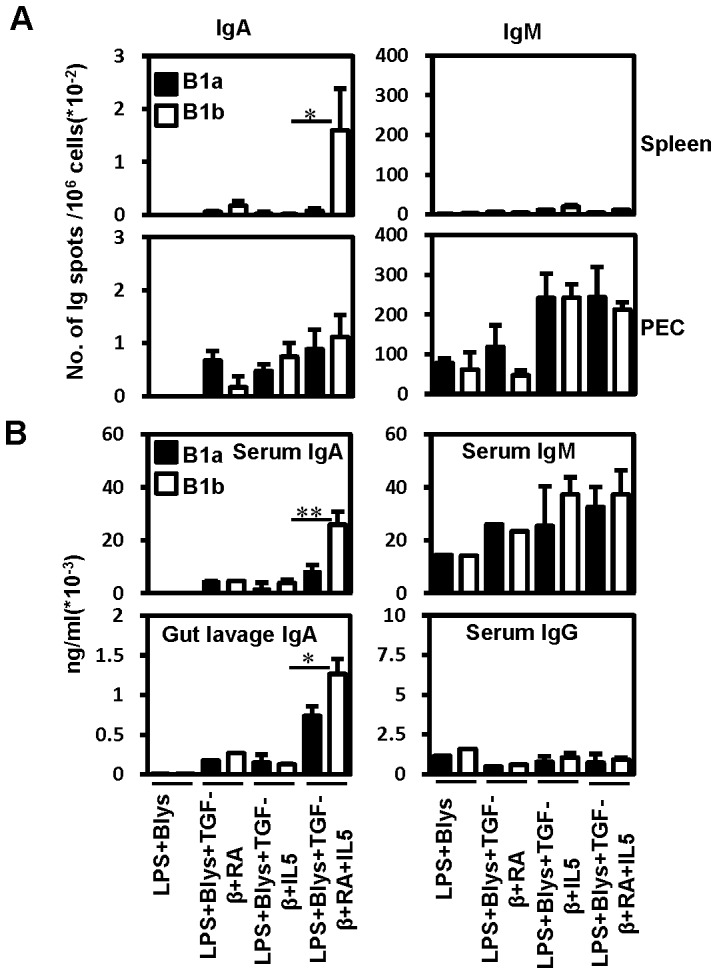
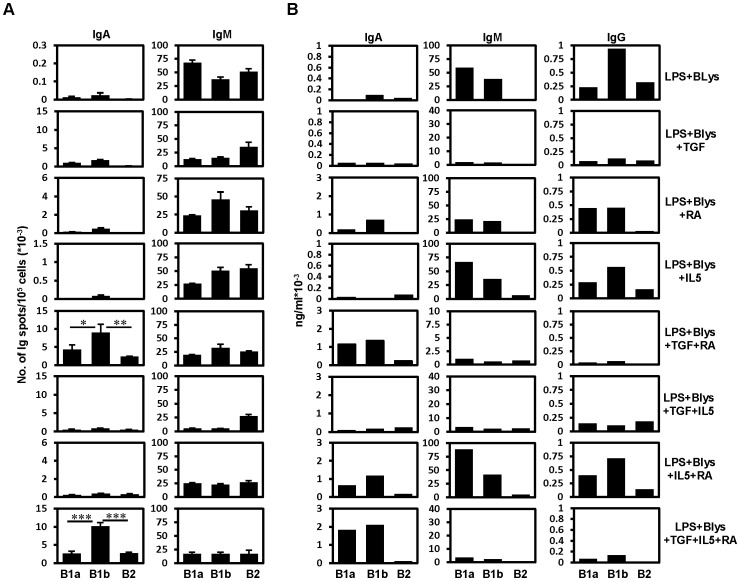
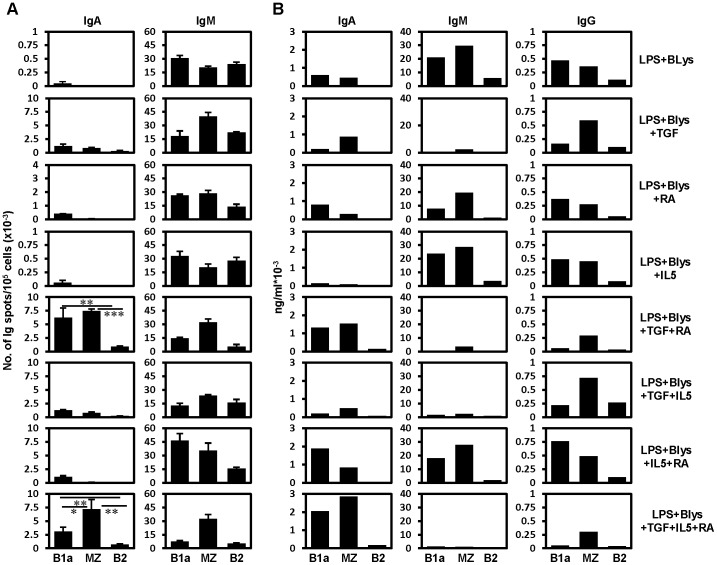
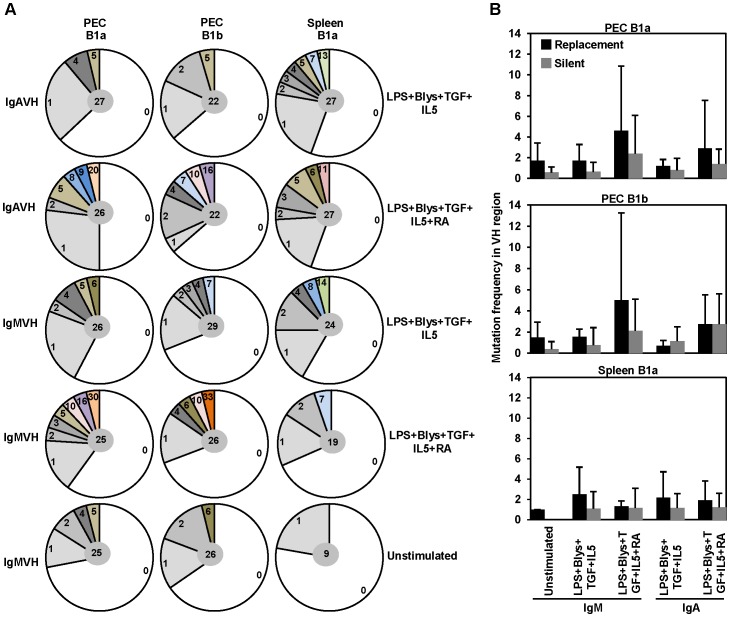
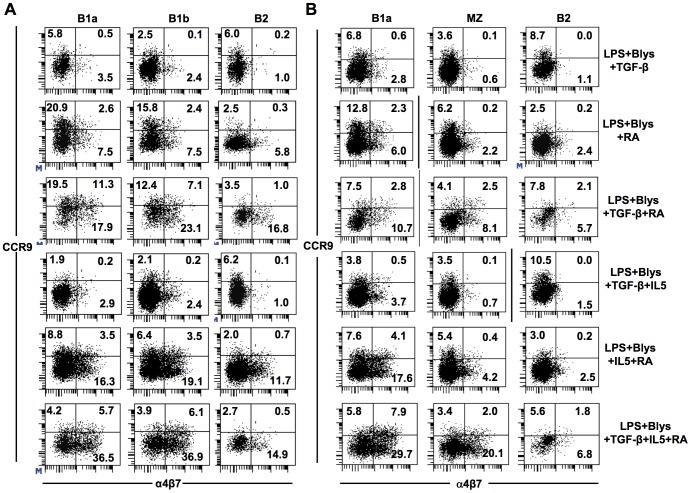
To study the influence of RA and TGF-β on switching of B cell subpopulations to IgA, peritoneal (B1a, B1b and B2 cells) and splenic (B1a, marginal zone, and B2) B cells from normal BALB/c mice were FACS purified, cultured for 4 days in presence of RA and TGF-β and the number of IgA producing cells was determined by ELISPOT assay or FACS analysis. In presence of TGF-β, peritoneal B1b cells switched to IgA more potently than other peritoneal B cell subpopulations. When TGF-β was combined with retinoic acid (RA), switching to IgA was even more pronounced. Under these conditions, "innate" B cells like peritoneal and splenic B1 cells and MZ B cells produced IgA more readily than B2 cells. Additionally, high frequency of nucleotide exchanges indicating somatic hypermutation in VH regions was observed. Besides IgA induction, RA treatment of sorted PEC and splenic B cells led to expression of gut homing molecules - α4β7 and CCR9. Intraperitoneal transfer of RA-treated B1 cells into Rag1(-/-) recipients resulted in IgA in serum and gut lavage, most efficiently amongst B1b cell recipients.
Present study demonstrates the differential and synergistic effect of RA and TGF-β on switching of different B cell subpopulations to IgA and establishes the prominence of peritoneal B1b cells in switching to IgA under the influence of these two factors. Our study extends our knowledge about the existing differences among B cell subpopulations with regards to IgA production and indicates towards their differential contribution to gut associated humoral immunity.
在本研究中,我们研究了在维甲酸(RA)和 TGF-β存在的情况下,鼠腹膜和脾 B 细胞亚群向 IgA 的比较转换倾向。
为了研究 RA 和 TGF-β对 B 细胞亚群向 IgA 转换的影响,从正常 BALB/c 小鼠中分离腹膜(B1a、B1b 和 B2 细胞)和脾(B1a、边缘区和 B2)B 细胞,在 RA 和 TGF-β存在的情况下进行 4 天培养,并通过 ELISPOT 测定或 FACS 分析确定 IgA 产生细胞的数量。在 TGF-β存在的情况下,腹膜 B1b 细胞比其他腹膜 B 细胞亚群更有效地向 IgA 转换。当 TGF-β与维甲酸(RA)联合使用时,向 IgA 的转换更为明显。在这些条件下,像腹膜和脾 B1 细胞和 MZ B 细胞这样的“先天”B 细胞比 B2 细胞更容易产生 IgA。此外,还观察到 VH 区域中核苷酸交换的高频,表明体细胞超突变。除了 IgA 诱导外,RA 处理的分选 PEC 和脾 B 细胞导致肠道归巢分子-α4β7 和 CCR9 的表达。RA 处理的 B1 细胞向 Rag1(-/-)受体的腹腔内转移导致血清和肠道灌洗液中的 IgA,其中 B1b 细胞受体的效果最佳。
本研究表明 RA 和 TGF-β对不同 B 细胞亚群向 IgA 的转换具有差异和协同作用,并确立了腹膜 B1b 细胞在这两种因子影响下向 IgA 转换的突出地位。我们的研究扩展了我们对 B 细胞亚群在 IgA 产生方面存在差异的认识,并表明它们对肠道相关体液免疫的差异贡献。