*Department of Obstetrics and Gynecology, Bangabandhu Sheikh Mujib Medical University Hospital, Dhaka, Bangladesh; †Department of Obstetrics and Gynecology, Department of Clinical Sciences, Danderyd Hospital, Karolinska Institutet, Stockholm, Sweden; ‡Statisticon, Uppsala; and §Karolinska Institutet, Karolinska University Hospital, Stockholm, Sweden.
Int J Gynecol Cancer. 2014 Feb;24(2):339-45. doi: 10.1097/IGC.0000000000000042.
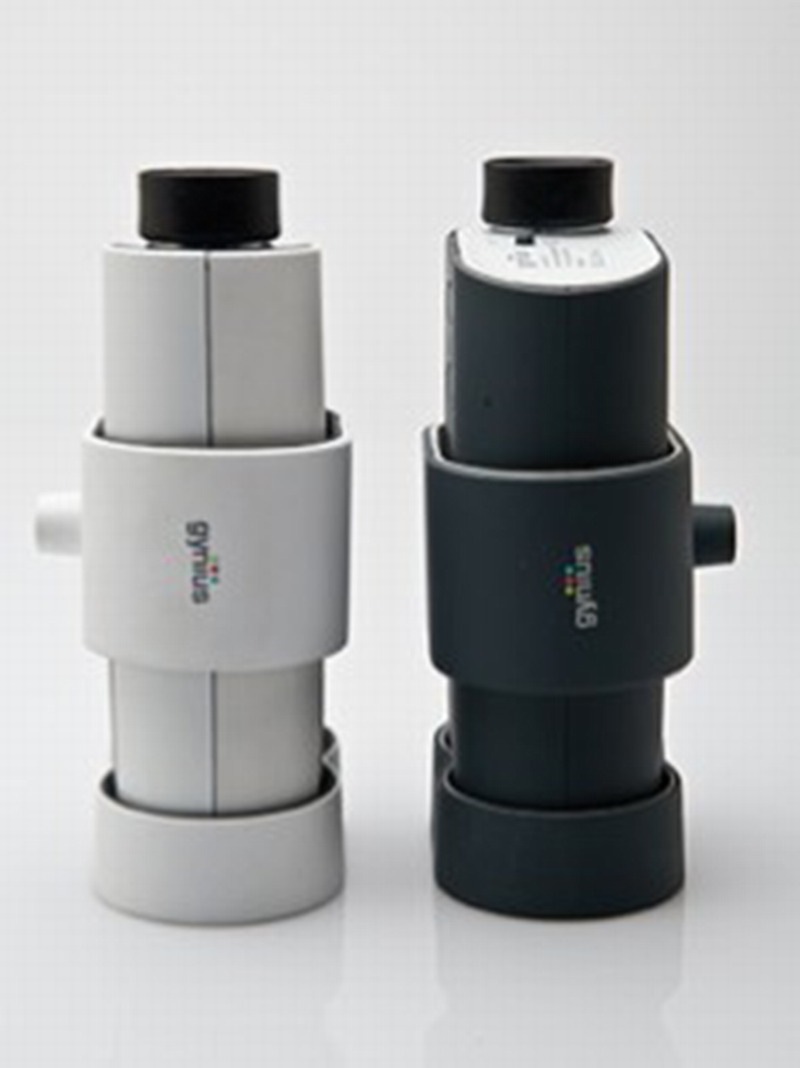
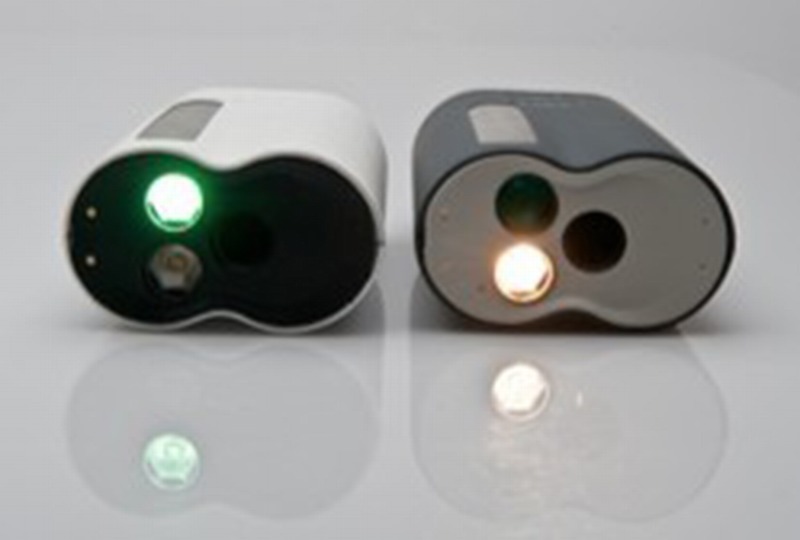
This study aimed to evaluate cervical lesions by the Swede coloscopy system, histologic finding, liquid-based cytology, and human papillomavirus (HPV) in women who resulted positive for visual inspection of the cervix with acetic acid (VIA) by using a pocket-sized battery-driven colposcope, the Gynocular (Gynius AB, Sweden).
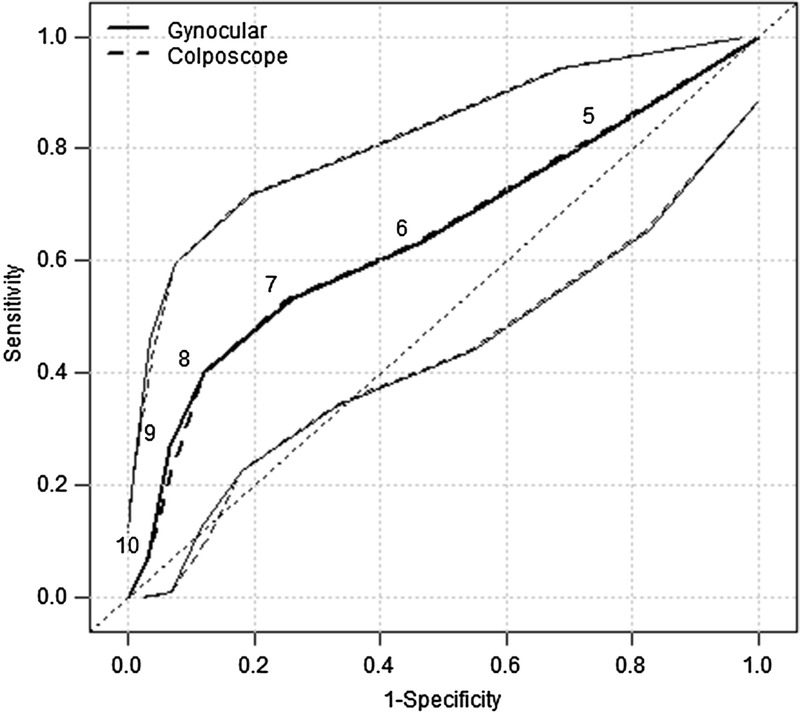
This study was a crossover, randomized clinical trial at the colposcopy clinic of Bangabandhu Sheikh Mujib Medical University in Dhaka, Bangladesh, with 540 VIA-positive women. Swede scores were obtained by the Gynocular and stationary colposcope, as well as samples for liquid-based cytology, HPV, and cervical biopsies. The Swede scores were compared against the histologic diagnosis and used as criterion standard. The percentage agreement and the κ statistic for the Gynocular and standard colposcope were also calculated.
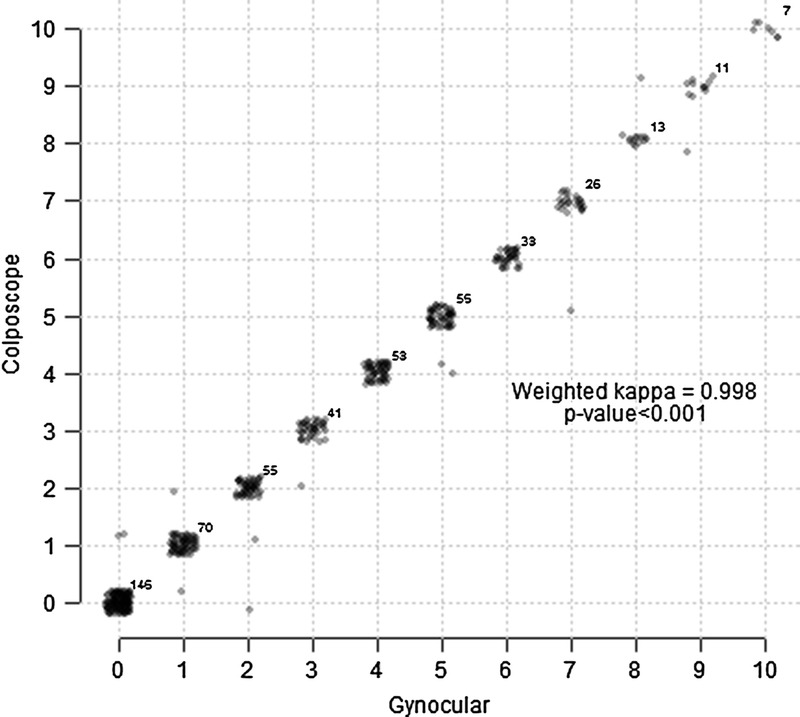
The Gynocular and stationary colposcope showed high agreement in Swede scores with a κ statistic of 0.998, P value of less than 0.0001, and no difference in detecting cervical lesions in biopsy. Biopsy detected cervical intraepithelial neoplasia (CIN) 2+ (CIN2, CIN3, and invasive cancer) in 38 (7%) of the women, whereas liquid-based cytology detected CIN2+ in 13 (2.5%) of the women. Forty-four (8.6%) women who were tested resulted positive for HPV; 20 (3.9%) women had HPV-16, 2 (0.4%) had HPV-18, and 22 (4.3%) had other high-risk HPV.
Our study showed that few VIA-positive women had CIN2+ lesions or HPV infection. Colposcopy by Swede score identified significantly more CIN2+ lesions than liquid-based cytology and could offer a more accurate screening and selection for immediate treatment of cervical lesions in low-resource settings.
本研究旨在使用 Gynius AB 公司生产的 pocket-sized 电池驱动阴道镜(Gynocular)评估醋酸肉眼检查阳性(VIA)的妇女的宫颈病变,该阴道镜为瑞士光学阴道镜系统,结合组织学检查、液基细胞学检查和人乳头瘤病毒(HPV)检查。
本研究为孟加拉国达卡的 Bangabandhu Sheikh Mujib 医科大学阴道镜诊所的一项交叉、随机临床试验,共纳入 540 例 VIA 阳性妇女。采用 Gynocular 和固定式阴道镜获取瑞士评分,并采集液基细胞学检查、HPV 和宫颈活检样本。将瑞士评分与组织学诊断进行比较,并作为金标准。还计算了 Gynocular 和标准阴道镜的百分比一致性和κ统计量。
Gynocular 和固定式阴道镜的瑞士评分具有很高的一致性,κ 统计量为 0.998,P 值小于 0.0001,且在活检中检测宫颈病变的结果无差异。活检发现 38 例(7%)妇女存在宫颈上皮内瘤变 2 级(CIN2、CIN3 和浸润性癌),而液基细胞学检查发现 13 例(2.5%)妇女存在 CIN2+病变。44 例(8.6%)妇女 HPV 检测呈阳性;20 例(3.9%)妇女 HPV-16 阳性,2 例(0.4%)妇女 HPV-18 阳性,22 例(4.3%)妇女感染其他高危型 HPV。
本研究表明,醋酸肉眼检查阳性的妇女中,CIN2+病变或 HPV 感染的妇女较少。瑞士评分阴道镜检查可显著发现更多的 CIN2+病变,可为资源匮乏地区的宫颈病变提供更准确的筛查和治疗选择。