School of Biomolecular and Biomedical Science, University College Dublin, Belfield, Dublin, Ireland.
PLoS Genet. 2013;9(12):e1003977. doi: 10.1371/journal.pgen.1003977. Epub 2013 Dec 5.
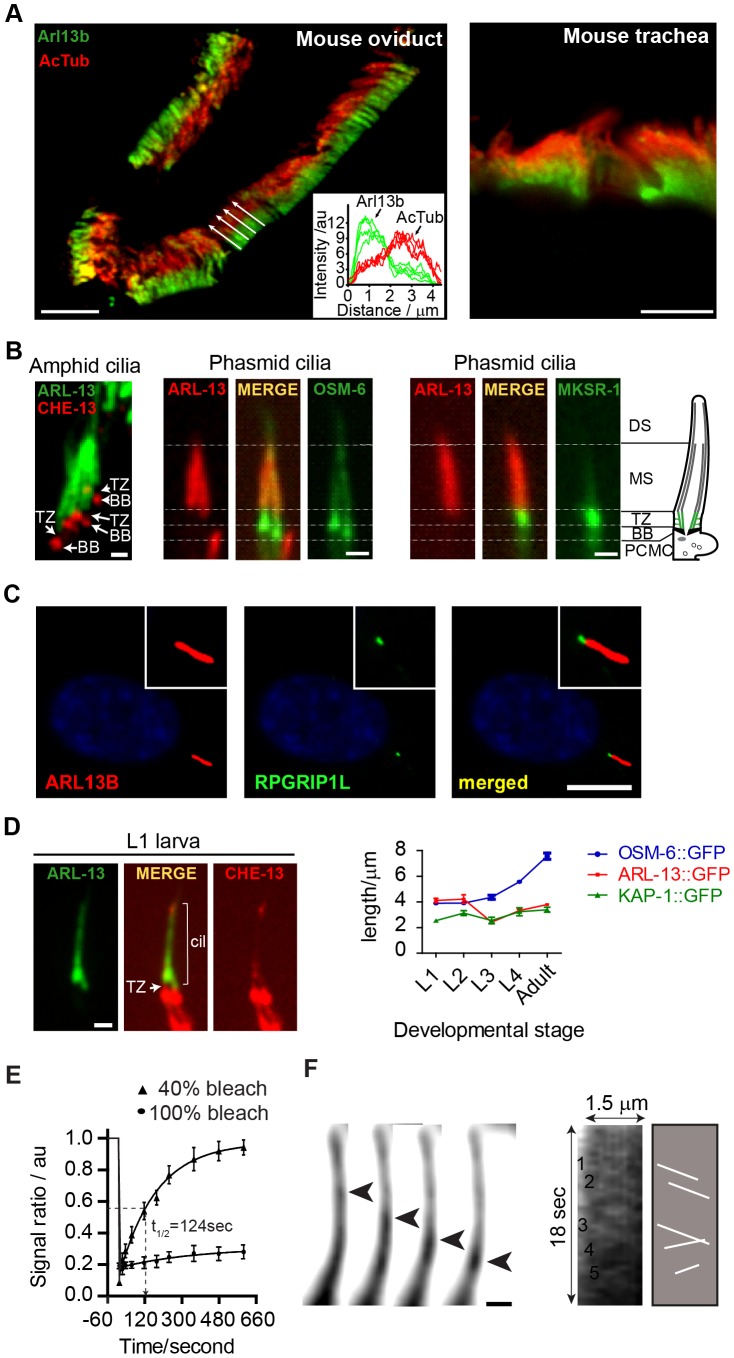
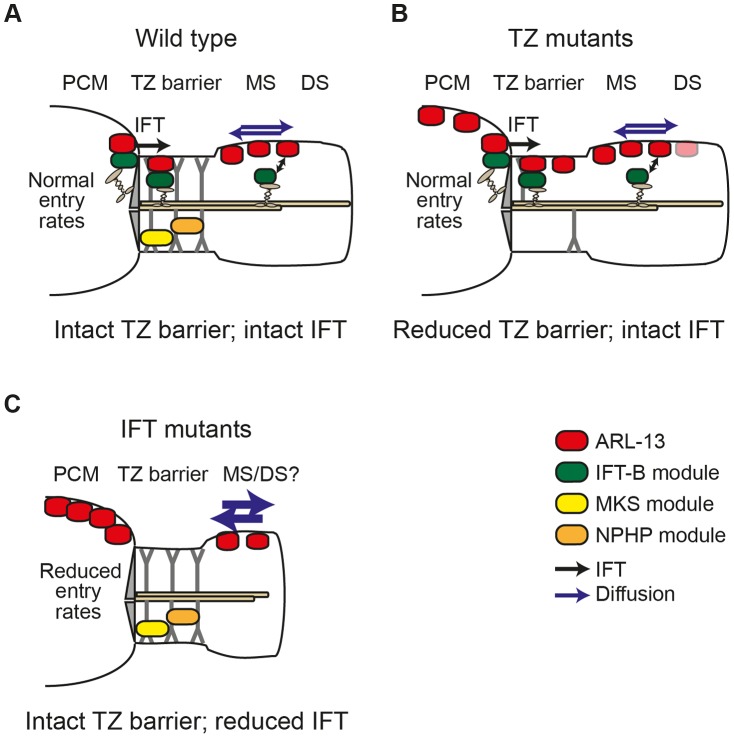
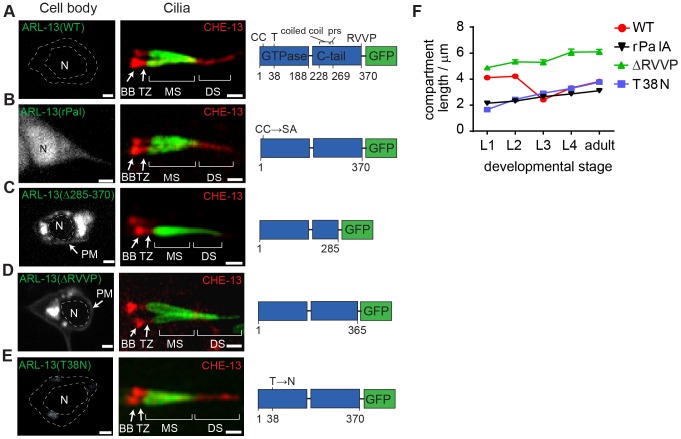
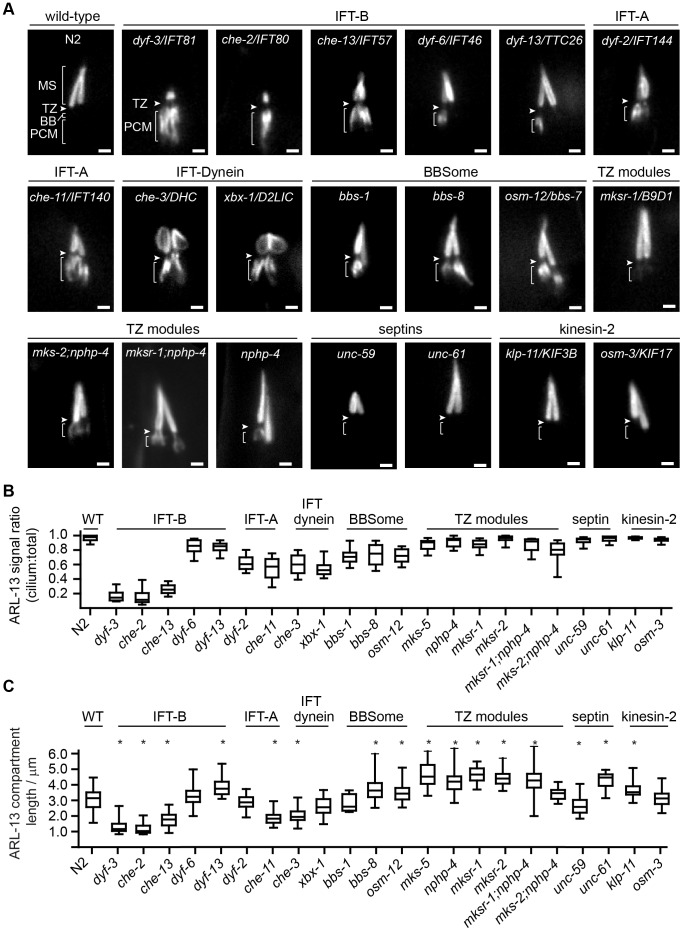
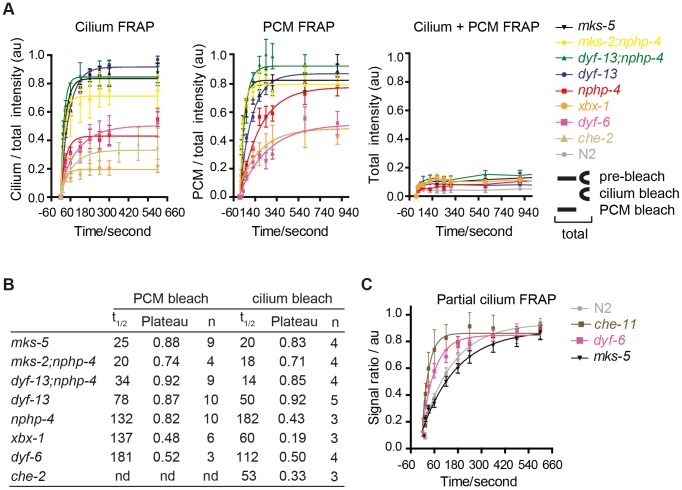
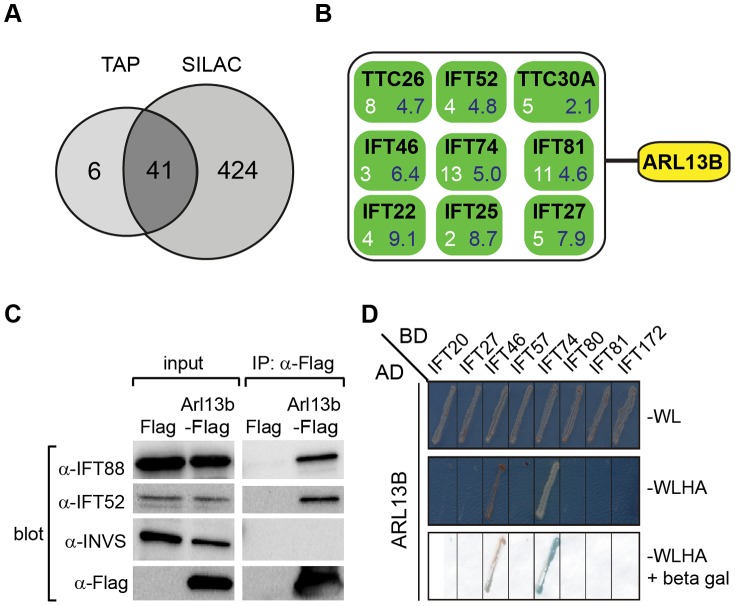
Cilia are microtubule-based cell appendages, serving motility, chemo-/mechano-/photo- sensation, and developmental signaling functions. Cilia are comprised of distinct structural and functional subregions including the basal body, transition zone (TZ) and inversin (Inv) compartments, and defects in this organelle are associated with an expanding spectrum of inherited disorders including Bardet-Biedl syndrome (BBS), Meckel-Gruber Syndrome (MKS), Joubert Syndrome (JS) and Nephronophthisis (NPHP). Despite major advances in understanding ciliary trafficking pathways such as intraflagellar transport (IFT), how proteins are transported to subciliary membranes remains poorly understood. Using Caenorhabditis elegans and mammalian cells, we investigated the transport mechanisms underlying compartmentalization of JS-associated ARL13B/ARL-13, which we previously found is restricted at proximal ciliary membranes. We now show evolutionary conservation of ARL13B/ARL-13 localisation to an Inv-like subciliary membrane compartment, excluding the TZ, in many C. elegans ciliated neurons and in a subset of mammalian ciliary subtypes. Compartmentalisation of C. elegans ARL-13 requires a C-terminal RVVP motif and membrane anchoring to prevent distal cilium and nuclear targeting, respectively. Quantitative imaging in more than 20 mutants revealed differential contributions for IFT and ciliopathy modules in defining the ARL-13 compartment; IFT-A/B, IFT-dynein and BBS genes prevent ARL-13 accumulation at periciliary membranes, whereas MKS/NPHP modules additionally inhibit ARL-13 association with TZ membranes. Furthermore, in vivo FRAP analyses revealed distinct roles for IFT and MKS/NPHP genes in regulating a TZ barrier to ARL-13 diffusion, and intraciliary ARL-13 diffusion. Finally, C. elegans ARL-13 undergoes IFT-like motility and quantitative protein complex analysis of human ARL13B identified functional associations with IFT-B complexes, mapped to IFT46 and IFT74 interactions. Together, these findings reveal distinct requirements for sequence motifs, IFT and ciliopathy modules in defining an ARL-13 subciliary membrane compartment. We conclude that MKS/NPHP modules comprise a TZ barrier to ARL-13 diffusion, whereas IFT genes predominantly facilitate ARL-13 ciliary entry and/or retention via active transport mechanisms.
纤毛是基于微管的细胞附属物,具有运动、化学感觉、机械感觉、光感觉和发育信号功能。纤毛由不同的结构和功能亚区组成,包括基体、过渡区 (TZ) 和内反转蛋白 (Inv) 区,该细胞器的缺陷与一系列不断扩大的遗传性疾病有关,包括 Bardet-Biedl 综合征 (BBS)、Meckel-Gruber 综合征 (MKS)、Joubert 综合征 (JS) 和肾单位肾病 (NPHP)。尽管在理解纤毛运输途径方面取得了重大进展,例如鞭毛内运输 (IFT),但蛋白质如何运输到亚纤毛膜仍知之甚少。我们使用秀丽隐杆线虫和哺乳动物细胞,研究了 JS 相关 ARL13B/ARL-13 分室化的运输机制,我们之前发现 ARL13B/ARL-13 局限于近端纤毛膜。现在我们表明,在许多秀丽隐杆线虫有纤毛的神经元和哺乳动物纤毛亚型的亚组中,ARL13B/ARL-13 的定位保守到类似于内反转蛋白的亚纤毛膜区室,排除过渡区。线虫 ARL-13 的区室化需要 C 末端 RVVP 基序和膜锚定,分别防止远端纤毛和核靶向。在 20 多个突变体中的定量成像显示,IFT 和纤毛病模块在定义 ARL-13 区室方面的贡献不同;IFT-A/B、IFT-动力蛋白和 BBS 基因阻止 ARL13 在边缘纤毛膜上的积累,而 MKS/NPHP 模块还抑制 ARL-13 与过渡区膜的结合。此外,体内 FRAP 分析显示,IFT 和 MKS/NPHP 基因在调节 ARL-13 扩散的过渡区屏障和纤毛内 ARL-13 扩散方面具有不同的作用。最后,秀丽隐杆线虫 ARL-13 经历 IFT 样运动,对人 ARL13B 的定量蛋白复合物分析确定了与 IFT-B 复合物的功能关联,映射到 IFT46 和 IFT74 相互作用。总之,这些发现揭示了序列基序、IFT 和纤毛病模块在定义 ARL-13 亚纤毛膜区室方面的不同要求。我们得出结论,MKS/NPHP 模块构成 ARL-13 扩散的过渡区屏障,而 IFT 基因主要通过主动运输机制促进 ARL-13 进入和/或保留纤毛。