Lee Sun-Hye, Woo Tae-Gyun, Lee Su-Jin, Kim Jin-Sik, Ha Nam-Chul, Park Bum-Joon
Department of Molecular Biology, College of Natural Science, Pusan National University, Busan, Republic of Korea.
Oncotarget. 2013 Dec;4(12):2523-31. doi: 10.18632/oncotarget.1550.
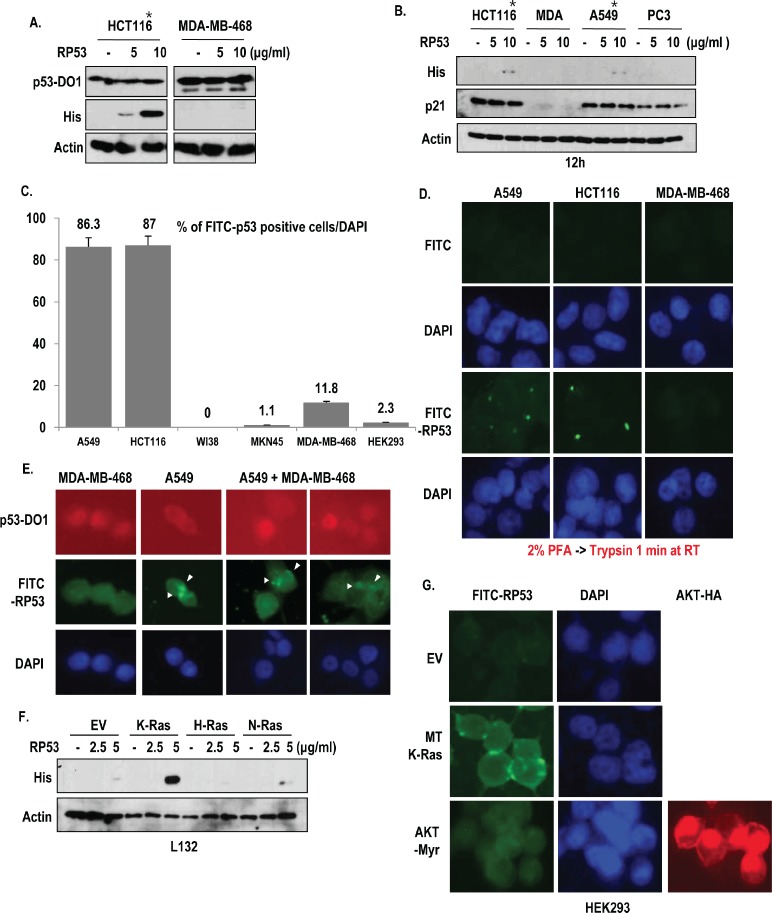
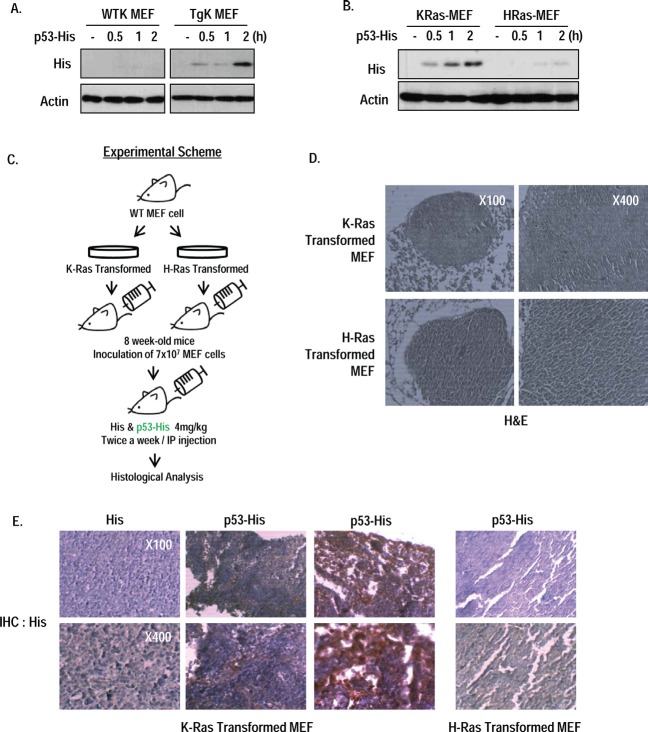
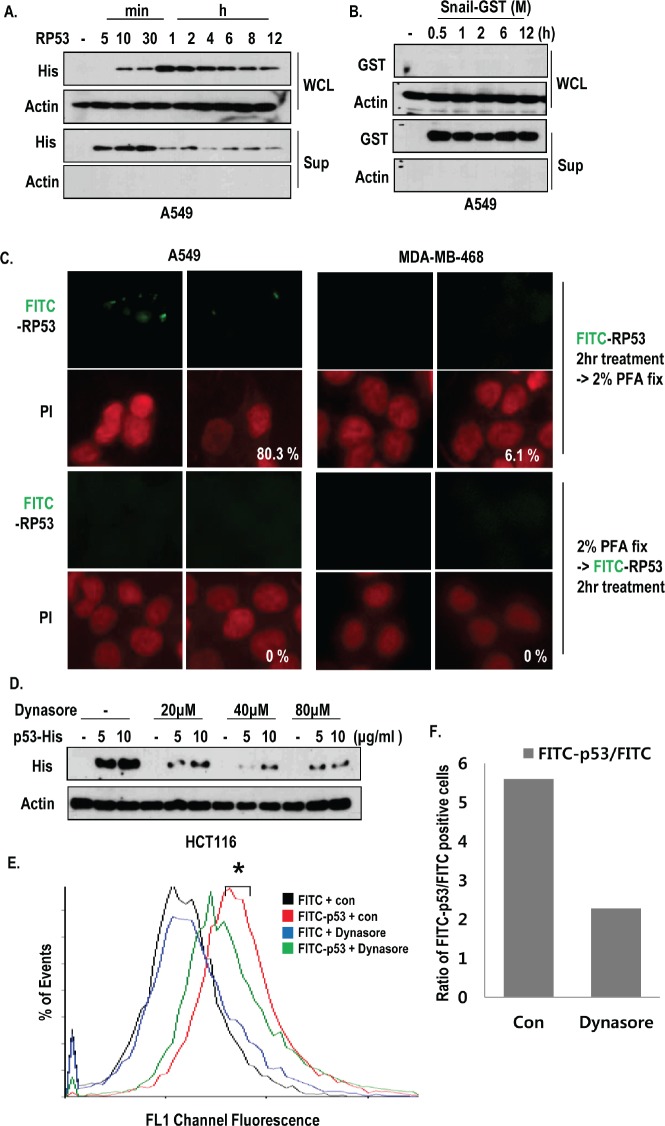
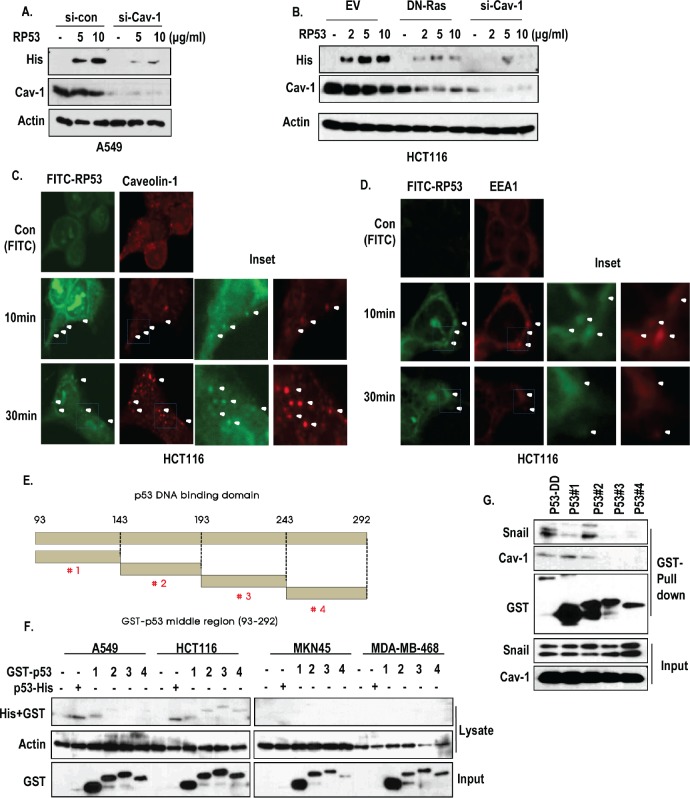
K-Ras mutation is detected in over 30% of human malignancies. In particular, 90% of human pancreatic cancers are initiated by K-Ras mutation. Thus, selective elimination of K-Ras mutated cells would be a plausible strategy to prevent or cure the malignancies. In our previous reports, it has been revealed that oncogenic K-Ras promotes the exocytosis of p53 with Snail. In this study, we have followed the final destination of extracellular p53, which is secreted by the Snail complex. Here we provide evidences that p53, exported from K-Ras-mutated cells, is specifically re-endocytosed by oncogenic K-Ras-containing cancer cells. The p53 DNA-binding domain directly associates with caveolin-1 and enters K-Ras mutated cells through early endosome-mediated endocytosis. Using a serial deletion approach, we revealed that a fragment of human p53 extending from 93-143 amino acids (AA) is responsible for binding with caveolin-1 and for endocytosis. In contrast, p53-Snail binding occurs at the 143-193 aa region. Finally, through in vivo study, we confirmed that injected recombinant p53 could be up-taken by tumor tissues, constructed by oncogenic K-Ras transformed MEF cells. In contrast, the tumors formed by H-Ras mutated MEF cells did not accumulate the injected p53 protein. These results indicate that the p53 fragment might be useful as a specific delivery tool into K- Ras mutated cells as well as a diagnostic method.
超过30%的人类恶性肿瘤中可检测到K-Ras突变。特别是,90%的人类胰腺癌由K-Ras突变引发。因此,选择性消除K-Ras突变细胞将是预防或治愈恶性肿瘤的一种可行策略。在我们之前的报告中,已揭示致癌性K-Ras与Snail共同促进p53的胞吐作用。在本研究中,我们追踪了由Snail复合物分泌的细胞外p53的最终去向。在此,我们提供证据表明,从K-Ras突变细胞中输出的p53被含致癌性K-Ras的癌细胞特异性地重新内吞。p53 DNA结合结构域直接与小窝蛋白-1结合,并通过早期内体介导的内吞作用进入K-Ras突变细胞。通过一系列缺失方法,我们发现人p53从93 - 143个氨基酸(AA)延伸的片段负责与小窝蛋白-1结合并参与内吞作用。相比之下,p53与Snail的结合发生在143 - 193 aa区域。最后,通过体内研究,我们证实注射的重组p53可被由致癌性K-Ras转化的MEF细胞构建的肿瘤组织摄取。相比之下,由H-Ras突变的MEF细胞形成的肿瘤未积累注射的p53蛋白。这些结果表明,p53片段可能作为一种向K-Ras突变细胞的特异性递送工具以及一种诊断方法有用。