School of Pharmacy, The Chinese University of Hong Kong, Shatin, Hong Kong, China.
Transl Neurodegener. 2013 Dec 17;2(1):24. doi: 10.1186/2047-9158-2-24.
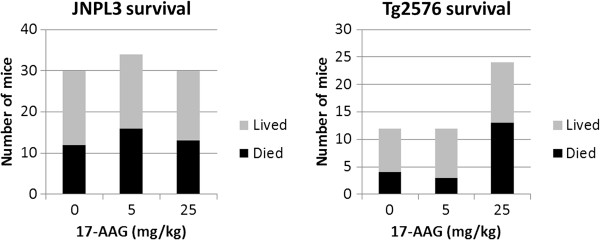
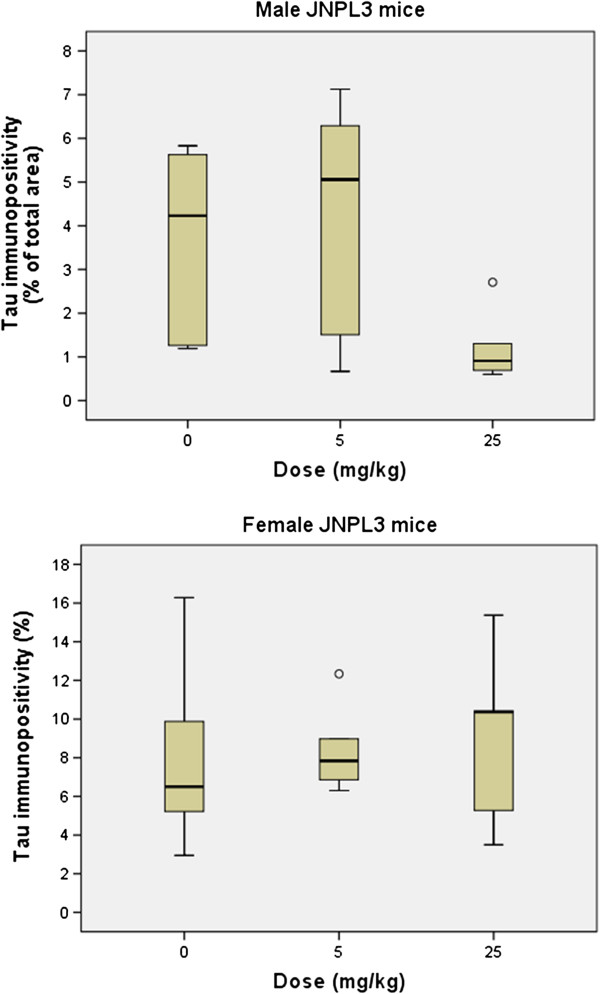
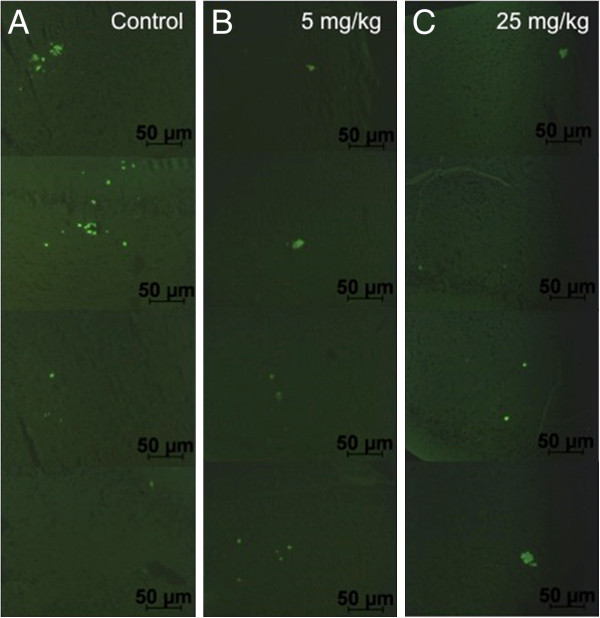
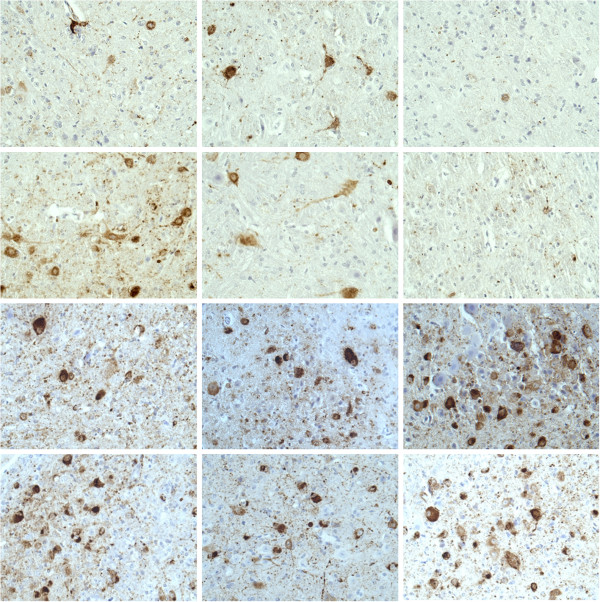
Alzheimer's disease (AD), the most common dementia, is characterized by potentially neurotoxic aggregation of Aβ peptide and tau protein, and their deposition as amyloid plaques and neurofibrillary tangles (NFTs). Tau aggregation also occurs in other common neurodegenerative diseases. Frontotemporal dementia (FTD) can be caused by tau mutations that increase the susceptibility of tau to hyperphosphorylation and aggregation, which may cause neuronal dysfunction and deposition of NFTs. 17-allylamino-17-demethoxygeldanamycin (17-AAG) is a potent inhibitor of heat shock protein 90 (Hsp90), a cytosolic chaperone implicated in the proper folding and functions of a repertoire of client proteins. 17-AAG binds to Hsp90 and enhances degradation of Hsp90 client protein. We sought to determine whether 17-AAG can reduce Aβ and tau pathology in the brains of AD and FTD model mice expressing Aβ or P301L mutant tau, respectively. Mice were randomized to receive 25, 5, or 0 mg/kg 17-AAG thrice weekly from age eight to 11 months. Analysis was performed by rotarod test on motor function, on the area occupied by plaques in hippocampus or NFTs in medulla tissue sections, and on mortality. A high dose of 17-AAG tended to decrease NFTs in male mice (p = 0.08). Further studies are required to confirm the effect of 17-AAG in diseases of tau aggregation.
阿尔茨海默病(AD)是最常见的痴呆症,其特征是 Aβ 肽和 tau 蛋白的潜在神经毒性聚集,以及它们作为淀粉样斑块和神经原纤维缠结(NFTs)的沉积。tau 聚集也发生在其他常见的神经退行性疾病中。额颞叶痴呆(FTD)可由增加 tau 易发生过度磷酸化和聚集的 tau 突变引起,这可能导致神经元功能障碍和 NFTs 的沉积。17-烯丙基-17-去甲氧基格尔德霉素(17-AAG)是热休克蛋白 90(Hsp90)的有效抑制剂,Hsp90 是一种细胞溶质伴侣,涉及一系列客户蛋白的正确折叠和功能。17-AAG 与 Hsp90 结合并增强 Hsp90 客户蛋白的降解。我们试图确定 17-AAG 是否可以减少表达 Aβ 或 P301L 突变 tau 的 AD 和 FTD 模型小鼠大脑中的 Aβ 和 tau 病理学。从 8 月龄到 11 月龄,每周三次随机给予小鼠 25、5 或 0mg/kg 17-AAG。通过旋转棒试验分析运动功能、海马体中斑块的面积或髓质组织切片中 NFT 的面积以及死亡率。高剂量的 17-AAG 可能会降低雄性小鼠的 NFT (p=0.08)。需要进一步的研究来确认 17-AAG 在 tau 聚集疾病中的作用。