Instituto Gulbenkian de Ciência, Oeiras, Portugal.
Instituto Gulbenkian de Ciência, Oeiras, Portugal ; Unidade de Imunologia Clínica, Instituto de Medicina Molecular, Faculdade de Medicina da Universidade de Lisboa, Lisboa, Portugal.
PLoS Pathog. 2013;9(12):e1003802. doi: 10.1371/journal.ppat.1003802. Epub 2013 Dec 12.
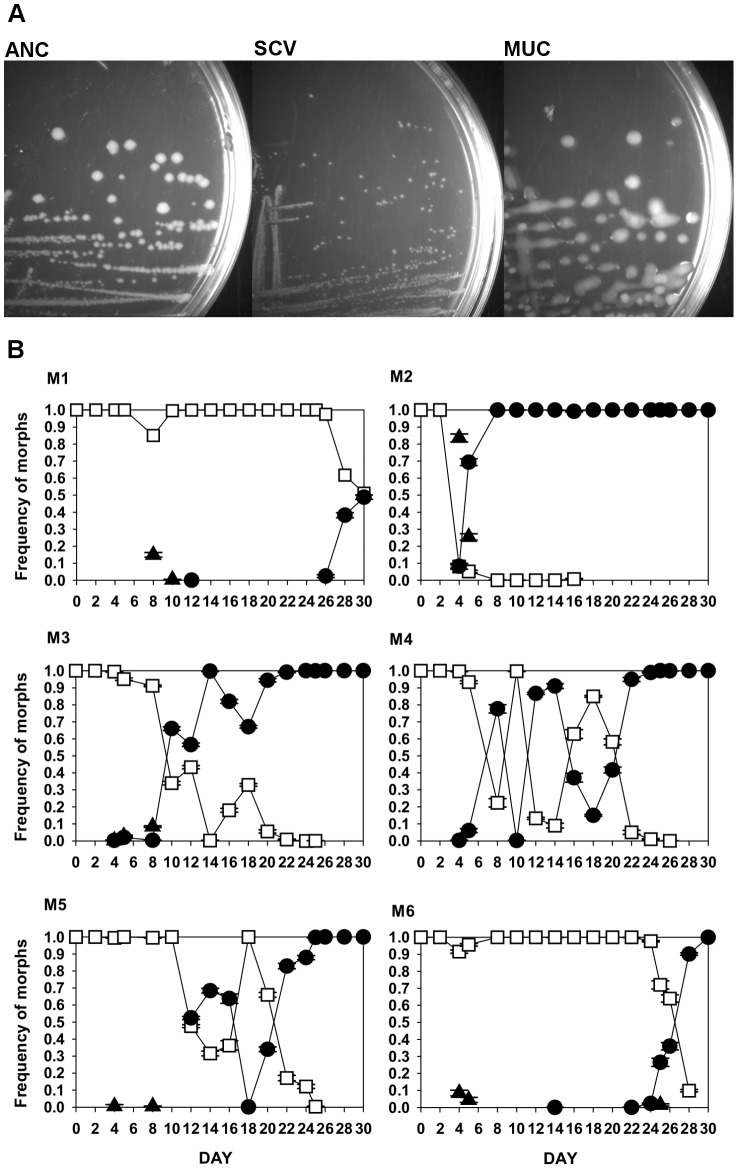
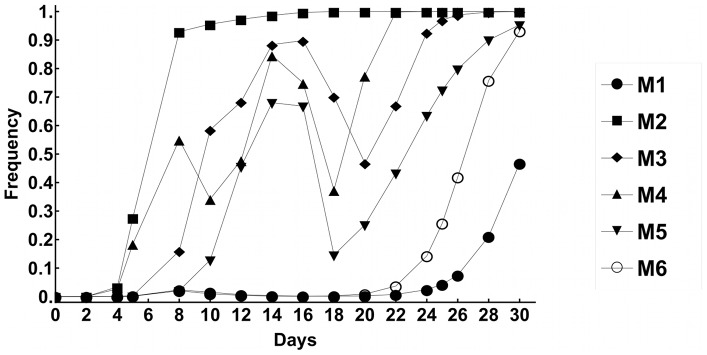
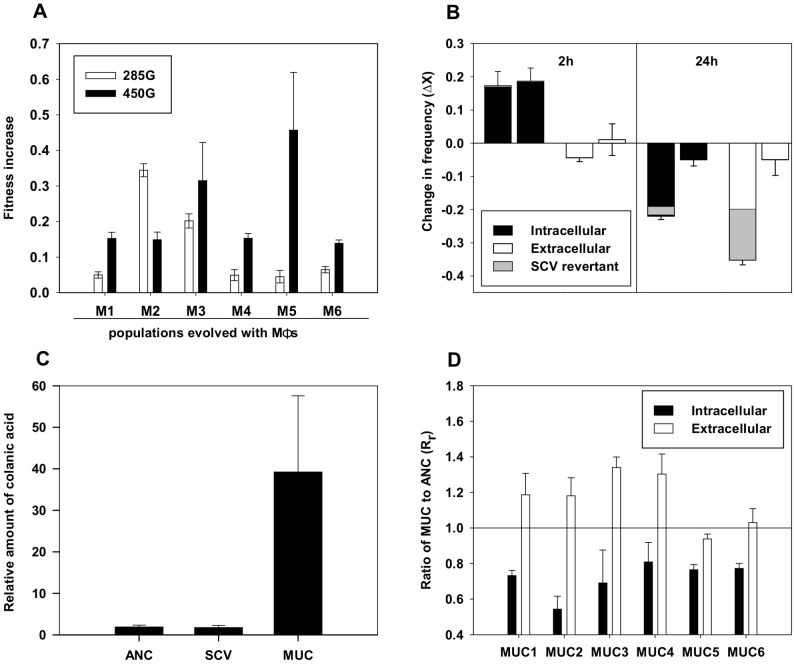
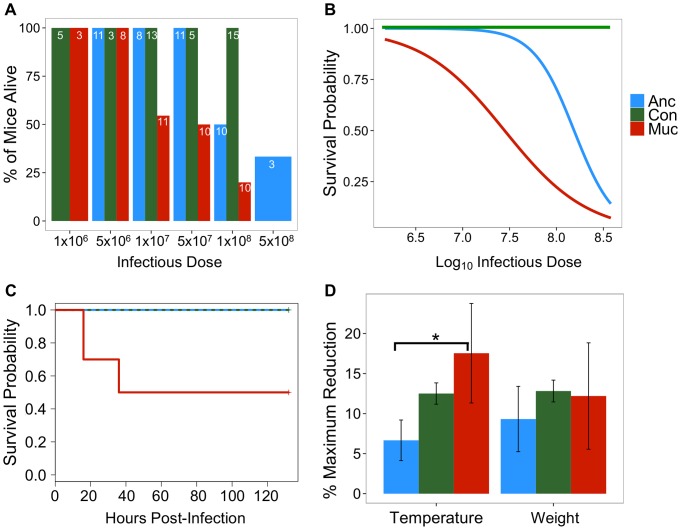
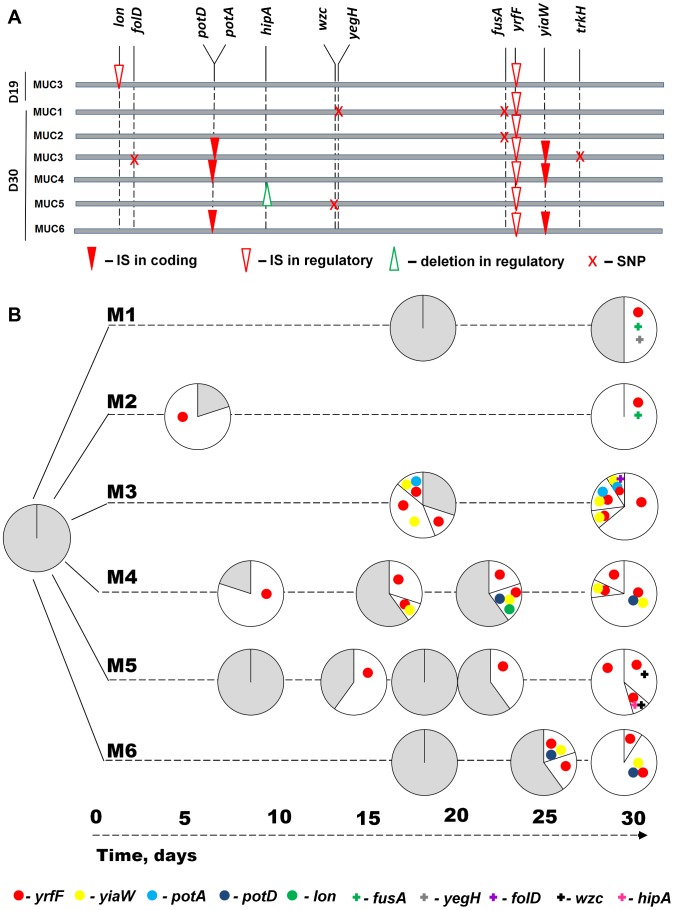
Antagonistic interactions are likely important driving forces of the evolutionary process underlying bacterial genome complexity and diversity. We hypothesized that the ability of evolved bacteria to escape specific components of host innate immunity, such as phagocytosis and killing by macrophages (MΦ), is a critical trait relevant in the acquisition of bacterial virulence. Here, we used a combination of experimental evolution, phenotypic characterization, genome sequencing and mathematical modeling to address how fast, and through how many adaptive steps, a commensal Escherichia coli (E. coli) acquire this virulence trait. We show that when maintained in vitro under the selective pressure of host MΦ commensal E. coli can evolve, in less than 500 generations, virulent clones that escape phagocytosis and MΦ killing in vitro, while increasing their pathogenicity in vivo, as assessed in mice. This pathoadaptive process is driven by a mechanism involving the insertion of a single transposable element into the promoter region of the E. coli yrfF gene. Moreover, transposition of the IS186 element into the promoter of Lon gene, encoding an ATP-dependent serine protease, is likely to accelerate this pathoadaptive process. Competition between clones carrying distinct beneficial mutations dominates the dynamics of the pathoadaptive process, as suggested from a mathematical model, which reproduces the observed experimental dynamics of E. coli evolution towards virulence. In conclusion, we reveal a molecular mechanism explaining how a specific component of host innate immunity can modulate microbial evolution towards pathogenicity.
拮抗相互作用可能是细菌基因组复杂性和多样性进化过程的重要驱动力。我们假设,进化后的细菌逃避宿主固有免疫的特定成分(如吞噬作用和巨噬细胞[MΦ]杀伤)的能力是与细菌毒力获得相关的关键特征。在这里,我们使用实验进化、表型特征、基因组测序和数学建模相结合的方法来研究共生大肠杆菌(E. coli)需要多长时间、通过多少适应步骤才能获得这种毒力特征。我们发现,当在体外受到宿主 MΦ的选择压力时,共生的大肠杆菌在不到 500 代的时间内就可以进化出能够逃避体外吞噬作用和 MΦ杀伤的毒力克隆,同时在小鼠体内增加其致病性。这个适应过程是由一种机制驱动的,该机制涉及将一个单一的转座元件插入到大肠杆菌 yrfF 基因的启动子区域。此外,IS186 元件插入编码 ATP 依赖性丝氨酸蛋白酶的 Lon 基因的启动子可能会加速这个适应过程。正如数学模型所建议的那样,从携带不同有益突变的克隆之间的竞争主导了适应过程的动态,该模型再现了观察到的大肠杆菌向毒力进化的实验动态。总之,我们揭示了一个分子机制,解释了宿主固有免疫的特定成分如何调节微生物向致病性的进化。