Cardelli Marco, Zirngibl Ralph A, Boetto Jonathan F, McKenzie Kristen P, Troy Tammy-Claire, Turksen Kursad, Aubin Jane E
Department of Medical Biophysics, University of Toronto, Toronto, Ontario, Canada.
Department of Molecular Genetics, University of Toronto, Toronto, Ontario, Canada.
PLoS One. 2013 Dec 9;8(12):e81511. doi: 10.1371/journal.pone.0081511. eCollection 2013.
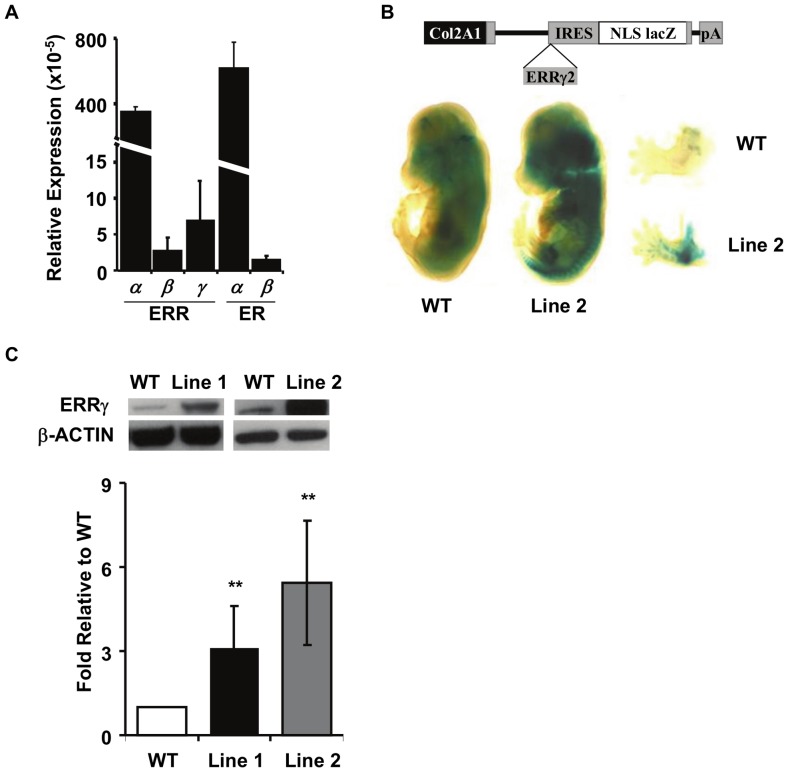
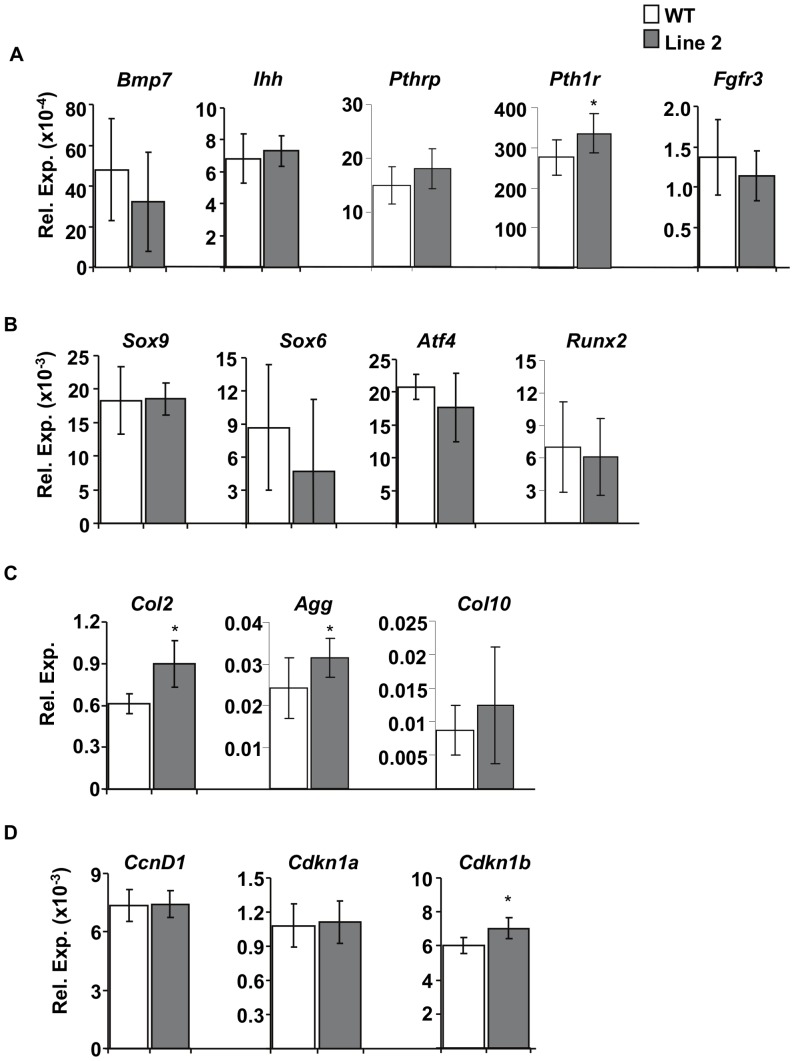
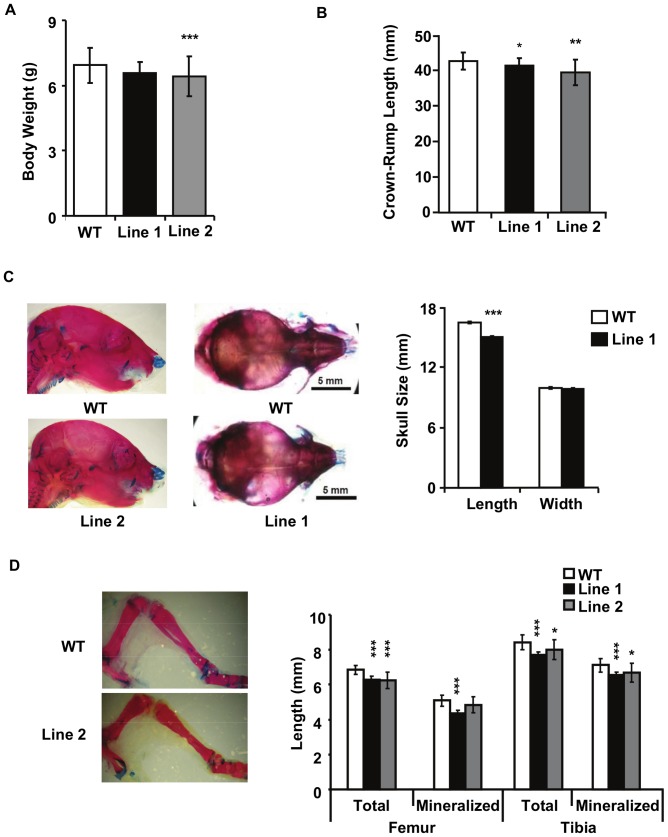
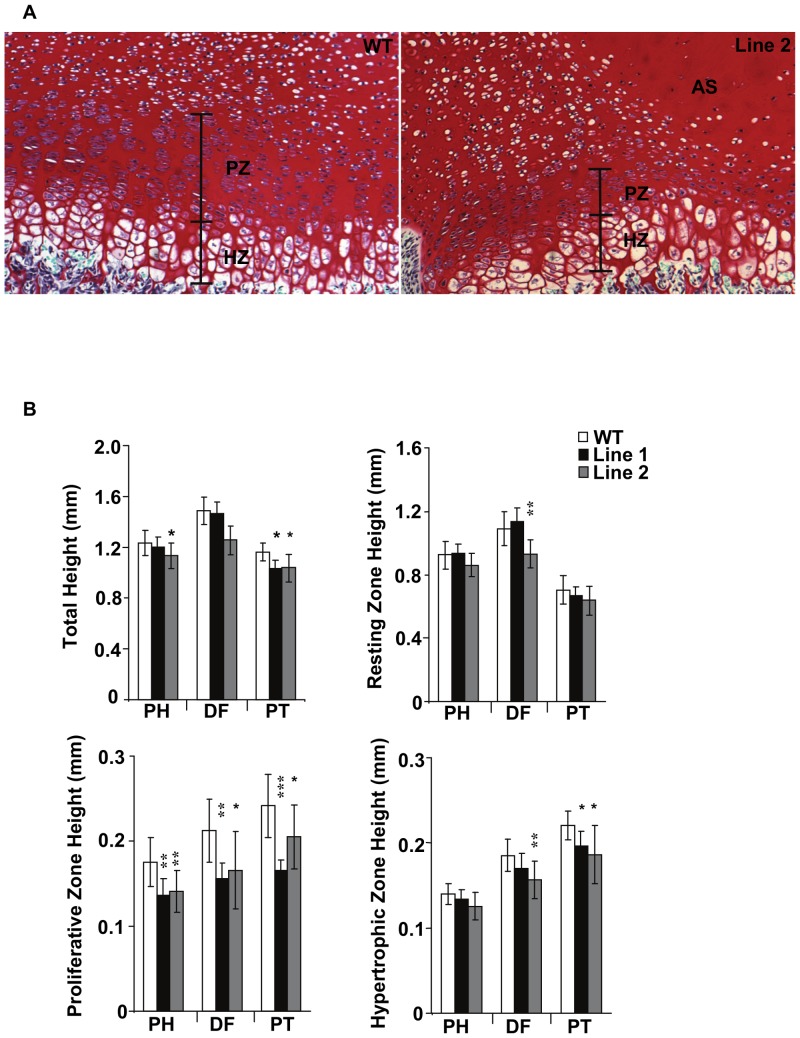
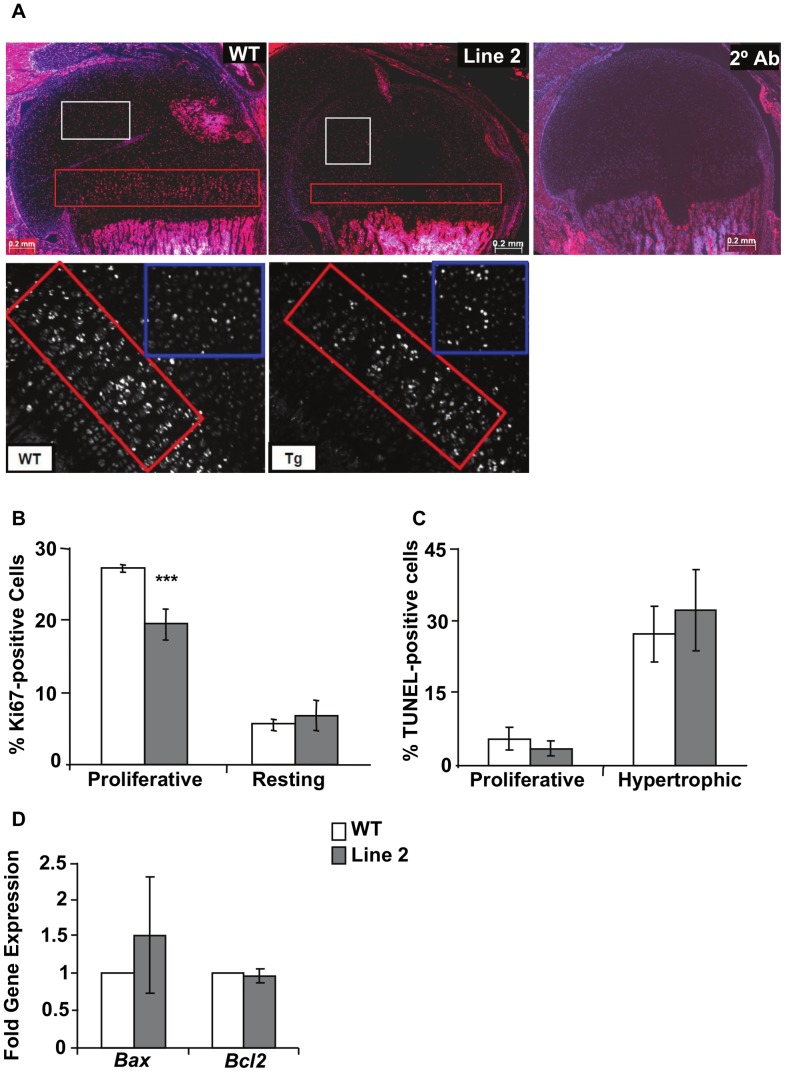
While the role of estrogen receptor-related receptor alpha (ERRα) in chondrogenesis has been investigated, the involvement of ERR gamma (ERRγ) has not been determined. To assess the effect of increased ERRγ activity on cartilage development in vivo, we generated two transgenic (Tg) lines overexpressing ERRγ2 via a chondrocyte-specific promoter; the two lines exhibited ∼3 and ∼5 fold increased ERRγ2 protein expression respectively in E14.5 Tg versus wild type (WT) limbs. On postnatal day seven (P7), we observed a 4-10% reduction in the size of the craniofacial, axial and appendicular skeletons in Tg versus WT mice. The reduction in bone length was already present at birth and did not appear to involve bones that are derived via intramembranous bone formation as the bones of the calvaria, clavicle, and the mandible developed normally. Histological analysis of P7 growth plates revealed a reduction in the length of the Tg versus WT growth plate, the majority of which was attributable to a reduced proliferative zone. The reduced proliferative zone paralleled a decrease in the number of Ki67-positive proliferating cells, with no significant change in apoptosis, and was accompanied by large cell-free swaths of cartilage matrix, which extended through multiple zones of the growth plate. Using a bioinformatics approach, we identified known chondrogenesis-associated genes with at least one predicted ERR binding site in their proximal promoters, as well as cell cycle regulators known to be regulated by ERRγ. Of the genes identified, Col2al, Agg, Pth1r, and Cdkn1b (p27) were significantly upregulated, suggesting that ERRγ2 negatively regulates chondrocyte proliferation and positively regulates matrix synthesis to coordinate growth plate height and organization.
虽然雌激素受体相关受体α(ERRα)在软骨形成中的作用已得到研究,但ERRγ在其中的作用尚未明确。为了评估ERRγ活性增加对体内软骨发育的影响,我们通过软骨细胞特异性启动子构建了两个过表达ERRγ2的转基因(Tg)品系;在胚胎第14.5天(E14.5),这两个品系的Tg小鼠四肢中ERRγ2蛋白表达分别比野生型(WT)增加了约3倍和约5倍。在出生后第7天(P7),我们观察到Tg小鼠与WT小鼠相比,颅面、躯干和附属骨骼的大小减少了4 - 10%。骨长度的减少在出生时就已出现,并且似乎不涉及通过膜内成骨形成的骨骼,因为颅骨、锁骨和下颌骨发育正常。对P7生长板的组织学分析显示,Tg生长板的长度比WT生长板短,这主要归因于增殖区缩短。增殖区缩短与Ki67阳性增殖细胞数量减少平行,细胞凋亡无显著变化,并且伴有大片无细胞的软骨基质,延伸穿过生长板的多个区域。使用生物信息学方法,我们鉴定了在其近端启动子中至少有一个预测ERR结合位点的已知软骨形成相关基因,以及已知受ERRγ调节的细胞周期调节因子。在鉴定出的基因中,Col2al、Agg、Pth1r和Cdkn1b(p27)显著上调,表明ERRγ2负向调节软骨细胞增殖,正向调节基质合成,以协调生长板的高度和组织结构。