Liver Research Center, Beijing Friendship Hospital, Capital Medical University, Beijing, China.
Department of Pathology, Institute of Basic Medical Sciences, Chinese Academy of Medical Sciences & Peking Union Medical College, Beijing, China.
PLoS One. 2013 Dec 13;8(12):e82426. doi: 10.1371/journal.pone.0082426. eCollection 2013.
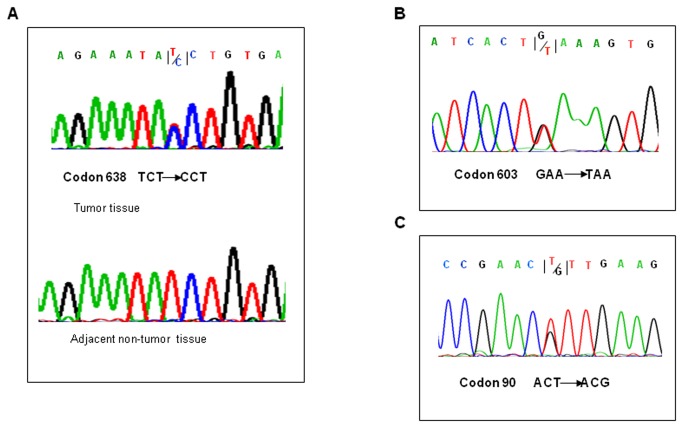
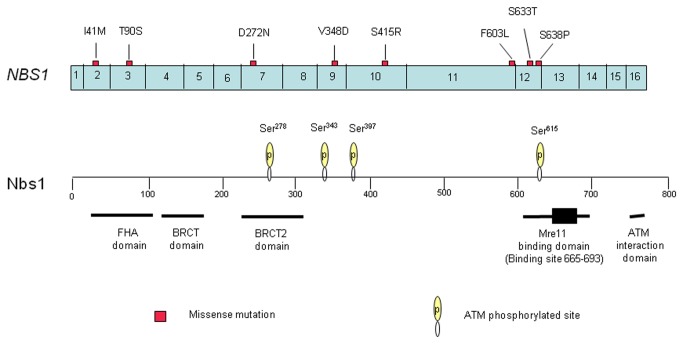
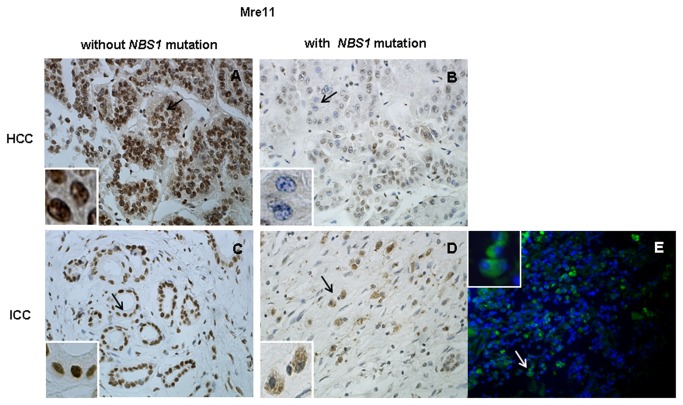
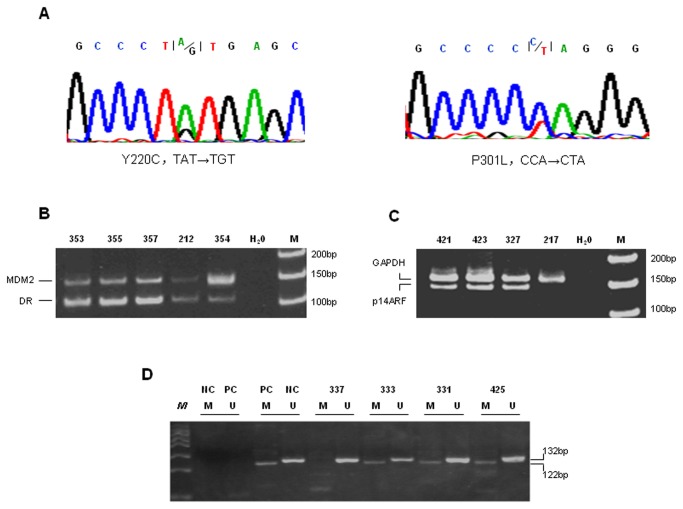
Nijmegen breakage syndrome (NBS) with NBS1 germ-line mutation is a human autosomal recessive disease characterized by genomic instability and enhanced cancer predisposition. The NBS1 gene codes for a protein, Nbs1(p95/Nibrin), involved in the processing/repair of DNA double-strand breaks. Hepatocellular carcinoma (HCC) is a complex and heterogeneous tumor with several genomic alterations. Recent studies have shown that heterozygous NBS1 mice exhibited a higher incidence of HCC than did wild-type mice. The objective of the present study is to assess whether NBS1 mutations play a role in the pathogenesis of human primary liver cancer, including HBV-associated HCC and intrahepatic cholangiocarcinoma (ICC). Eight missense NBS1 mutations were identified in six of 64 (9.4%) HCCs and two of 18 (11.1%) ICCs, whereas only one synonymous mutation was found in 89 control cases of cirrhosis and chronic hepatitis B. Analysis of the functional consequences of the identified NBS1 mutations in Mre11-binding domain showed loss of nuclear localization of Nbs1 partner Mre11, one of the hallmarks for Nbs1 deficiency, in one HCC and two ICCs with NBS1 mutations. Moreover, seven of the eight tumors with NBS1 mutations had at least one genetic alteration in the TP53 pathway, including TP53 mutation, MDM2 amplification, p14ARF homozygous deletion and promoter methylation, implying a synergistic effect of Nbs1 disruption and p53 inactivation. Our findings provide novel insight on the molecular pathogenesis of primary liver cancer characterized by mutation inactivation of NBS1, a DNA repair associated gene.
尼曼匹克氏症(NBS)伴 NBS1 种系突变是一种人类常染色体隐性疾病,其特征为基因组不稳定和增强的癌症易感性。NBS1 基因编码一种蛋白,即 Nbs1(p95/Nibrin),参与 DNA 双链断裂的加工/修复。肝细胞癌(HCC)是一种具有多种基因组改变的复杂异质性肿瘤。最近的研究表明,杂合 NBS1 小鼠 HCC 的发生率高于野生型小鼠。本研究的目的是评估 NBS1 突变是否在人类原发性肝癌的发病机制中起作用,包括 HBV 相关 HCC 和肝内胆管细胞癌(ICC)。在 64 例 HCC 中发现了 6 例(9.4%)和 18 例 ICC 中 2 例(11.1%)存在 8 种错义 NBS1 突变,而在 89 例肝硬化和慢性乙型肝炎对照病例中仅发现 1 种同义突变。对鉴定的 NBS1 突变在 Mre11 结合域中的功能后果进行分析,发现一个 HCC 和两个 ICC 中 Nbs1 伙伴 Mre11 的核定位丢失,这是 Nbs1 缺陷的一个标志。此外,8 个具有 NBS1 突变的肿瘤中,有 7 个至少有一种 TP53 通路的遗传改变,包括 TP53 突变、MDM2 扩增、p14ARF 纯合缺失和启动子甲基化,这表明 Nbs1 破坏和 p53 失活的协同效应。我们的研究结果为以 NBS1 突变失活为特征的原发性肝癌的分子发病机制提供了新的见解,NBS1 是一种与 DNA 修复相关的基因。