Department of Cardiology, Shanghai Tenth People's Hospital, Tongji University School of Medicine, Shanghai, China.
Department of Ophthalmology, Eye & ENT Hospital, Fudan University School of Medicine, Shanghai, China.
PLoS One. 2013 Dec 9;8(12):e82509. doi: 10.1371/journal.pone.0082509. eCollection 2013.
Recent studies have found additional roles for vinpocetine, a potent phosphodiesterase type I inhibitor, in anti-proliferation and anti-inflammation of vascular smooth muscle cells and cancer cells via different mechanisms. In this study, we attempted to investigate whether vinpocetine protected against atherosclerotic development in apoE(-/-) mice and explore the underlying anti-atherogenic mechanisms in macrophages.
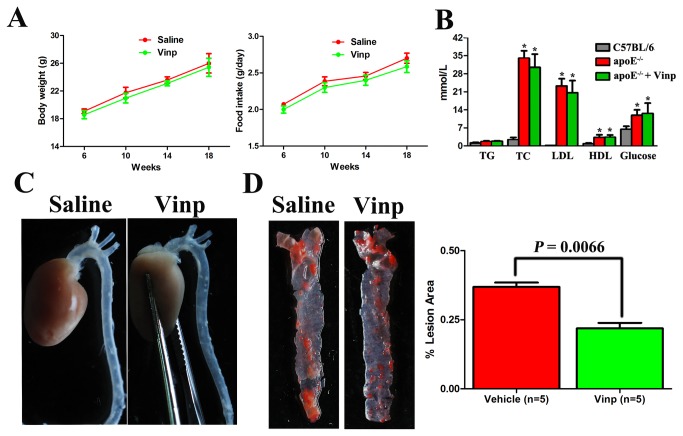
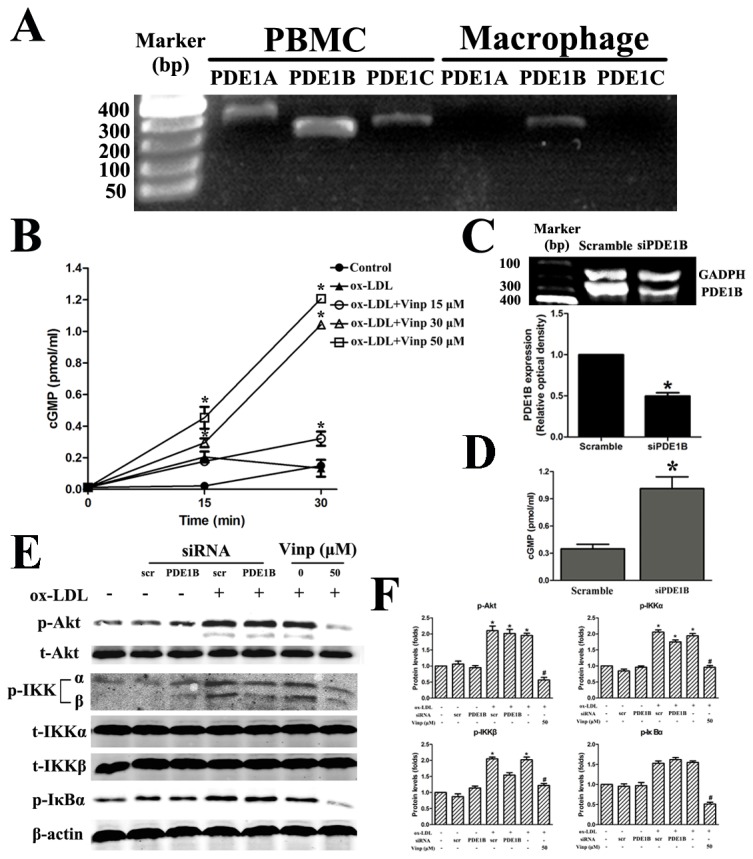
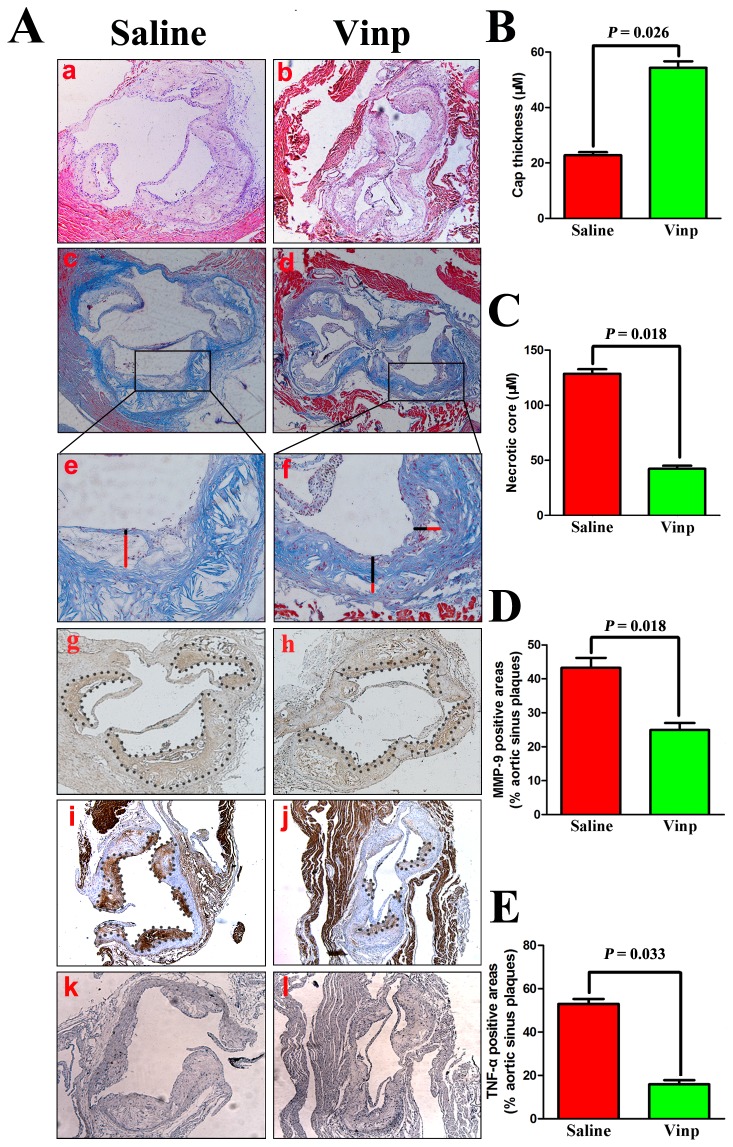
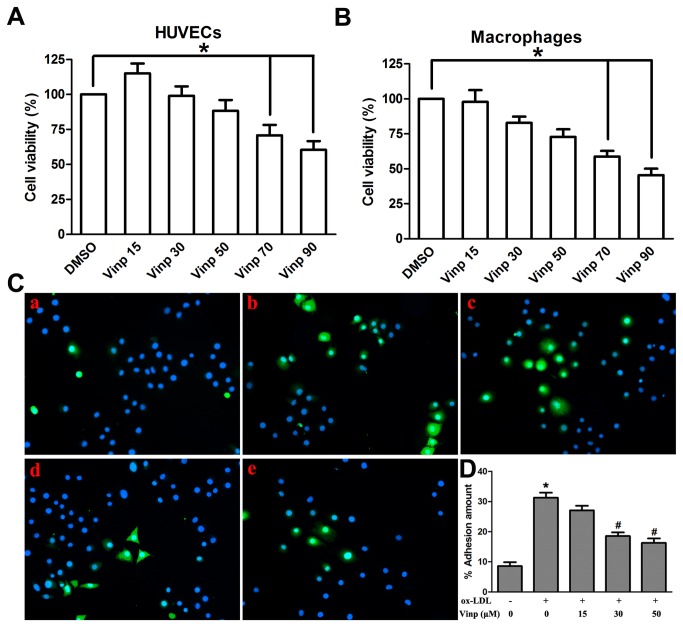
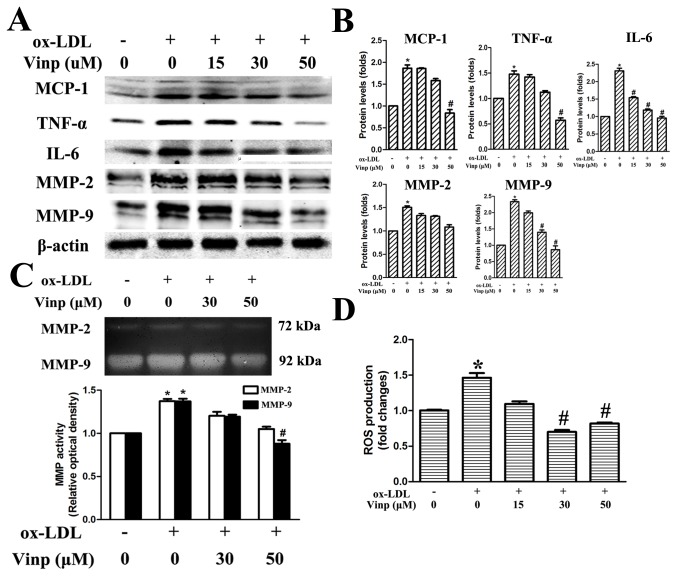
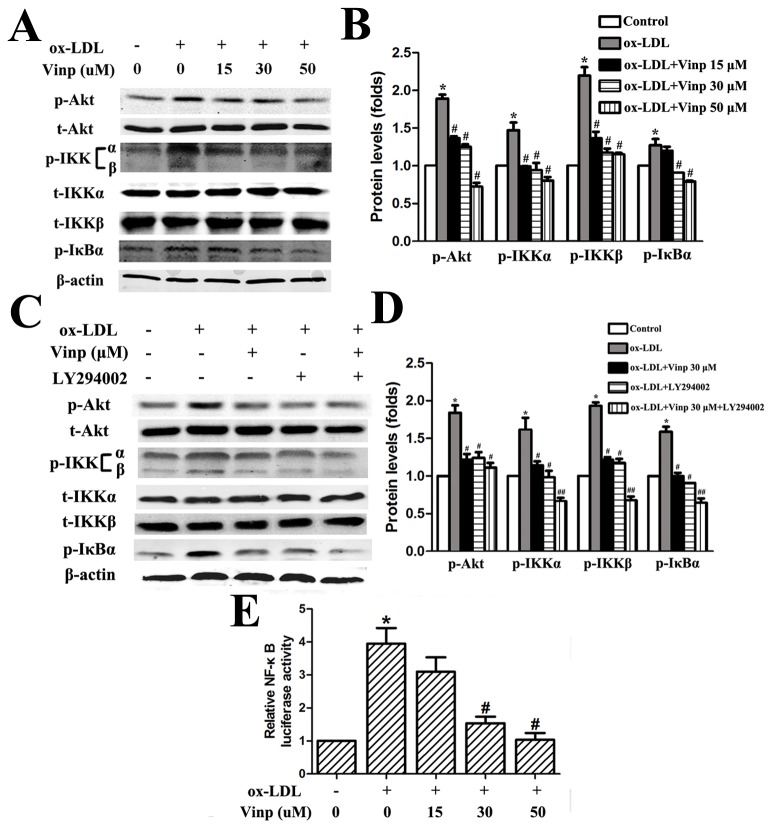
METHODOLOGY/PRINCIPAL FINDINGS: Vinpocetine markedly decreased atherosclerotic lesion size in apoE(-/-) mice measured by oil red O. Masson's trichrome staining and immunohistochemical analyses revealed that vinpocetine significantly increased the thickness of fibrous cap, reduced the size of lipid-rich necrotic core and attenuated inflammation. In vitro experiments exhibited a significant decrease in monocyte adhesion treated with vinpocetine. Further, active TNF-α, IL-6, monocyte chemoattractant protein-1 and matrix metalloproteinase-9 expression induced by ox-LDL were attenuated by vinpocetine in a dose-dependent manner. Similarly, ox-LDL-induced reactive oxygen species were significantly repressed by vinpocetine. Both western blot and luciferase activity assay showed that vinpocetine inhibited the enhanced Akt, IKKα/β, IκBα phosphorylation and NF-κB activity induced by ox-LDL, and the inhibition of NF-κB activity was partly caused by Akt dephosphorylation. However, knockdown of PDE1B did not affect Akt, IKKα/β and IκBα phosphorylation.
These results suggest that vinpocetine exerts anti-atherogenic effects through inhibition of monocyte adhesion, oxidative stress and inflammatory response, which are mediated by Akt/NF-κB dependent pathway but independent of PDE1 blockade in macrophages.
最近的研究发现,作为一种强效的磷酸二酯酶 I 抑制剂,长春西汀通过不同的机制,在血管平滑肌细胞和癌细胞的抗增殖和抗炎方面具有额外的作用。在本研究中,我们试图探讨长春西汀是否能防止载脂蛋白 E 基因敲除(apoE(-/-))小鼠的动脉粥样硬化发展,并探索其在巨噬细胞中的潜在抗动脉粥样硬化机制。
方法/主要发现:油红 O 染色、马松三色染色和免疫组化分析表明,长春西汀可显著减少 apoE(-/-) 小鼠的动脉粥样硬化病变面积,增加纤维帽厚度,减少富含脂质的坏死核心大小,并减轻炎症。体外实验显示,长春西汀处理后单核细胞黏附显著减少。此外,长春西汀呈剂量依赖性地减弱 ox-LDL 诱导的活性 TNF-α、IL-6、单核细胞趋化蛋白-1 和基质金属蛋白酶-9 的表达。同样,长春西汀显著抑制 ox-LDL 诱导的活性氧产生。Western blot 和荧光素酶活性测定显示,长春西汀抑制 ox-LDL 诱导的 Akt、IKKα/β、IκBα磷酸化和 NF-κB 活性增强,NF-κB 活性的抑制部分是由于 Akt 去磷酸化。然而,PDE1B 的敲低并不影响 Akt、IKKα/β 和 IκBα的磷酸化。
这些结果表明,长春西汀通过抑制单核细胞黏附、氧化应激和炎症反应发挥抗动脉粥样硬化作用,该作用是通过 Akt/NF-κB 依赖性途径介导的,但与巨噬细胞中 PDE1 的阻断无关。