Department of Bioelectrochemistry and Biospectroscopy, Institute of Biochemistry, Vilnius University, Vilnius, Lithuania ; Bio Complexity Department, The Niels Bohr Institute, Copenhagen University, Copenhagen, Denmark.
Department of Immunology and Cell Biology, Institute of Biotechnology, Vilnius University, Vilnius, Lithuania.
PLoS One. 2013 Dec 13;8(12):e82536. doi: 10.1371/journal.pone.0082536. eCollection 2013.
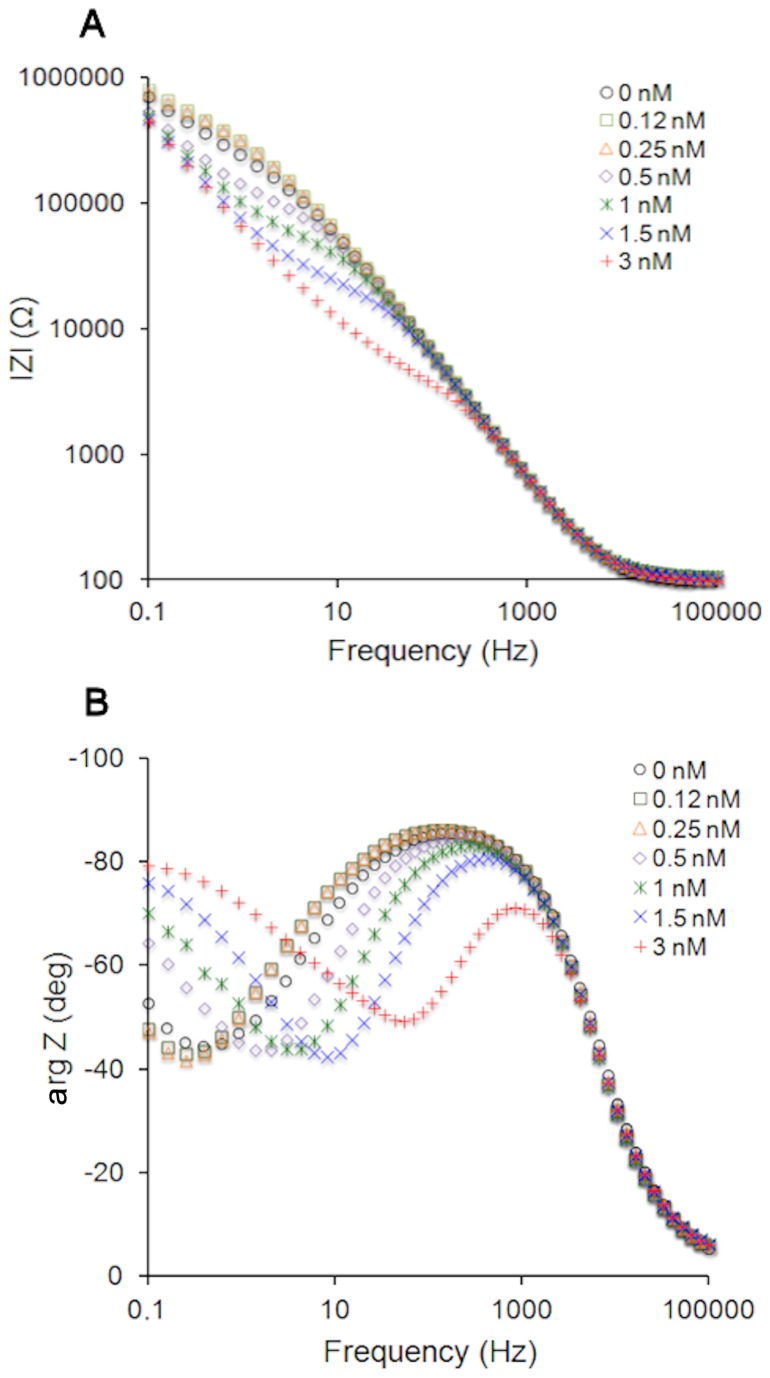
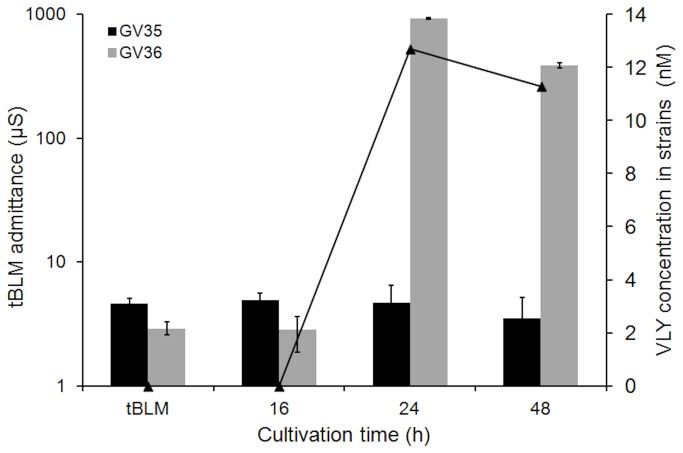
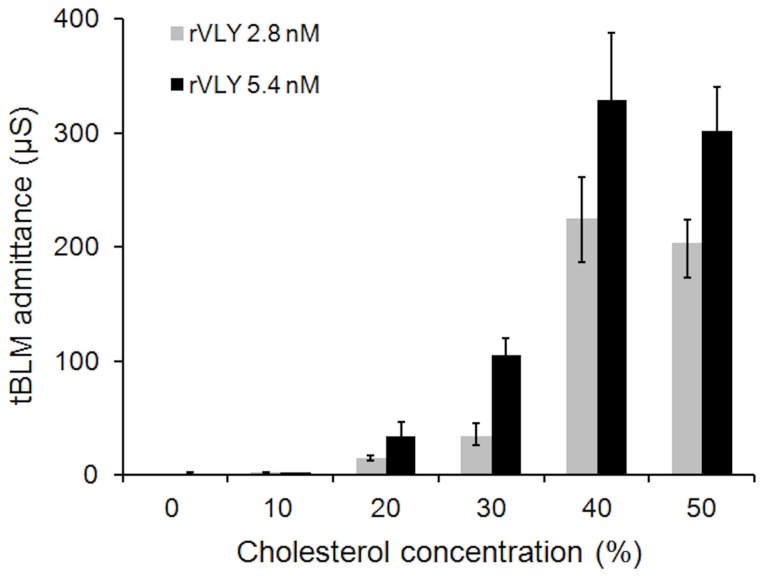
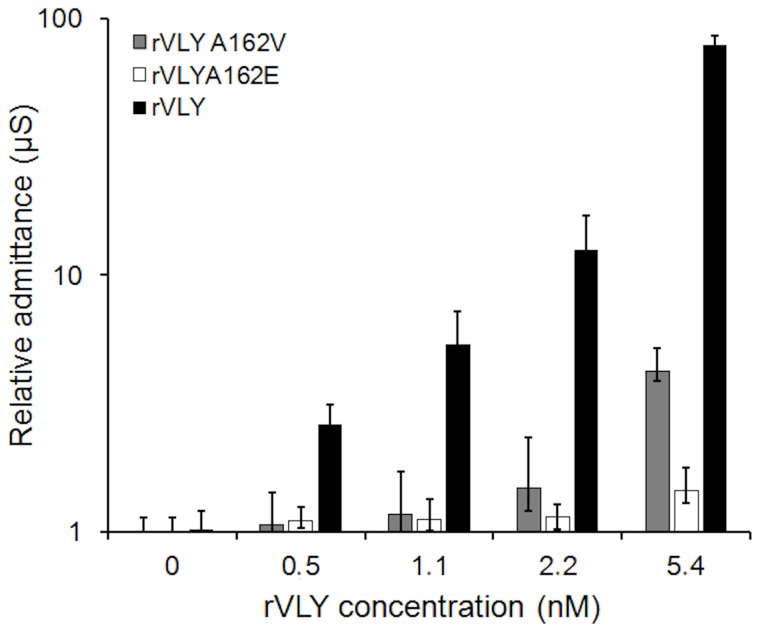
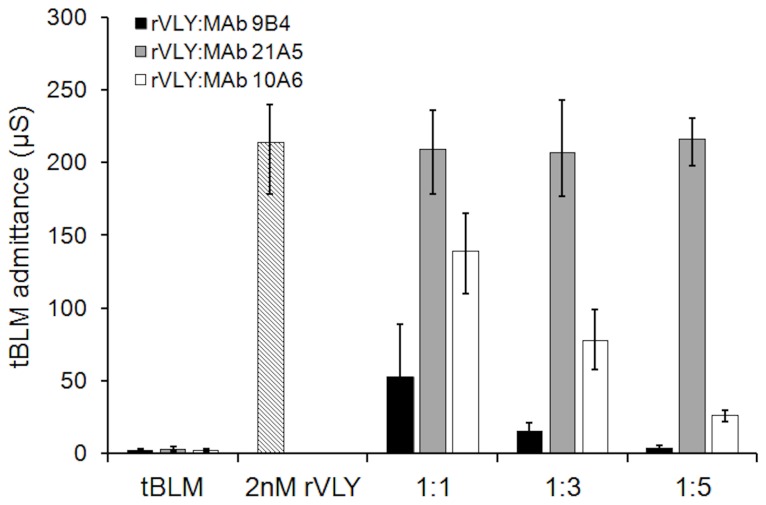
Functional reconstitution of the cholesterol-dependent cytolysin vaginolysin (VLY) from Gardnerella vaginalis into artificial tethered bilayer membranes (tBLMs) has been accomplished. The reconstitution of VLY was followed in real-time by electrochemical impedance spectroscopy (EIS). Changes of the EIS parameters of the tBLMs upon exposure to VLY solutions were consistent with the formation of water-filled pores in the membranes. It was found that reconstitution of VLY is a strictly cholesterol-dependent, irreversible process. At a constant cholesterol concentration reconstitution of VLY occurred in a concentration-dependent manner, thus allowing the monitoring of VLY concentration and activity in vitro and opening possibilities for tBLM utilization in bioanalysis. EIS methodology allowed us to detect VLY down to 0.5 nM (28 ng/mL) concentration. Inactivation of VLY by certain amino acid substitutions led to noticeably lesser tBLM damage. Pre-incubation of VLY with the neutralizing monoclonal antibody 9B4 inactivated the VLY membrane damage in a concentration-dependent manner, while the non-neutralizing antibody 21A5 exhibited no effect. These findings demonstrate the biological relevance of the interaction between VLY and the tBLM. The membrane-damaging interaction between VLY and tBLM was observed in the absence of the human CD59 receptor, known to strongly facilitate the hemolytic activity of VLY. Taken together, our study demonstrates the applicability of tBLMs as a bioanalytical platform for the detection of the activity of VLY and possibly other cholesterol-dependent cytolysins.
已成功将阴道加德纳菌中的胆固醇依赖性细胞溶解素 vaginolysin(VLY)功能重建到人工连接双层膜(tBLM)中。通过电化学阻抗谱(EIS)实时跟踪 VLY 的重建。暴露于 VLY 溶液后 tBLM 的 EIS 参数的变化与膜中形成充满水的孔一致。发现 VLY 的重建是严格依赖胆固醇的不可逆过程。在恒定胆固醇浓度下,VLY 的重建呈浓度依赖性,从而允许在体外监测 VLY 的浓度和活性,并为 tBLM 在生物分析中的应用开辟可能性。EIS 方法允许我们检测到低至 0.5 nM(28 ng/mL)浓度的 VLY。某些氨基酸取代导致 VLY 的失活会导致 tBLM 损伤明显减少。VLY 与中和单克隆抗体 9B4 的预孵育以浓度依赖性方式使 VLY 膜损伤失活,而非中和抗体 21A5 则没有效果。这些发现证明了 VLY 与 tBLM 之间相互作用的生物学相关性。在缺乏已知可强烈促进 VLY 溶血活性的人 CD59 受体的情况下,观察到 VLY 与 tBLM 之间的膜损伤相互作用。总之,我们的研究表明 tBLM 可作为检测 VLY 及可能其他胆固醇依赖性细胞溶解素活性的生物分析平台的适用性。