Zhang Junfeng, Zhang Zongqi, Zhang David Y, Zhu Jianbing, Zhang Tiantian, Wang Changqian
Department of Cardiology, Ninth People's Hospital, Shanghai Jiao Tong University School of Medicine, Shanghai, China.
Department of Cardiology, Third People's Hospital, Shanghai Jiao Tong University School of Medicine, Shanghai, China.
PLoS One. 2013 Dec 13;8(12):e83294. doi: 10.1371/journal.pone.0083294. eCollection 2013.
Endothelial progenitor cells (EPCs) are capable of proliferating and differentiating into mature endothelial cells, and they have been considered as potential candidates for coronary heart disease therapy. However, the transition of EPCs to mesenchymal cells is not fully understood. This study aimed to explore the role of microRNA 126 (miR-126) in the endothelial-to-mesenchymal transition (EndMT) induced by transforming growth factor beta 1 (TGFβ1).
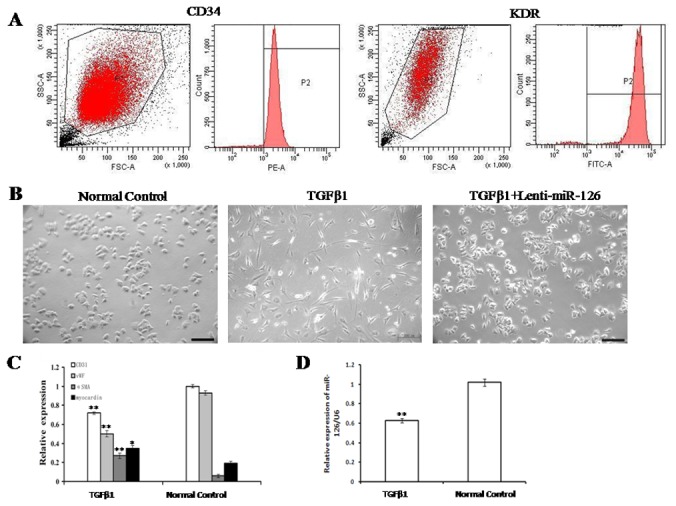
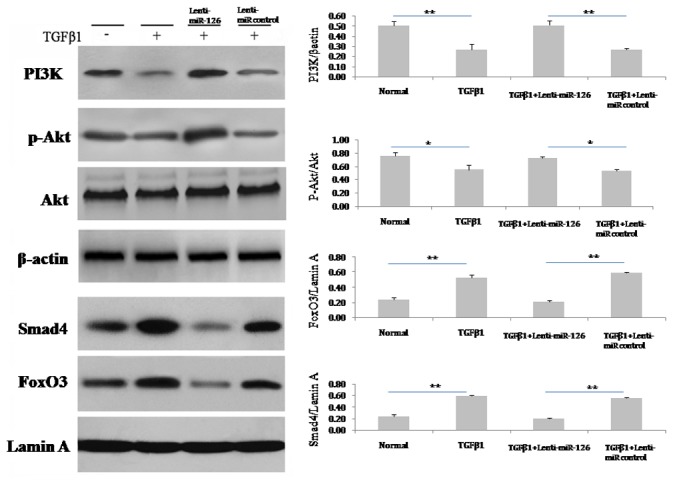
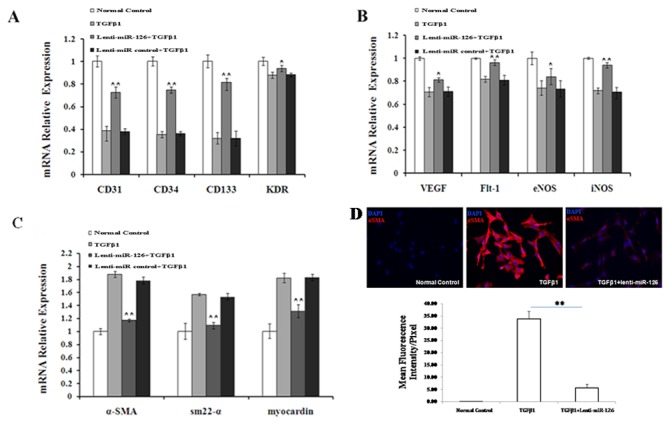
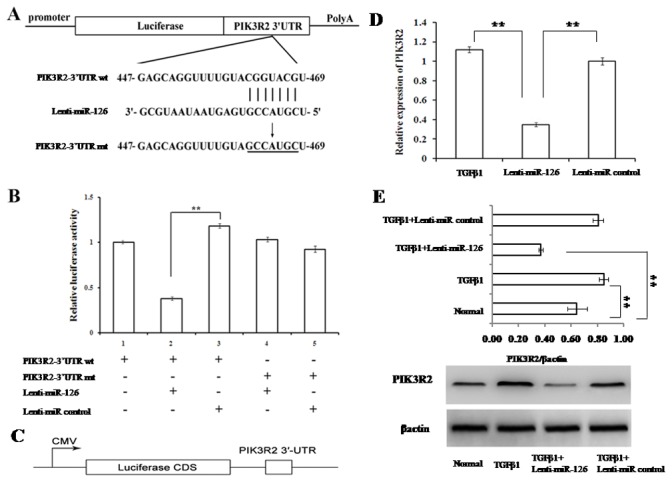
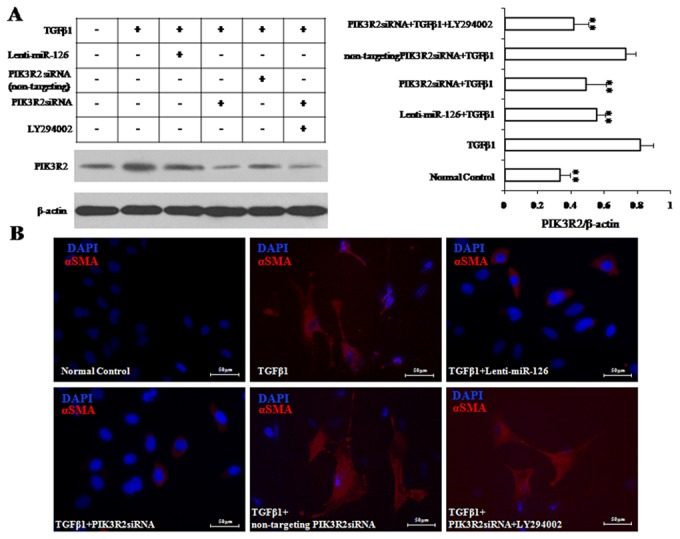
EndMT of rat bone marrow-derived EPCs was induced by TGFβ1 (5 ng/mL) for 7 days. miR-126 expression was depressed in the process of EPC EndMT. The luciferase reporter assay showed that the PI3K regulatory subunit p85 beta (PIK3R2) was a direct target of miR-126 in EPCs. Overexpression of miR-126 by a lentiviral vector (lenti-miR-126) was found to downregulate the mRNA expression of mesenchymal cell markers (α-SMA, sm22-a, and myocardin) and to maintain the mRNA expression of progenitor cell markers (CD34, CD133). In the cellular process of EndMT, there was an increase in the protein expression of PIK3R2 and the nuclear transcription factors FoxO3 and Smad4; PI3K and phosphor-Akt expression decreased, a change that was reversed markedly by overexpression of miR-126. Furthermore, knockdown of PIK3R2 gene expression level showed reversed morphological changes of the EPCs treated with TGFβ1, thereby giving the evidence that PIK3R2 is the target gene of miR-126 during EndMT process.
These results show that miR-126 targets PIK3R2 to inhibit EPC EndMT and that this process involves regulation of the PI3K/Akt signalling pathway. miR-126 has the potential to be used as a biomarker for the early diagnosis of intimal hyperplasia in cardiovascular disease and can even be a therapeutic tool for treating cardiovascular diseases mediated by the EndMT process.
内皮祖细胞(EPCs)能够增殖并分化为成熟的内皮细胞,它们被视为冠心病治疗的潜在候选细胞。然而,EPCs向间充质细胞的转变尚未完全明确。本研究旨在探讨微小RNA 126(miR - 126)在转化生长因子β1(TGFβ1)诱导的内皮 - 间充质转化(EndMT)中的作用。
用TGFβ1(5 ng/mL)诱导大鼠骨髓来源的EPCs发生EndMT 7天。在EPCs的EndMT过程中,miR - 126表达降低。荧光素酶报告基因检测表明,PI3K调节亚基p85β(PIK3R2)是EPCs中miR - 126的直接靶标。发现通过慢病毒载体(lenti - miR - 126)过表达miR - 126可下调间充质细胞标志物(α - SMA、sm22 - a和心肌肌动蛋白)的mRNA表达,并维持祖细胞标志物(CD34、CD133)的mRNA表达。在EndMT的细胞过程中,PIK3R2以及核转录因子FoxO3和Smad4的蛋白表达增加;PI3K和磷酸化Akt表达降低,而miR - 126过表达可显著逆转这种变化。此外,敲低PIK3R2基因表达水平显示,经TGFβ1处理的EPCs的形态变化得到逆转,从而证明PIK3R2是EndMT过程中miR - 126的靶基因。
这些结果表明,miR - 126靶向PIK3R2以抑制EPCs的EndMT,且该过程涉及PI3K/Akt信号通路的调节。miR - 126有潜力用作心血管疾病内膜增生早期诊断的生物标志物,甚至可成为治疗由EndMT过程介导的心血管疾病的治疗工具。