Qiu Feng, Cole Michael H, Davids Keith W, Hennig Ewald M, Silburn Peter A, Netscher Heather, Kerr Graham K
Department of Neurology, Nanjing Brain Hospital affiliated with Nanjing Medical University, Nanjing, Jiangsu Province, China ; Movement Neuroscience Program, Institute of Health and Biomedical Innovation, Queensland University of Technology, Brisbane, Queensland, Australia ; School of Exercise and Nutrition Sciences, Queensland University of Technology, Brisbane, Queensland, Australia.
Movement Neuroscience Program, Institute of Health and Biomedical Innovation, Queensland University of Technology, Brisbane, Queensland, Australia ; School of Exercise Science, Australian Catholic University, Brisbane, Queensland, Australia.
PLoS One. 2013 Dec 12;8(12):e83309. doi: 10.1371/journal.pone.0083309. eCollection 2013.
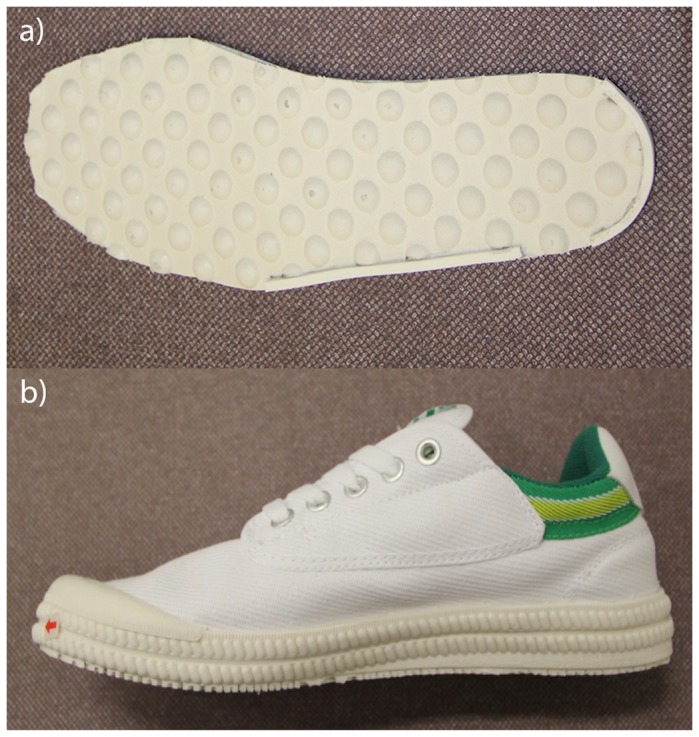
Degradation of the somatosensory system has been implicated in postural instability and increased falls risk for older people and Parkinson's disease (PD) patients. Here we demonstrate that textured insoles provide a passive intervention that is an inexpensive and accessible means to enhance the somatosensory input from the plantar surface of the feet.
20 healthy older adults (controls) and 20 participants with PD were recruited for the study. We evaluated effects of manipulating somatosensory information from the plantar surface of the feet using textured insoles. Participants performed standing tests, on two different surfaces (firm and foam), under three footwear conditions: 1) barefoot; 2) smooth insoles; and 3) textured insoles. Standing balance was evaluated using a force plate yielding data on the range of anterior-posterior and medial-lateral sway, as well as standard deviations for anterior-posterior and medial-lateral sway.
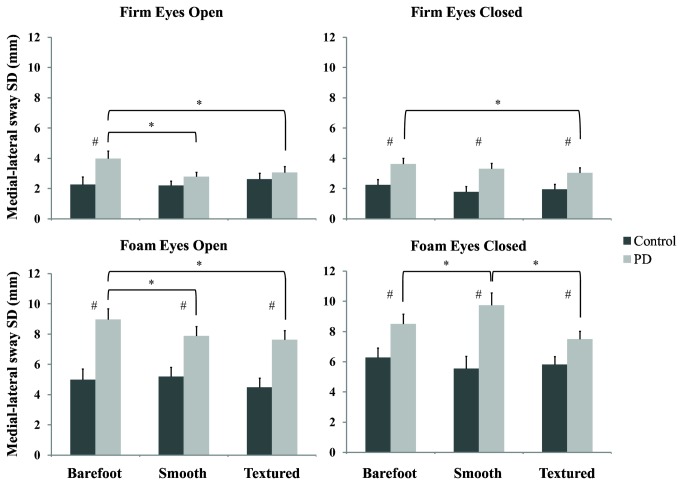
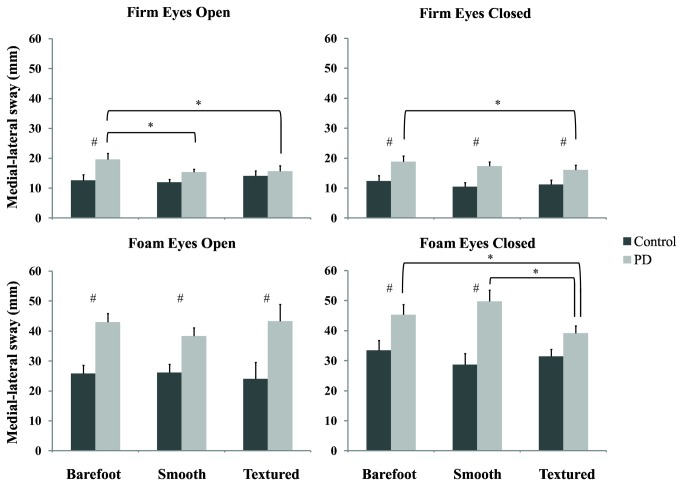
On the firm surface with eyes open both the smooth and textured insoles reduced medial-lateral sway in the PD group to a similar level as the controls. Only the textured insole decreased medial-lateral sway and medial-lateral sway standard deviation in the PD group on both surfaces, with and without visual input. Greatest benefits were observed in the PD group while wearing the textured insoles, and when standing on the foam surface with eyes closed.
Data suggested that textured insoles may provide a low-cost means of improving postural stability in high falls-risk groups, such as people with PD.
体感系统的退化与老年人和帕金森病(PD)患者的姿势不稳及跌倒风险增加有关。在此我们证明,有纹理的鞋垫提供了一种被动干预措施,是一种廉价且易于获得的增强来自足底表面体感输入的方法。
招募了20名健康老年人(对照组)和20名PD患者参与该研究。我们评估了使用有纹理的鞋垫操纵来自足底表面体感信息的效果。参与者在两种不同表面(硬地面和泡沫)上,在三种鞋类条件下进行站立测试:1)赤脚;2)光滑鞋垫;3)有纹理的鞋垫。使用测力板评估站立平衡,该测力板可得出前后和内外侧摆动范围以及前后和内外侧摆动的标准差数据。
在硬地面上睁眼时,光滑和有纹理的鞋垫都将PD组的内外侧摆动减少到与对照组相似的水平。仅在有纹理的鞋垫条件下,无论有无视觉输入,PD组在两种表面上的内外侧摆动及内外侧摆动标准差均降低。在PD组中,当穿着有纹理的鞋垫且闭眼站在泡沫表面时观察到最大益处。
数据表明,有纹理的鞋垫可能为改善高跌倒风险人群(如PD患者)的姿势稳定性提供一种低成本方法。