Department of Geratology, First Hospital of Jilin University, Changchun, Jilin 130021, China.
College of Pharmacology, Inner Mongolia University for the Nationalities, Tongliao, Inner Mongolia 028000, China
Int J Mol Sci. 2013 Dec 16;14(12):24438-75. doi: 10.3390/ijms141224438.
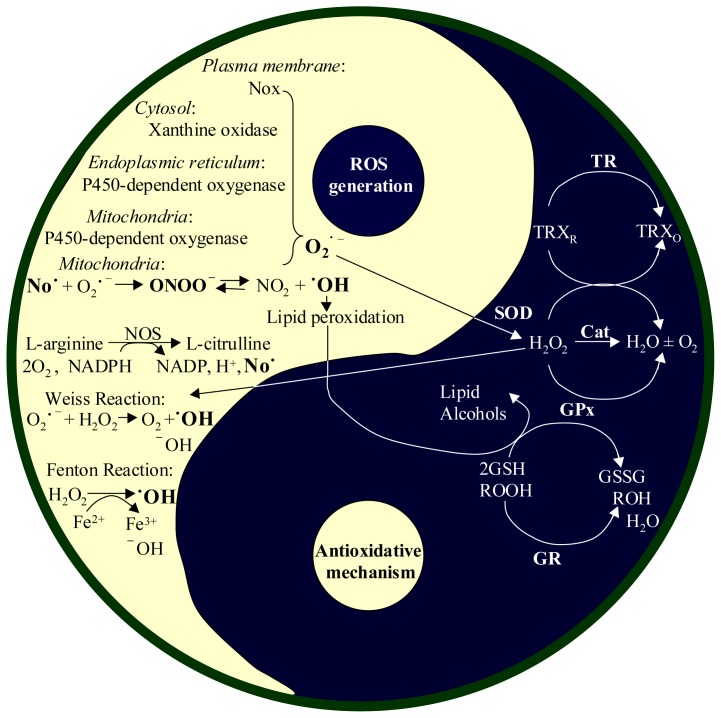
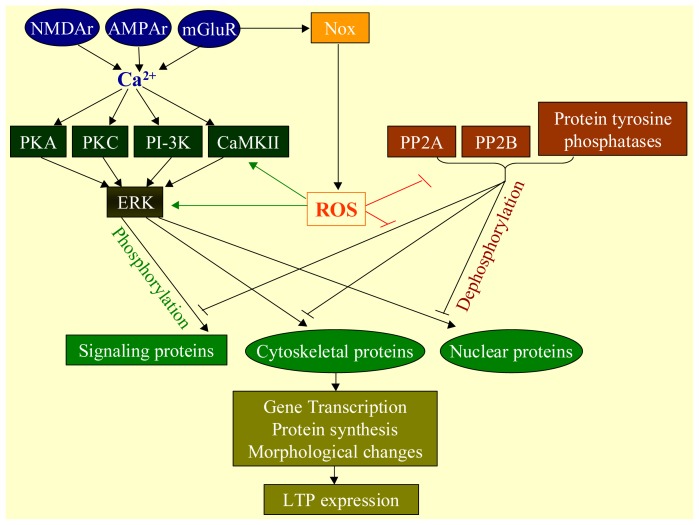
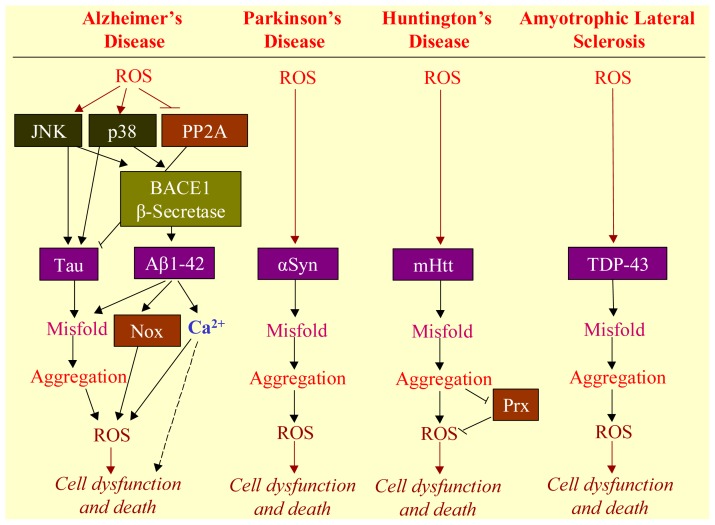
Living cells continually generate reactive oxygen species (ROS) through the respiratory chain during energetic metabolism. ROS at low or moderate concentration can play important physiological roles. However, an excessive amount of ROS under oxidative stress would be extremely deleterious. The central nervous system (CNS) is particularly vulnerable to oxidative stress due to its high oxygen consumption, weakly antioxidative systems and the terminal-differentiation characteristic of neurons. Thus, oxidative stress elicits various neurodegenerative diseases. In addition, chemotherapy could result in severe side effects on the CNS and peripheral nervous system (PNS) of cancer patients, and a growing body of evidence demonstrates the involvement of ROS in drug-induced neurotoxicities as well. Therefore, development of antioxidants as neuroprotective drugs is a potentially beneficial strategy for clinical therapy. In this review, we summarize the source, balance maintenance and physiologic functions of ROS, oxidative stress and its toxic mechanisms underlying a number of neurodegenerative diseases, and the possible involvement of ROS in chemotherapy-induced toxicity to the CNS and PNS. We ultimately assess the value for antioxidants as neuroprotective drugs and provide our comments on the unmet needs.
在能量代谢过程中,活细胞通过呼吸链不断产生活性氧(ROS)。低浓度或中等浓度的 ROS 可以发挥重要的生理作用。然而,氧化应激下过量的 ROS 会产生极大的毒性。由于中枢神经系统(CNS)具有高耗氧量、较弱的抗氧化系统和神经元的终末分化特性,因此特别容易受到氧化应激的影响。因此,氧化应激会引发各种神经退行性疾病。此外,化疗会对癌症患者的中枢神经系统和周围神经系统(PNS)产生严重的副作用,越来越多的证据表明 ROS 参与了药物引起的神经毒性。因此,开发抗氧化剂作为神经保护药物是一种具有潜在临床治疗价值的策略。在这篇综述中,我们总结了 ROS、氧化应激及其在多种神经退行性疾病中的毒性机制的来源、平衡维持和生理功能,以及 ROS 可能参与化疗诱导的 CNS 和 PNS 毒性的情况。我们最终评估了抗氧化剂作为神经保护药物的价值,并对未满足的需求提出了看法。