Luo Huan, Ying Mengchao, Yang Yun, Huo Qian, Hong Xinyu, Tao Gonghua, Xiao Ping
Shanghai Municipal Center for Disease Control & Prevention, Shanghai 201107, China.
State Environmental Protection Key Laboratory of Environmental Health Impact Assessment of Emerging Contaminants, Shanghai 200233, China.
Int J Mol Sci. 2025 Jun 13;26(12):5685. doi: 10.3390/ijms26125685.
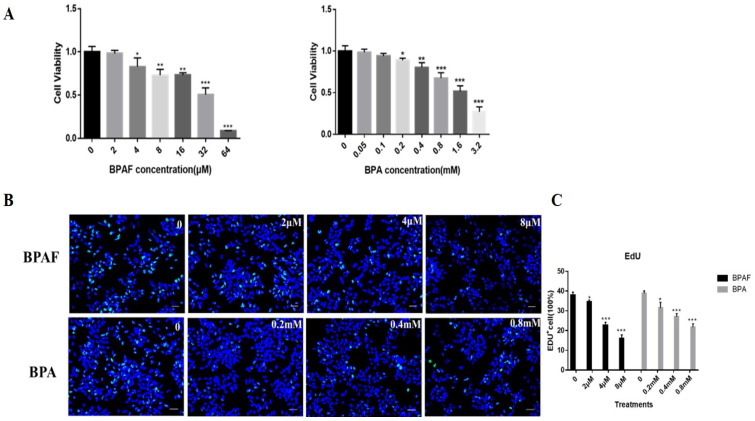
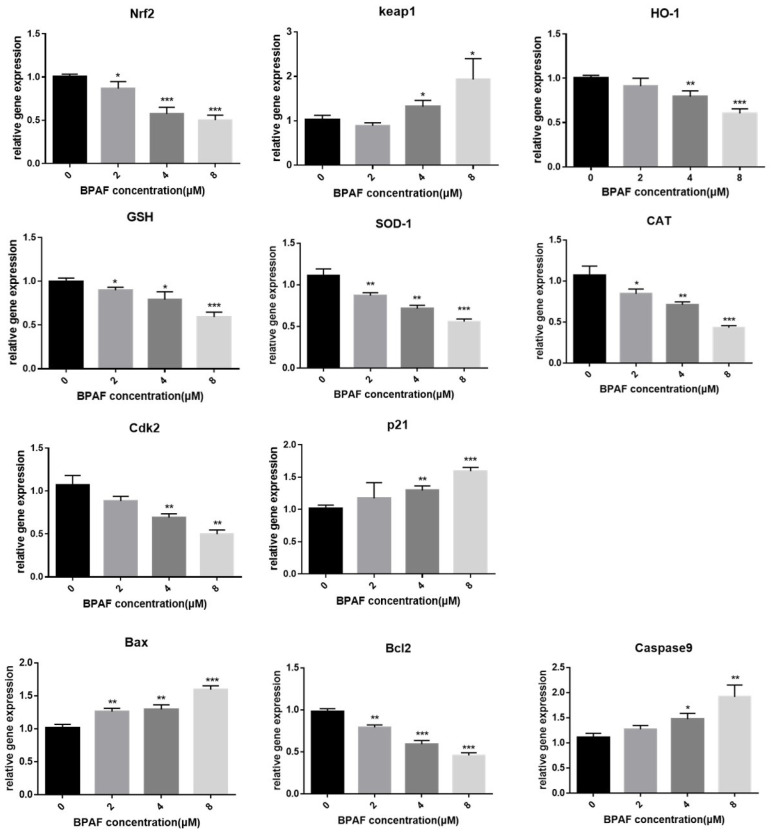
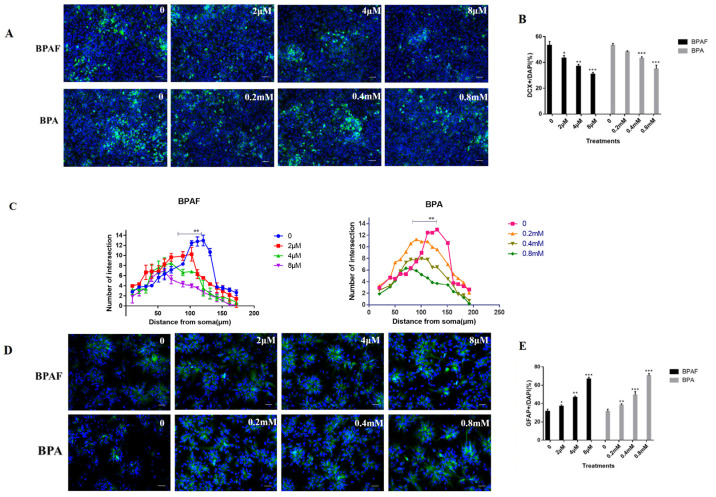
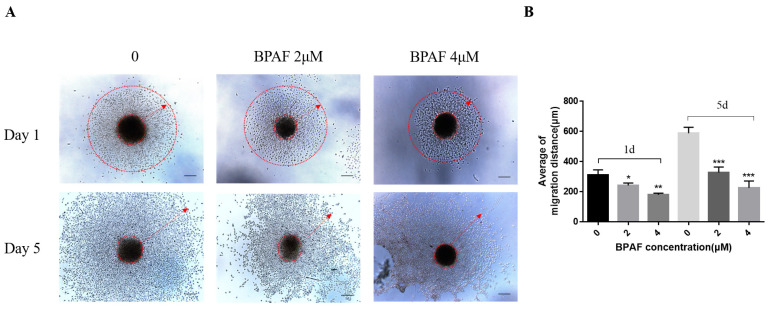
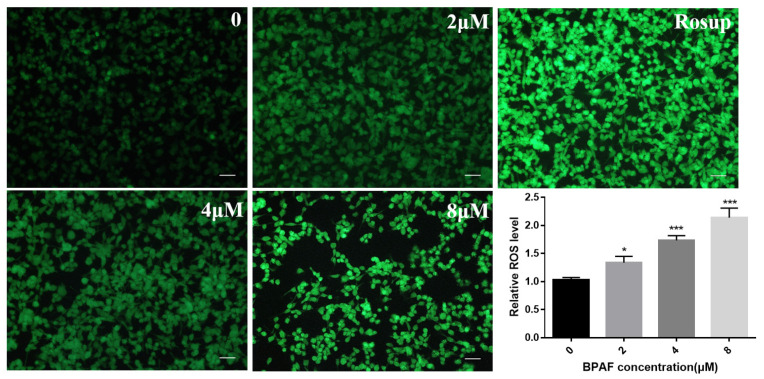
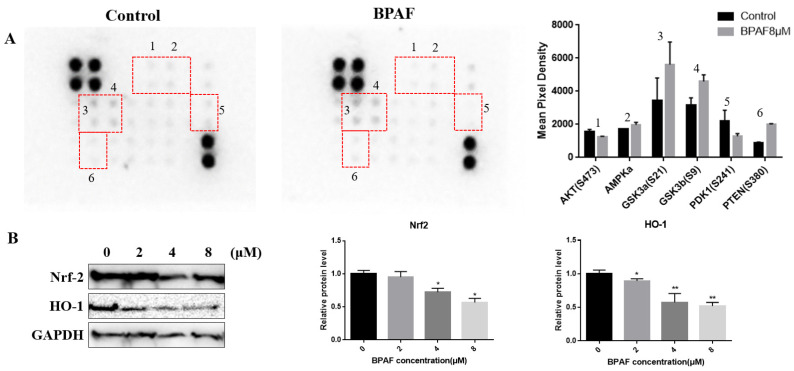
Bisphenol AF (BPAF) is widely utilized as an analog of bisphenol A (BPA) in the plastics industry. However, there is limited evidence on its neurodevelopmental toxicity. Existing studies suggest that BPAF has greater accumulation in vivo than other bisphenol analogs, and could pass through the placental barrier and the blood-brain barrier. In this study, we used the human neural progenitor cells line ReNcell CX, which was derived from 14-week human cortical brain tissue, as an in vitro model to investigate the neurodevelopmental toxicity effects of BPAF and BPA on ReNcell CX cells, and explored the possible mechanism by which BPAF induced neurodevelopmental toxicity on ReNcell CX cells. The results showed that BPAF reduced the proliferation of neural progenitor cells and changed the differentiation towards neurons after exposure for 24 h. Compared with BPA, ReNcell CX cells are more susceptible to BPAF exposure. In a 3D neurospheres model, BPAF affected the distance that neurons migrated outwards at the concentration of 2 μM. Furthermore, BPAF increased ROS levels in cells and reduced the expression of key proteins in the Nrf2/HO-1 pathway and its downstream molecules, such as SOD, GSH, and CAT. In conclusion, BPAF induces damage to critical nodes in neural progenitor cell development through the Nrf2/HO-1 pathway. Therefore, clarifying its neurodevelopmental toxicity and elaborating on the neurodevelopmental toxicity effects and mechanisms of bisphenol AF will help identify intervention targets for neurodevelopmental toxicity, and will have important public health significance for the safety assessment and risk prediction of bisphenol-related chemicals.
双酚AF(BPAF)在塑料工业中被广泛用作双酚A(BPA)的类似物。然而,关于其神经发育毒性的证据有限。现有研究表明,BPAF在体内的蓄积量比其他双酚类似物更大,并且能够穿过胎盘屏障和血脑屏障。在本研究中,我们使用源自14周龄人类皮质脑组织的人神经祖细胞系ReNcell CX作为体外模型,研究BPAF和BPA对ReNcell CX细胞的神经发育毒性作用,并探讨BPAF对ReNcell CX细胞诱导神经发育毒性的可能机制。结果表明,BPAF在暴露24小时后可降低神经祖细胞的增殖,并改变其向神经元的分化。与BPA相比,ReNcell CX细胞对BPAF暴露更敏感。在三维神经球模型中,BPAF在2 μM浓度下影响神经元向外迁移的距离。此外,BPAF增加细胞内活性氧水平,降低Nrf2/HO-1通路及其下游分子如超氧化物歧化酶(SOD)、谷胱甘肽(GSH)和过氧化氢酶(CAT)的关键蛋白表达。综上所述,BPAF通过Nrf2/HO-1通路诱导神经祖细胞发育关键节点的损伤。因此,阐明其神经发育毒性,阐述双酚AF的神经发育毒性作用及机制,将有助于确定神经发育毒性的干预靶点,对双酚类相关化学品的安全性评估和风险预测具有重要的公共卫生意义。