Schmitt Françoise, Podevin Guillaume, Poupon Joël, Roux Jérôme, Legras Pierre, Trocello Jean-Marc, Woimant France, Laprévote Olivier, Nguyen Tuan Huy, El Balkhi Souleiman
INSERM UMR1064, Jean Monnet Hospital, Nantes, France ; HIFIH - Pediatric Hepatogastroenterology Team, University Hospital of Angers, Angers, France.
HIFIH - Pediatric Hepatogastroenterology Team, University Hospital of Angers, Angers, France.
PLoS One. 2013 Dec 17;8(12):e82323. doi: 10.1371/journal.pone.0082323. eCollection 2013.
Wilson's disease (WD) is an inherited disorder of copper metabolism leading to liver failure and/or neurological impairment. Its diagnosis often remains difficult even with genetic testing. Relative exchangeable copper (REC) has recently been described as a reliable serum diagnostic marker for WD.
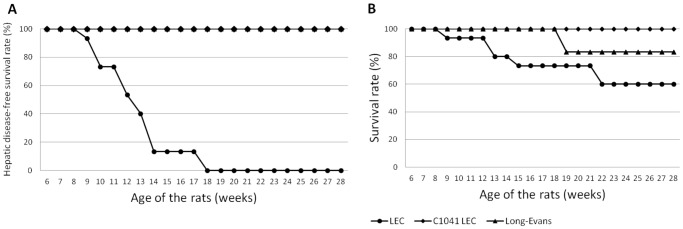
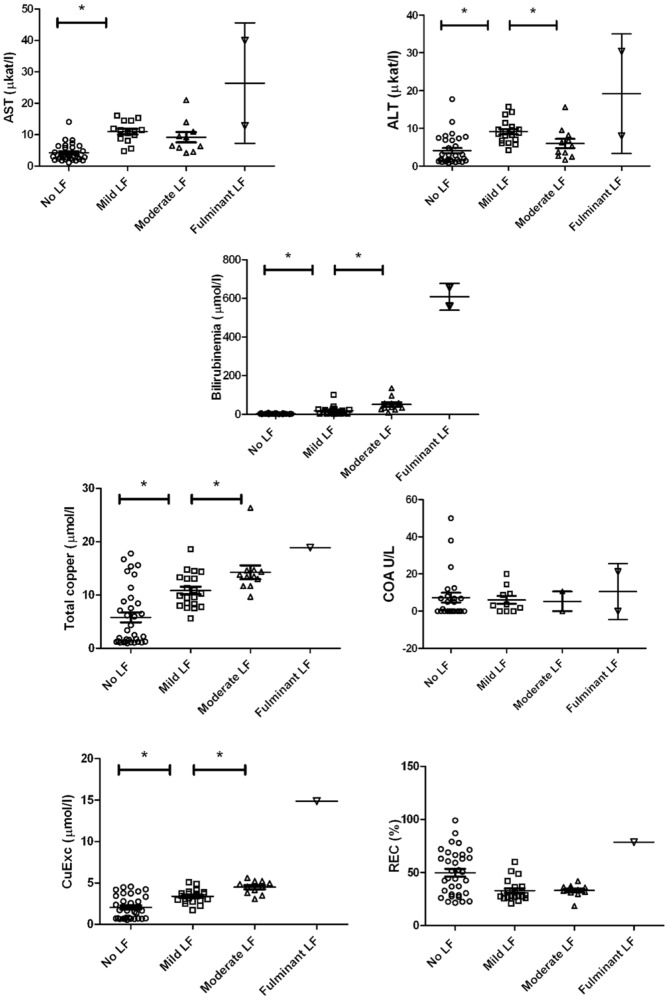
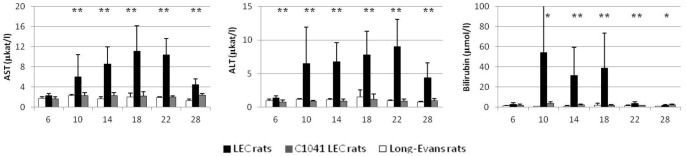
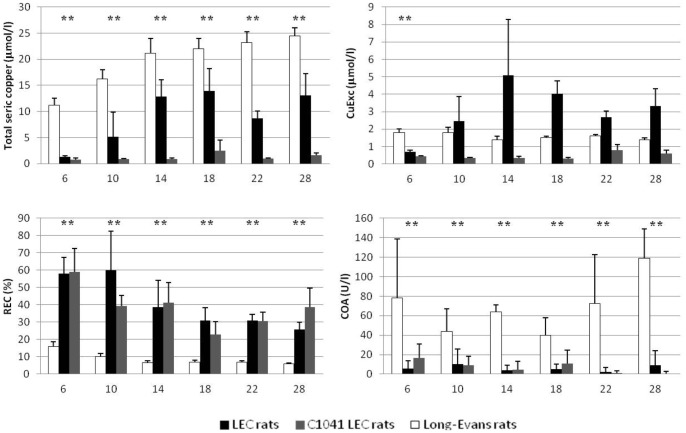
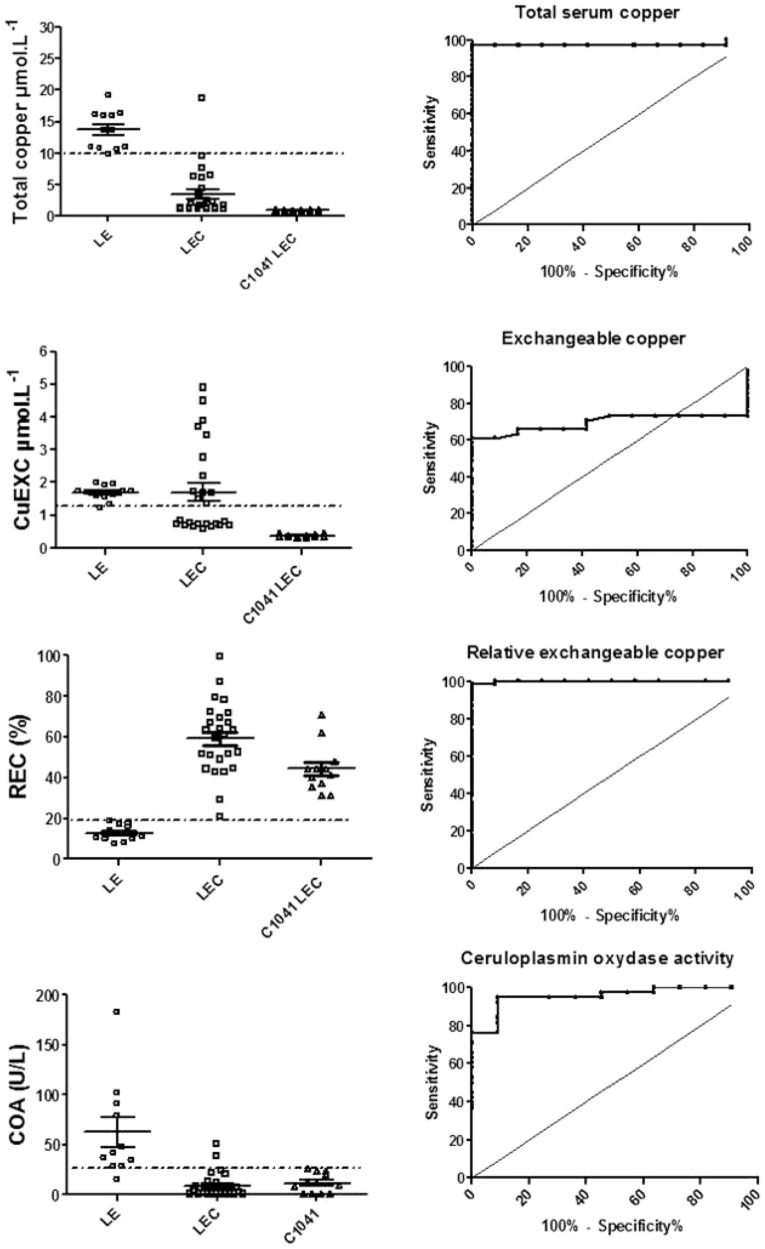
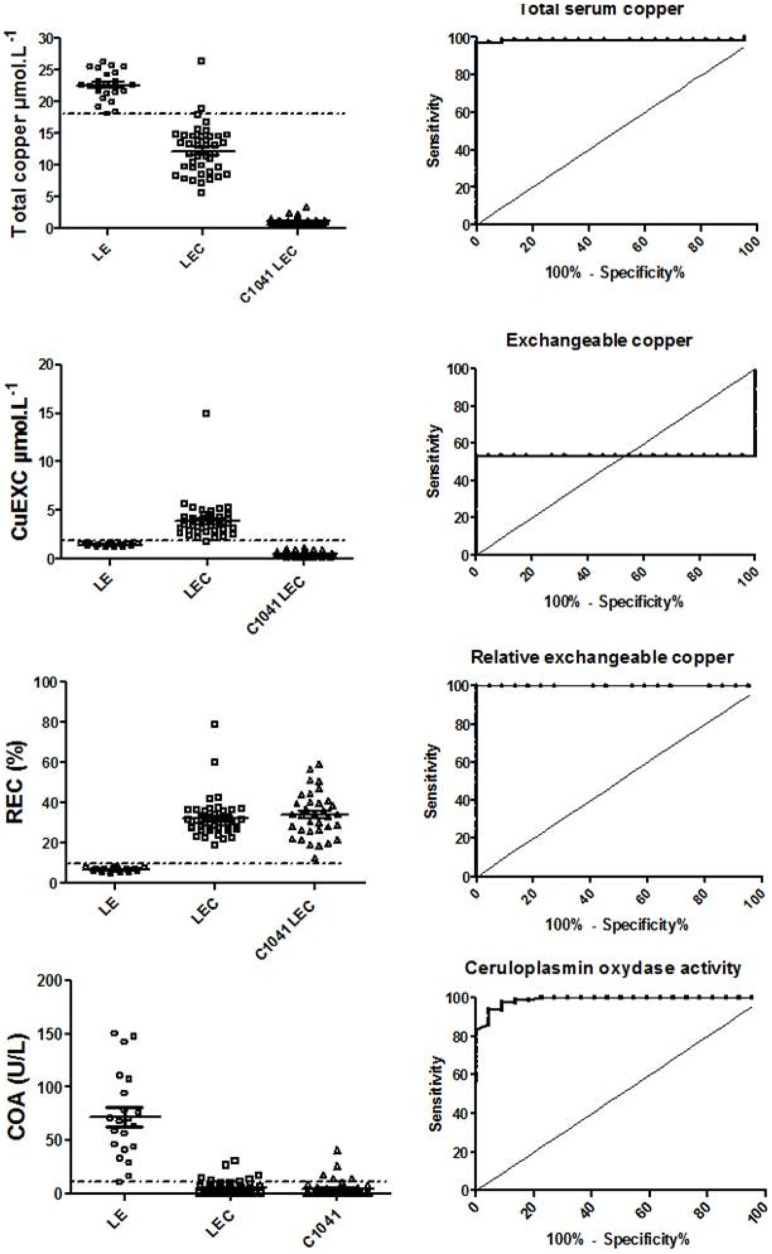
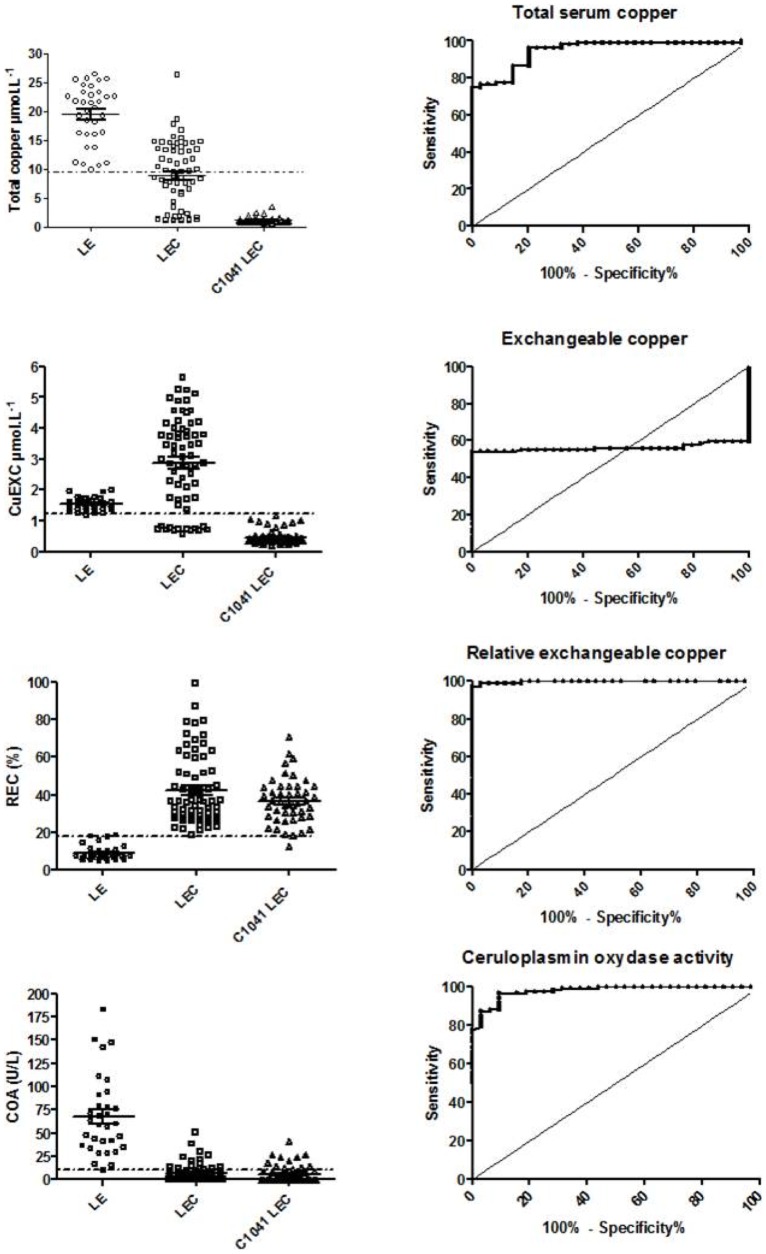
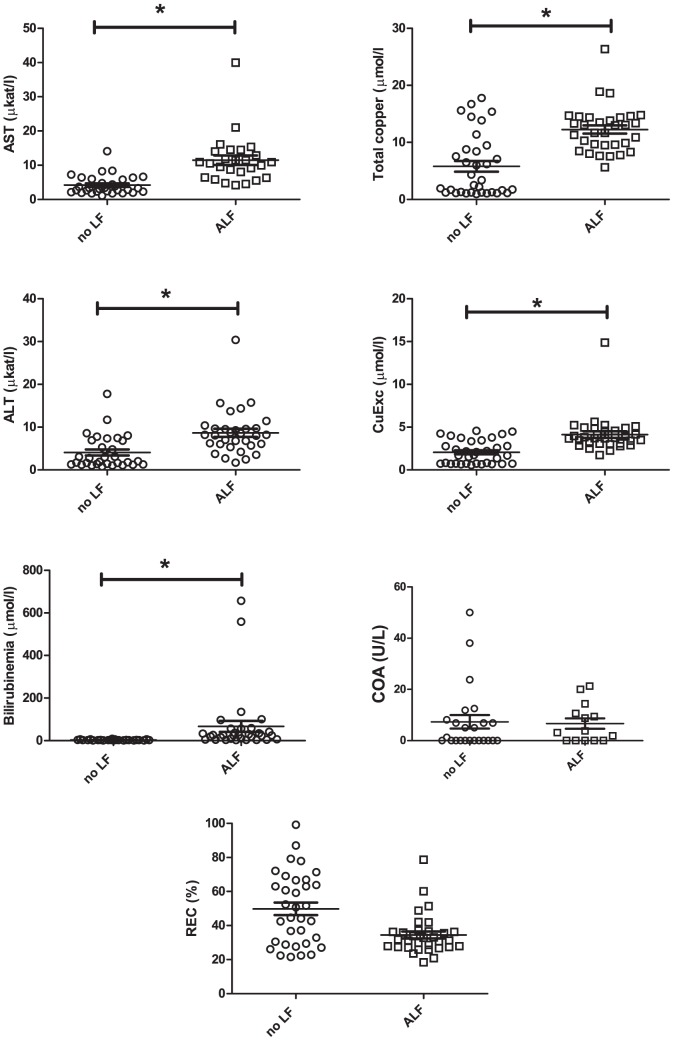
METHODOLOGY/PRINCIPAL FINDINGS: The aim of this study was to validate the use of REC in the Long Evans Cinnamon (LEC) rat, an animal model for WD, and to study its relevance under different conditions in comparison with conventional markers. Two groups of LEC rats and one group of Long-Evans (LE) rats were clinically and biologically monitored from 6 to 28 weeks of age. One group of LEC rats was given copper-free food. The other groups had normal food. Blood samples were collected each month and different serum markers for WD (namely ceruloplasmin oxidase activity, exchangeable copper (CuEXC), total serum copper and REC) and acute liver failure (serum transaminases and bilirubinemia) were tested. Every LEC rat under normal food developed acute liver failure (ALF), with 40% global mortality. Serum transaminases and bilirubinemia along with total serum copper and exchangeable copper levels increased with the onset of acute liver failure. A correlation was observed between CuEXC values and the severity of ALF. Cut-off values were different between young and adult rats and evolved because of age and/or liver failure. Only REC, with values >19%, was able to discriminate LEC groups from the LE control group at every time point in the study. REC sensitivity and specificity reached 100% in adults rats.
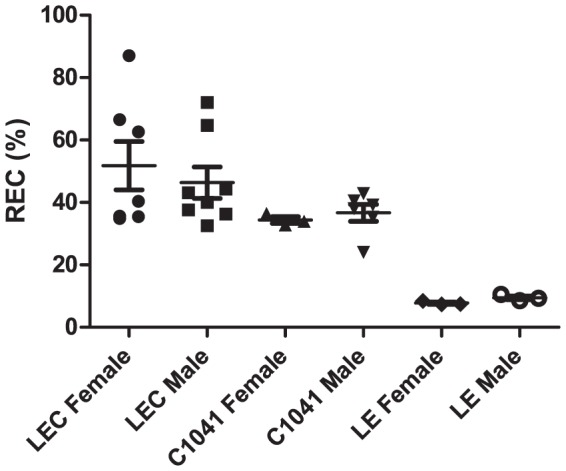
CONCLUSIONS/SIGNIFICANCE: REC appears to be independent of demographic or clinical data in LEC rats. It is a very simple and reliable blood test for the diagnosis of copper toxicosis owing to a lack of ATP7B function. CuEXC can be used as an accurate biomarker of copper overload.
威尔逊病(WD)是一种遗传性铜代谢紊乱疾病,可导致肝功能衰竭和/或神经功能障碍。即使进行基因检测,其诊断往往仍很困难。相对可交换铜(REC)最近被描述为WD可靠的血清诊断标志物。
方法/主要发现:本研究的目的是验证REC在WD动物模型长 Evans 肉桂色(LEC)大鼠中的应用,并与传统标志物相比,研究其在不同条件下的相关性。对两组LEC大鼠和一组长 Evans(LE)大鼠从6周龄至28周龄进行临床和生物学监测。一组LEC大鼠给予无铜食物。其他组给予正常食物。每月采集血样,检测WD的不同血清标志物(即铜蓝蛋白氧化酶活性、可交换铜(CuEXC)、总血清铜和REC)以及急性肝功能衰竭(血清转氨酶和胆红素血症)。正常食物喂养下的每只LEC大鼠均发生急性肝功能衰竭(ALF),总体死亡率为40%。随着急性肝功能衰竭的发生,血清转氨酶、胆红素血症以及总血清铜和可交换铜水平升高。观察到CuEXC值与ALF严重程度之间存在相关性。幼鼠和成年大鼠的临界值不同,且因年龄和/或肝功能衰竭而变化。在研究的每个时间点,只有REC值>19%能够将LEC组与LE对照组区分开来。成年大鼠中REC的敏感性和特异性达到100%。
结论/意义:在LEC大鼠中,REC似乎与人口统计学或临床数据无关。由于缺乏ATP7B功能,它是一种用于诊断铜中毒的非常简单可靠的血液检测方法。CuEXC可作为铜过载的准确生物标志物。