Chen Wangbing, Guo Wei, Li Mei, Shi Dingbo, Tian Yun, Li Zhenlin, Wang Jingshu, Fu Lingyi, Xiao Xiangsheng, Liu Quentin Qiang, Wang Shusen, Huang Wenlin, Deng Wuguo
State Key Laboratory of Oncology in South China, Collaborative Innovation Center of Cancer Medicine, Sun Yat-sen University Cancer Center, Guangzhou, China.
Institute of Cancer Stem Cell, Dalian Medical University Cancer Center, Dalian, China.
PLoS One. 2013 Dec 16;8(12):e82728. doi: 10.1371/journal.pone.0082728. eCollection 2013.
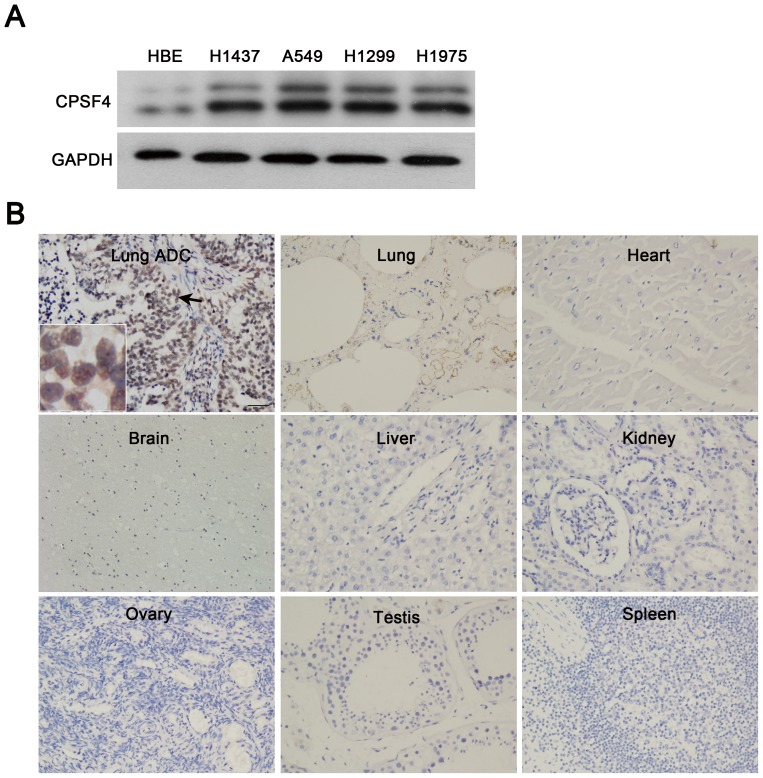
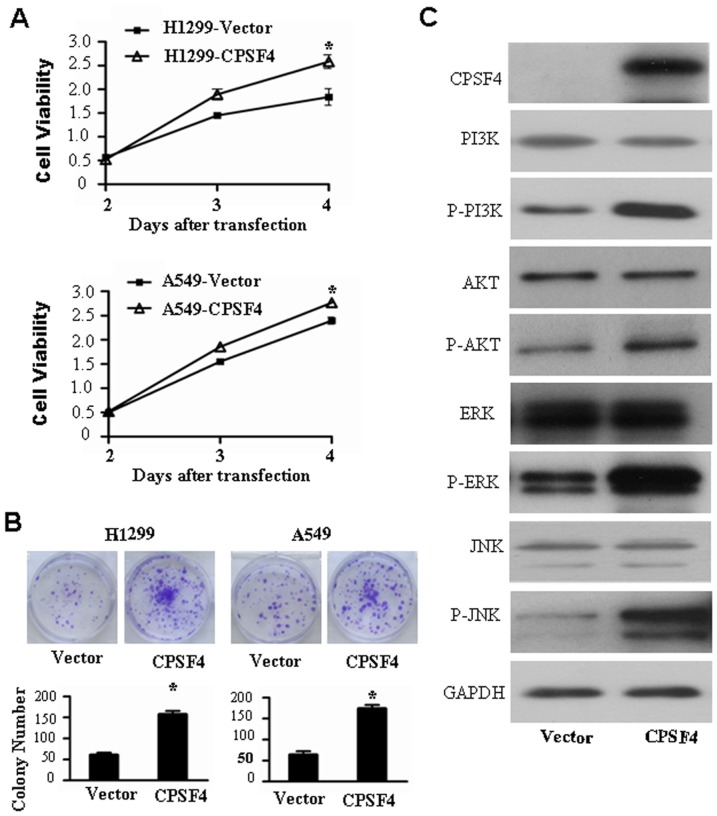
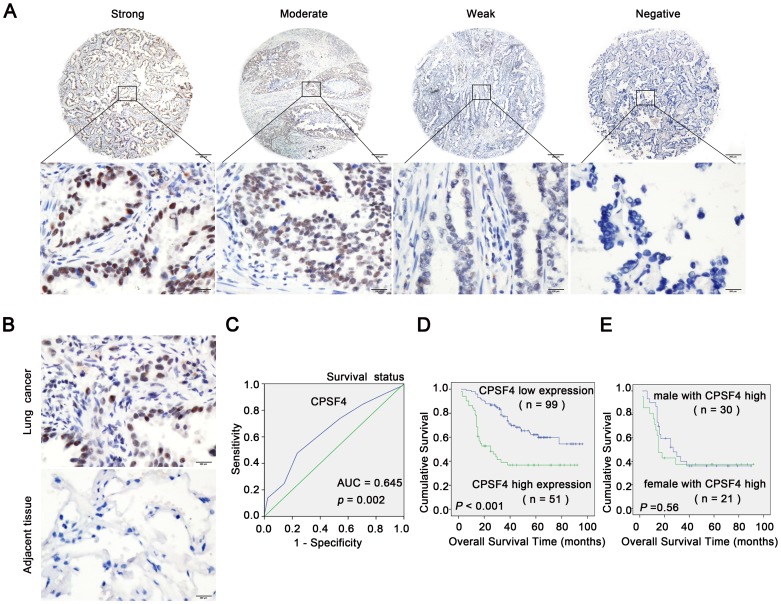
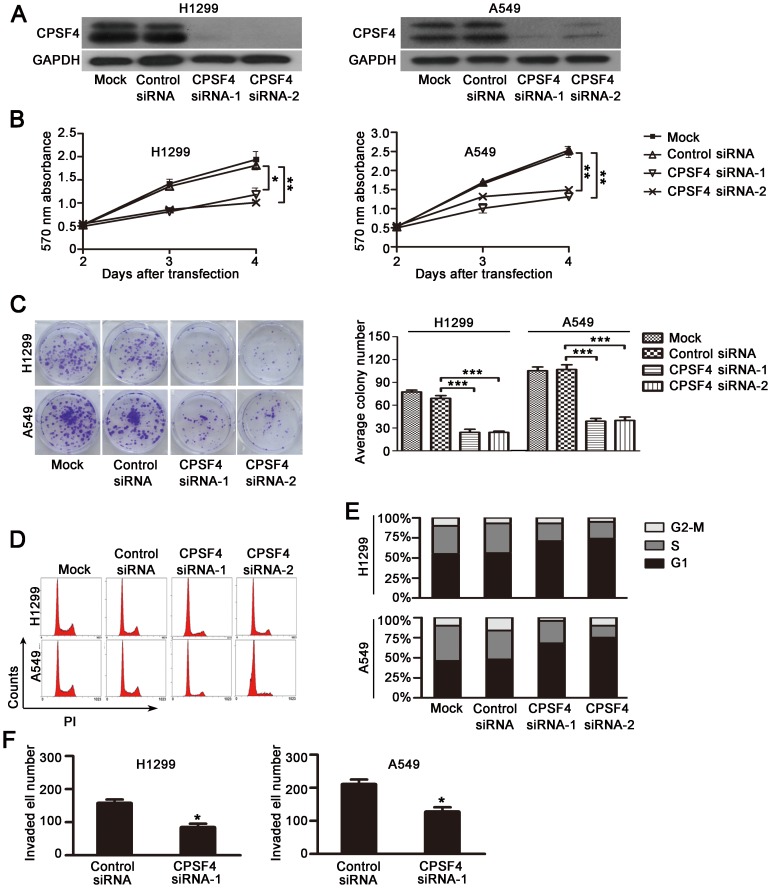
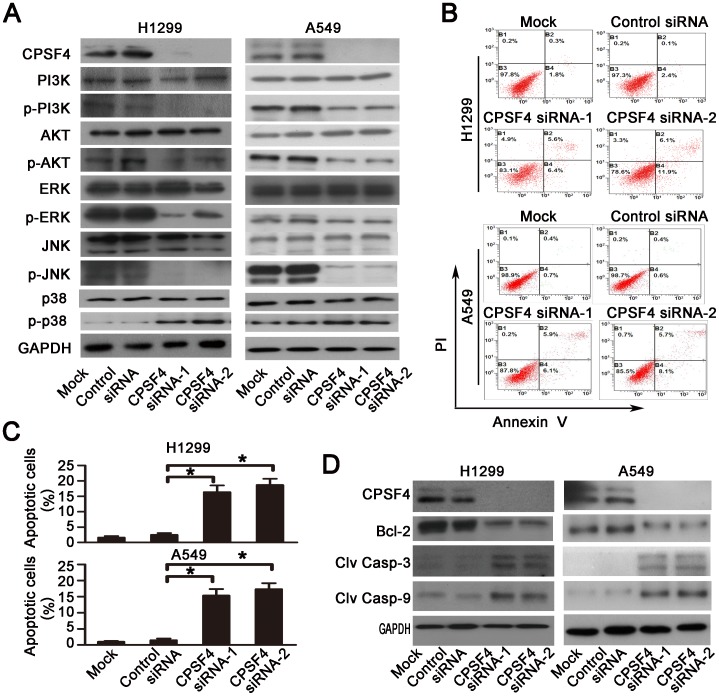
Cleavage and polyadenylation specific factor 4 (CPSF4), a member of CPSF complex, plays a key role in mRNA polyadenylation and mRNA 3' ends maturation. However, its possible role in lung cancer pathogenesis is unknown. In this study, we investigated the biological role and clinical significance of CPSF4 in lung cancer growth and survival and elucidated its underlying molecular mechanisms. We found that CPSF4 was highly expressed in lung adenocarcinoma cell lines and tumor tissue but was undetectable in 8 normal human tissues. We also found that CPSF4 overexpression was correlated with poor overall survival in patients with lung adenocarcinomas (P<0.001). Multivariate survival analyses revealed that higher CPSF4 expression was an independent prognostic factor for overall survival of the patients with lung adenocarcinomas. Suppression of CPSF4 by siRNA inhibited lung cancer cells proliferation, colony formation, and induced apoptosis. Mechanism studies revealed that these effects were achieved through simultaneous modulation of multiple signaling pathways. Knockdown of CPSF4 expression by siRNA markedly inhibited the phosphorylation of PI3K, AKT and ERK1/2 and JNK proteins. In contrast, the ectopic expression of CPSF4 had the opposite effects. Moreover, CPSF4 knockdown also induced the cleavage of caspase-3 and caspse-9 proteins. Collectively, these results demonstrate that CPSF4 plays a critical role in regulating lung cancer cell proliferation and survival and may be a potential prognostic biomarker and therapeutic target for lung adenocarcinoma.
切割与聚腺苷酸化特异性因子4(CPSF4)是CPSF复合物的成员之一,在mRNA聚腺苷酸化和mRNA 3'末端成熟过程中发挥关键作用。然而,其在肺癌发病机制中的潜在作用尚不清楚。在本研究中,我们调查了CPSF4在肺癌生长和存活中的生物学作用及临床意义,并阐明了其潜在的分子机制。我们发现CPSF4在肺腺癌细胞系和肿瘤组织中高表达,但在8种正常人体组织中未检测到。我们还发现CPSF4过表达与肺腺癌患者的总生存期较差相关(P<0.001)。多因素生存分析显示,较高的CPSF4表达是肺腺癌患者总生存期的独立预后因素。通过小干扰RNA(siRNA)抑制CPSF4可抑制肺癌细胞增殖、集落形成并诱导凋亡。机制研究表明,这些作用是通过同时调节多个信号通路实现的。用siRNA敲低CPSF4表达可显著抑制PI3K、AKT以及ERK1/2和JNK蛋白的磷酸化。相反,CPSF4的异位表达则产生相反的效果。此外,敲低CPSF4还可诱导caspase-3和caspase-9蛋白的切割。总体而言,这些结果表明CPSF4在调节肺癌细胞增殖和存活中起关键作用,可能是肺腺癌潜在的预后生物标志物和治疗靶点。