Carlsten Chris, Oron Assaf P, Curtiss Heidi, Jarvis Sara, Daniell William, Kaufman Joel D
Department of Environmental and Occupational Health Sciences, University of Washington, Seattle, Washington, United States of America.
Children's Core For Biomedical Statistics, Seattle Children's Research Institute, Seattle, Washington, United States of America.
PLoS One. 2013 Dec 16;8(12):e83573. doi: 10.1371/journal.pone.0083573. eCollection 2013.
Diesel exhaust (DE) exposures are very common, yet exposure-related symptoms haven't been rigorously examined.
Describe symptomatic responses to freshly generated and diluted DE and filtered air (FA) in a controlled human exposure setting; assess whether such responses are altered by perception of exposure.
43 subjects participated within three double-blind crossover experiments to order-randomized DE exposure levels (FA and DE calibrated at 100 and/or 200 micrograms/m(3) particulate matter of diameter less than 2.5 microns), and completed questionnaires regarding symptoms and dose perception.
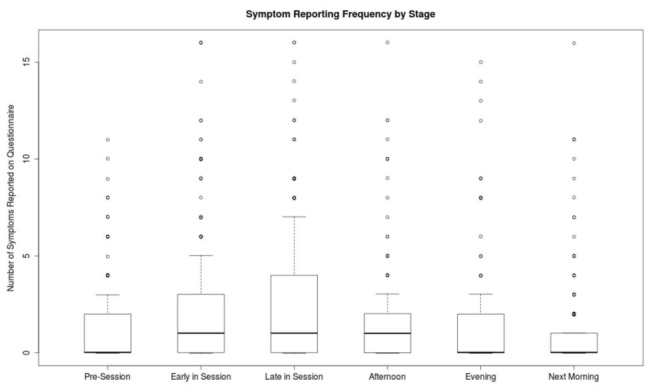
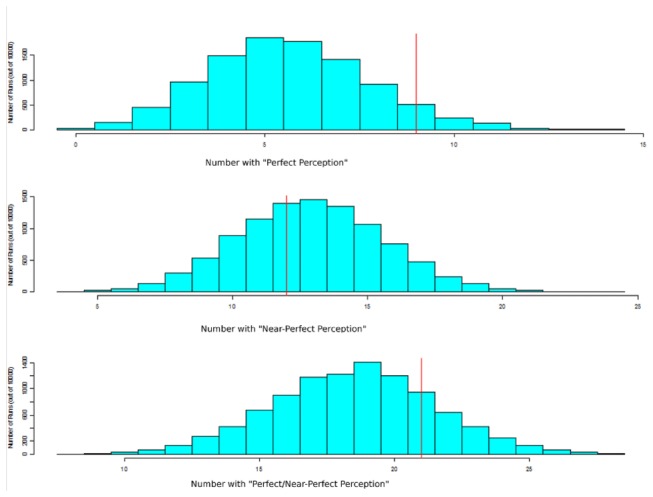
For a given symptom cluster, the majority of those exposed to moderate concentrations of diesel exhaust do not report such symptoms. The most commonly reported symptom cluster was of the nose (29%). Blinding to exposure is generally effective. Perceived exposure, rather than true exposure, is the dominant modifier of symptom reporting.
Controlled human exposure to moderate-dose diesel exhaust is associated with a range of mild symptoms, though the majority of individuals will not experience any given symptom. Blinding to DE exposure is generally effective. Perceived DE exposure, rather than true DE exposure, is the dominant modifier of symptom reporting.
柴油废气(DE)暴露非常普遍,但与暴露相关的症状尚未得到严格研究。
描述在受控人体暴露环境中对新产生和稀释的DE以及过滤空气(FA)的症状反应;评估这种反应是否会因对暴露的感知而改变。
43名受试者参与了三项双盲交叉实验,以随机顺序暴露于不同水平的DE(FA和DE的校准浓度为直径小于2.5微米的颗粒物100和/或200微克/立方米),并完成有关症状和剂量感知的问卷。
对于给定的症状群,大多数暴露于中等浓度柴油废气的人并未报告此类症状。最常报告的症状群是鼻部症状(29%)。对暴露进行盲法处理通常是有效的。感知到的暴露而非实际暴露是症状报告的主要影响因素。
在受控条件下人体暴露于中等剂量柴油废气会出现一系列轻微症状,不过大多数人不会出现任何特定症状。对DE暴露进行盲法处理通常是有效的。感知到的DE暴露而非实际DE暴露是症状报告的主要影响因素。