The Center of Diagnosis and Treatment for Children's Bone Diseases, the Children's Hospital Affiliated to Soochow University, Suzhou, Jiangsu, China.
PLoS One. 2013 Dec 17;8(12):e84175. doi: 10.1371/journal.pone.0084175. eCollection 2013.
The malignant osteoblastoma has poor prognosis, thus the search for novel and more efficient chemo-agents against this disease is urgent. Salinomycin induces broad anti-cancer effects both in vivo and in vitro, however, its role in osteoblastoma is still not clear.
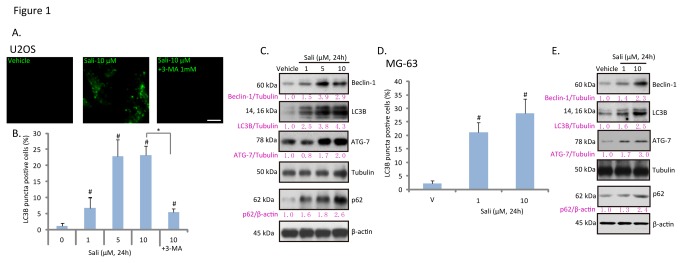
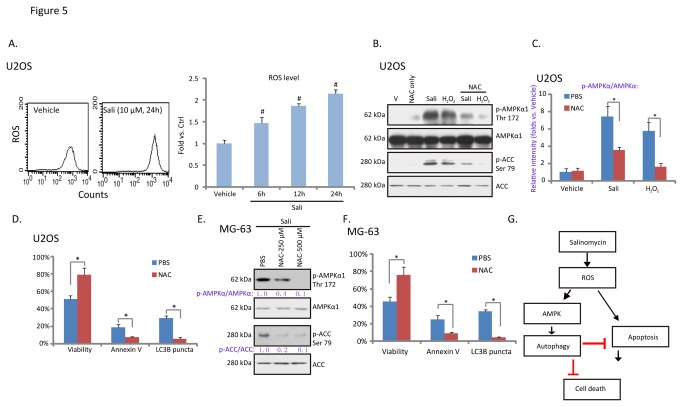
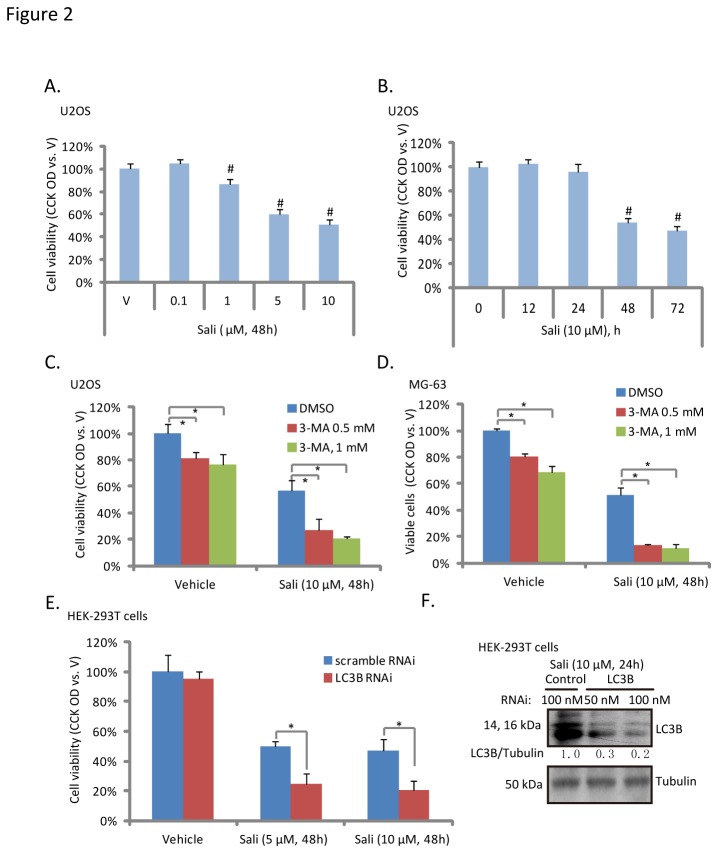
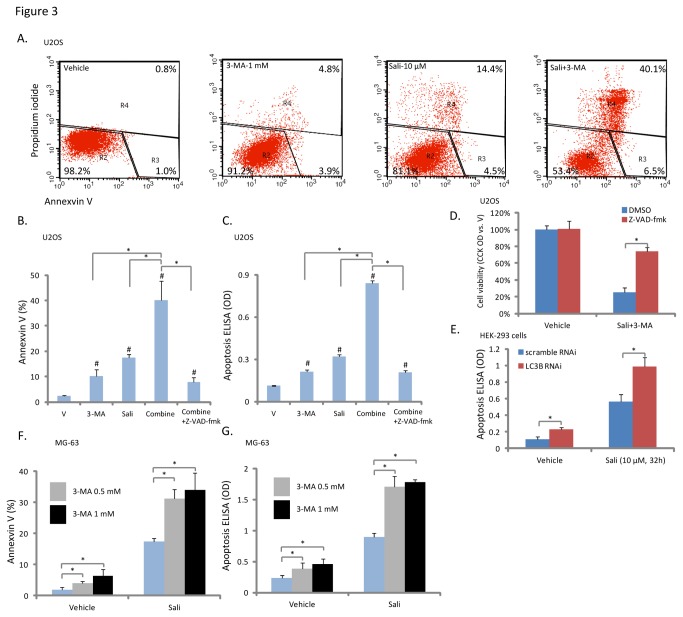
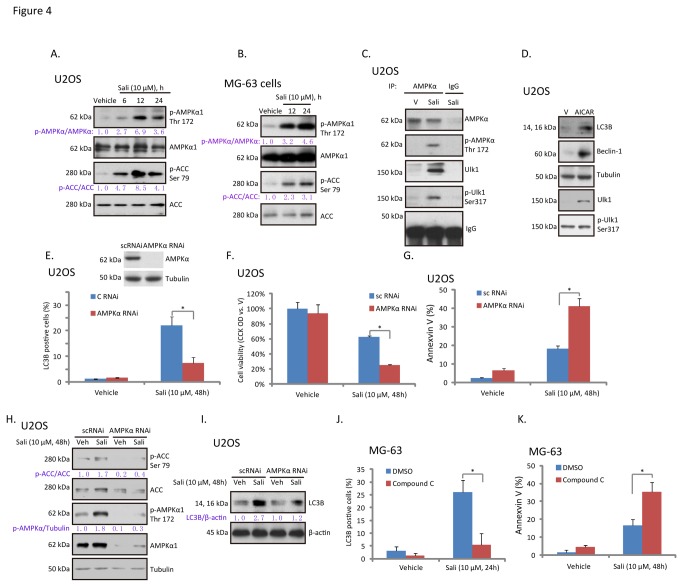
Salinomycin induced both apoptosis and autophagy in cultured U2OS and MG-63 osteoblastoma cells. Inhibition of autophagy by 3-methyladenine (3-MA), or by RNA interference (RNAi) of light chain 3B (LC3B), enhanced salinomycin-induced cytotoxicity and apoptosis. Salinomycin induced a profound AMP-activated protein kinase (AMPK) activation, which was required for autophagy induction. AMPK inhibition by compound C, or by AMPKα RNAi prevented salinomycin-induced autophagy activation, while facilitating cancer cell death and apoptosis. On the other hand, the AMPK agonist AICAR promoted autophagy activation in U2OS cells. Salinomycin-induced AMPK activation was dependent on reactive oxygen species (ROS) production in osteoblastoma cells. Antioxidant n-acetyl cysteine (NAC) significantly inhibited salinomycin-induced AMPK activation and autophagy induction.
Salinomycin activates AMPK-dependent autophagy in osteoblastoma cells, which serves as a negative regulator against cell apoptosis. AMPK-autophagy inhibition might be a novel strategy to sensitize salinomycin's effect in cancer cells.
恶性成骨细胞瘤预后不良,因此迫切需要寻找针对这种疾病的新型、更有效的化疗药物。沙利霉素在体内和体外均能诱导广泛的抗癌作用,但它在成骨细胞瘤中的作用尚不清楚。
沙利霉素诱导培养的 U2OS 和 MG-63 成骨细胞瘤细胞发生凋亡和自噬。3-甲基腺嘌呤(3-MA)或 LC3B 的 RNA 干扰(RNAi)抑制自噬,增强了沙利霉素诱导的细胞毒性和细胞凋亡。沙利霉素诱导了强烈的 AMP 激活蛋白激酶(AMPK)激活,这是诱导自噬所必需的。用化合物 C 或 AMPKα RNAi 抑制 AMPK,可阻止沙利霉素诱导的自噬激活,同时促进癌细胞死亡和细胞凋亡。另一方面,AMPK 激动剂 AICAR 促进了 U2OS 细胞中的自噬激活。沙利霉素诱导的 AMPK 激活依赖于成骨细胞瘤细胞中的活性氧(ROS)产生。抗氧化剂 N-乙酰半胱氨酸(NAC)显著抑制了沙利霉素诱导的 AMPK 激活和自噬诱导。
沙利霉素激活成骨细胞瘤细胞中 AMPK 依赖性自噬,作为细胞凋亡的负调节剂。AMPK-自噬抑制可能是增强沙利霉素在癌细胞中作用的一种新策略。