Brechbühl Julien, Moine Fabian, Broillet Marie-Christine
Department of Pharmacology and Toxicology, Faculty of Biology and Medicine, University of Lausanne Lausanne, Switzerland.
Front Behav Neurosci. 2013 Dec 9;7:193. doi: 10.3389/fnbeh.2013.00193. eCollection 2013.
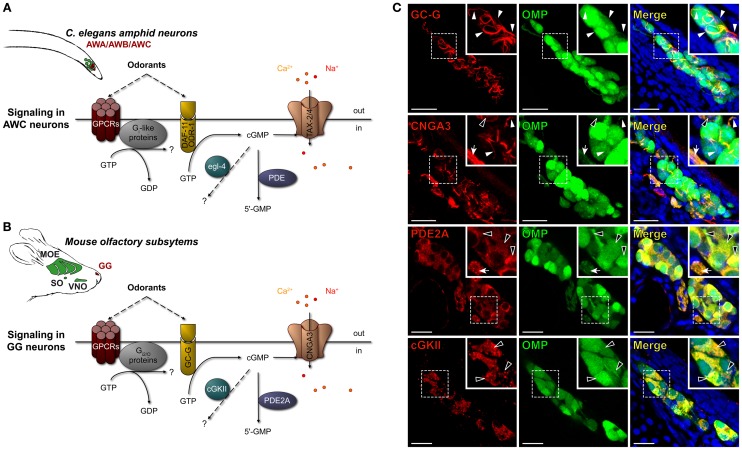
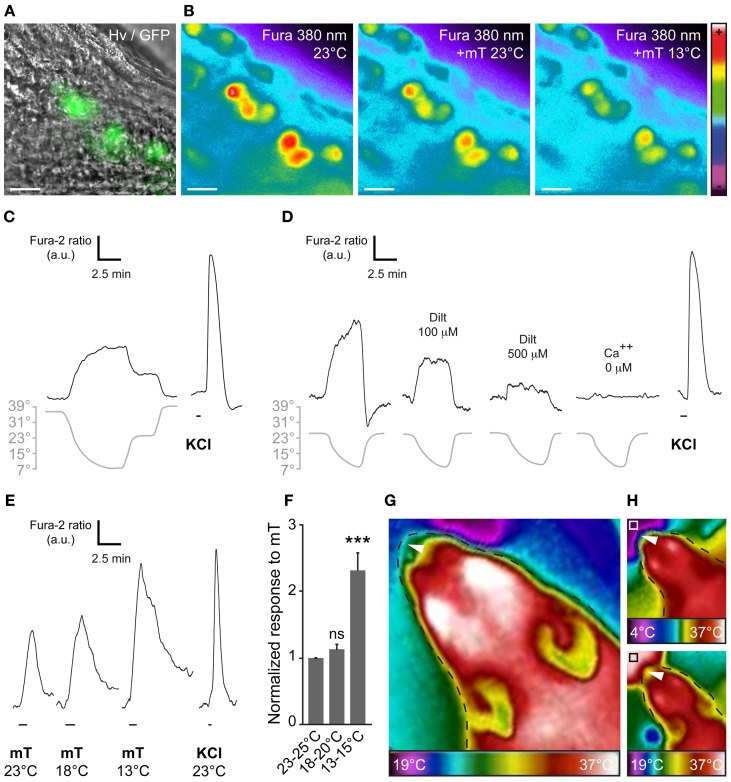
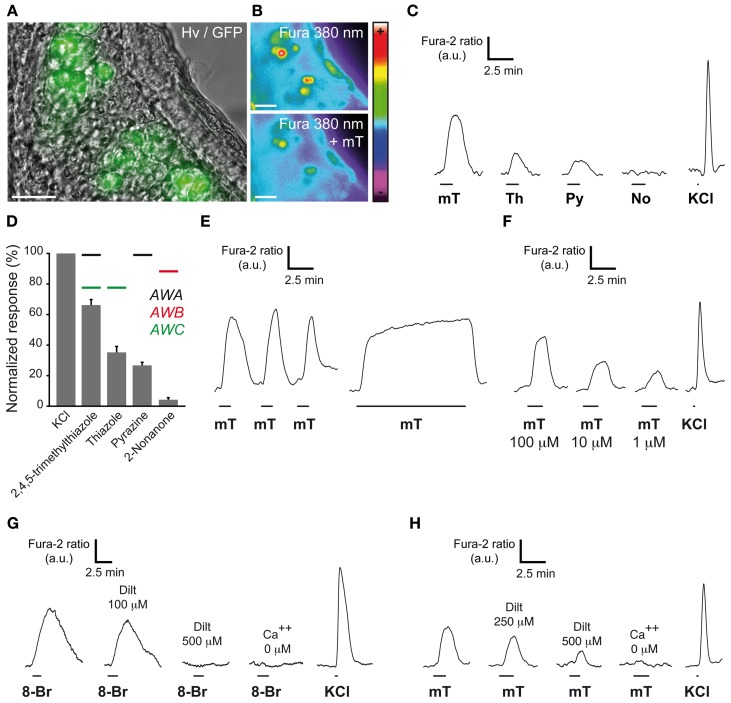
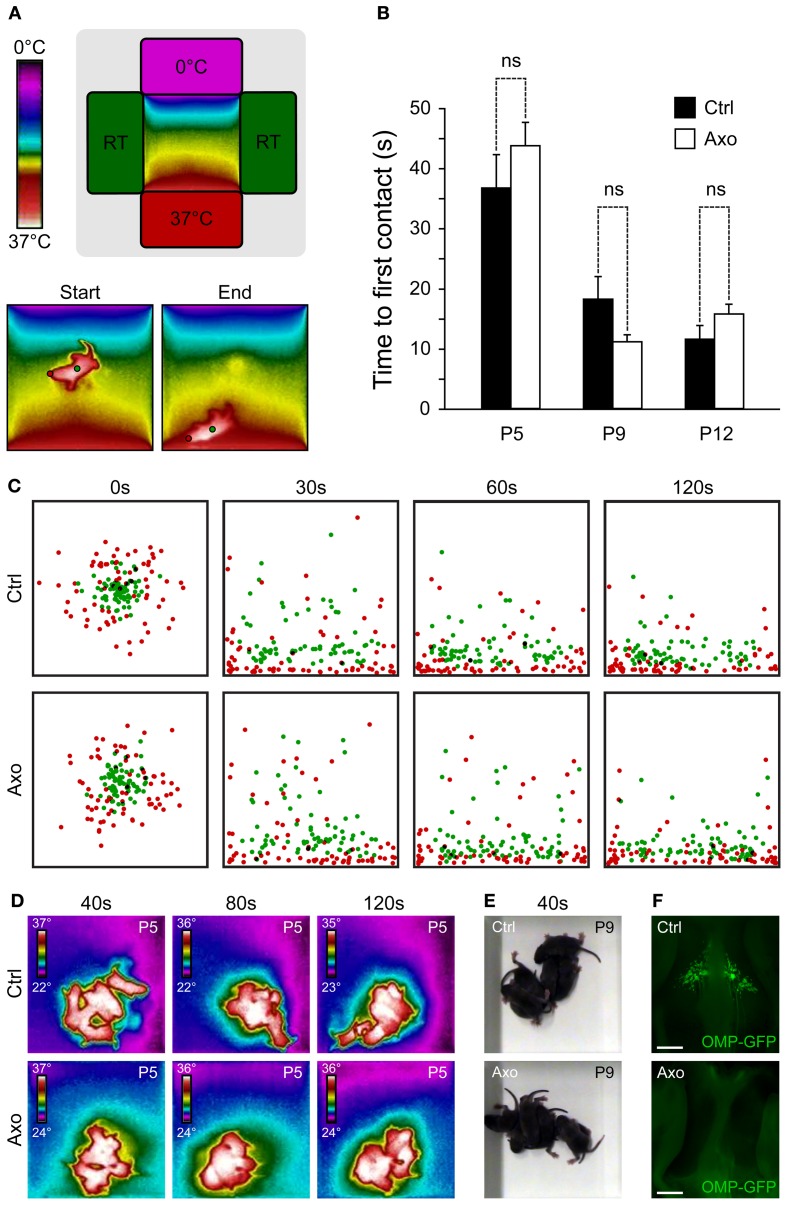
The mouse Grueneberg ganglion (GG) is an olfactory subsystem located at the tip of the nose close to the entry of the naris. It comprises neurons that are both sensitive to cold temperature and play an important role in the detection of alarm pheromones (APs). This chemical modality may be essential for species survival. Interestingly, GG neurons display an atypical mammalian olfactory morphology with neurons bearing deeply invaginated cilia mostly covered by ensheathing glial cells. We had previously noticed their morphological resemblance with the chemosensory amphid neurons found in the anterior region of the head of Caenorhabditis elegans (C. elegans). We demonstrate here further molecular and functional similarities. Thus, we found an orthologous expression of molecular signaling elements that was furthermore restricted to similar specific subcellular localizations. Calcium imaging also revealed a ligand selectivity for the methylated thiazole odorants that amphid neurons are known to detect. Cellular responses from GG neurons evoked by chemical or temperature stimuli were also partially cGMP-dependent. In addition, we found that, although behaviors depending on temperature sensing in the mouse, such as huddling and thermotaxis did not implicate the GG, the thermosensitivity modulated the chemosensitivity at the level of single GG neurons. Thus, the striking similarities with the chemosensory amphid neurons of C. elegans conferred to the mouse GG neurons unique multimodal sensory properties.
小鼠的格伦贝格神经节(GG)是一个嗅觉子系统,位于鼻尖靠近鼻孔入口处。它由对低温敏感且在警报信息素(APs)检测中起重要作用的神经元组成。这种化学模式可能对物种生存至关重要。有趣的是,GG神经元呈现出非典型的哺乳动物嗅觉形态,其神经元带有深深内陷的纤毛,大多被包绕神经胶质细胞覆盖。我们之前注意到它们在形态上与秀丽隐杆线虫(C. elegans)头部前部发现的化学感受性双凹神经元相似。我们在此进一步证明了分子和功能上的相似性。因此,我们发现分子信号元件的直系同源表达,而且这种表达局限于相似的特定亚细胞定位。钙成像还揭示了对甲基化噻唑气味剂的配体选择性,而双凹神经元已知能检测这种气味剂。化学或温度刺激诱发的GG神经元的细胞反应也部分依赖于环鸟苷酸(cGMP)。此外,我们发现,尽管小鼠中依赖温度感知的行为,如挤作一团和趋温性并不涉及GG,但热敏性在单个GG神经元水平上调节了化学敏感性。因此,与秀丽隐杆线虫的化学感受性双凹神经元的显著相似性赋予了小鼠GG神经元独特的多模态感官特性。