Amtage Florian, Feuerstein Thomas J, Meier Simone, Prokop Thomas, Piroth Tobias, Pinsker Marcus O
Department of Neurology, University Medical Center Freiburg , Freiburg , Germany.
Section of Clinical Neuropharmacology, Department of Neurosurgery, University Medical Center Freiburg , Freiburg , Germany.
Front Neurol. 2013 Dec 5;4:198. doi: 10.3389/fneur.2013.00198.
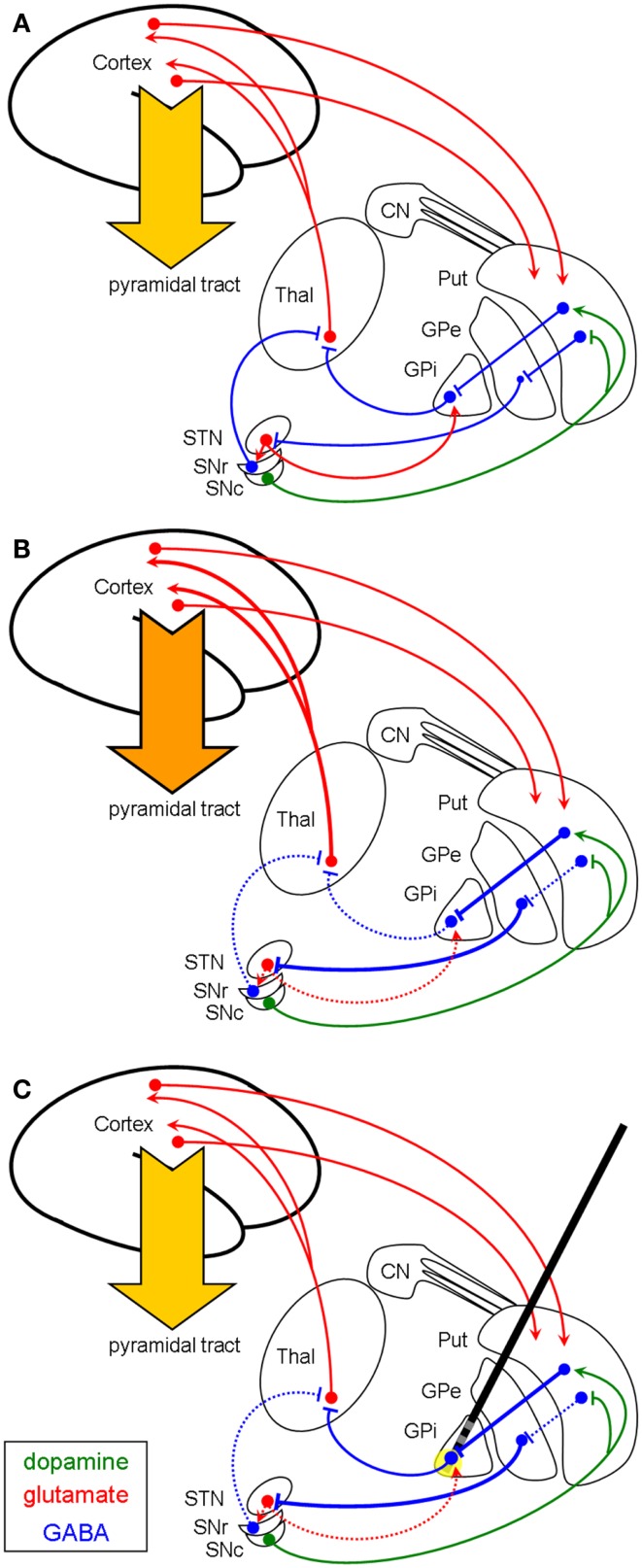
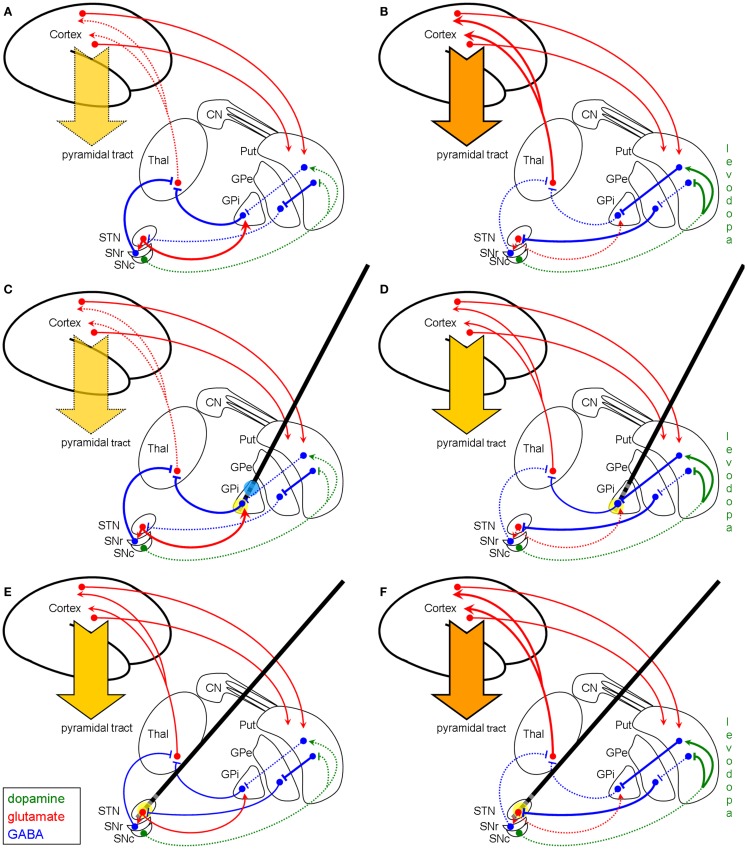
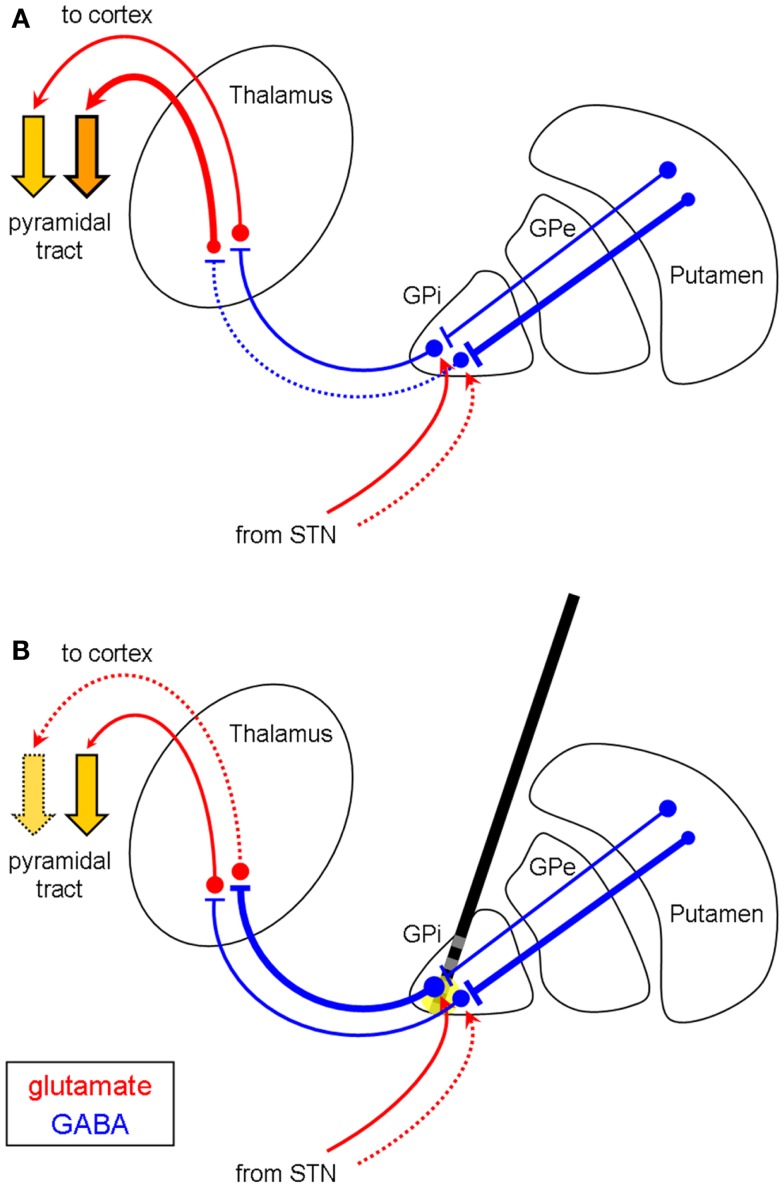
In the past, many studies have documented the beneficial effects of deep brain stimulation (DBS) in the globus pallidus internus for treatment of primary segmental or generalized dystonia. Recently however, several reports focused on DBS-induced hypokinesia or freezing of gait (FOG) as a side effect in these patients. Here we report on two patients suffering from FOG after successful treatment of their dystonic movement disorder with pallidal high frequency stimulation (HFS). Several attempts to reduce the FOG resulted in worsening of the control of dystonia. In one patient levodopa treatment was initialized which was somewhat successful to relieve FOG. We discuss the possible mechanisms of hypokinetic side effects of pallidal DBS which can be explained by the hypothesis of selective GABA release as the mode of action of HFS. Pallidal HFS is also effective in treating idiopathic Parkinson's disease as a hypokinetic disorder which at first sight seems to be a paradox. In our view, however, the GABAergic hypothesis can explain this and other clinical observations.
过去,许多研究记录了内侧苍白球深部脑刺激(DBS)治疗原发性节段性或全身性肌张力障碍的有益效果。然而最近,有几份报告关注了DBS诱发的运动徐缓或步态冻结(FOG),将其作为这些患者的一种副作用。在此,我们报告两例在苍白球高频刺激(HFS)成功治疗肌张力障碍性运动障碍后出现FOG的患者。多次尝试减轻FOG均导致肌张力障碍控制恶化。在一名患者中开始使用左旋多巴治疗,在一定程度上成功缓解了FOG。我们讨论了苍白球DBS运动徐缓副作用的可能机制,这可以用选择性GABA释放假说作为HFS的作用模式来解释。苍白球HFS在治疗特发性帕金森病这种运动徐缓性疾病方面也有效,乍一看这似乎自相矛盾。然而,在我们看来,GABA能假说可以解释这一点及其他临床观察结果。