Department of Forest Sciences, University of Helsinki Helsinki, Finland.
Front Plant Sci. 2013 Dec 5;4:496. doi: 10.3389/fpls.2013.00496. eCollection 2013.
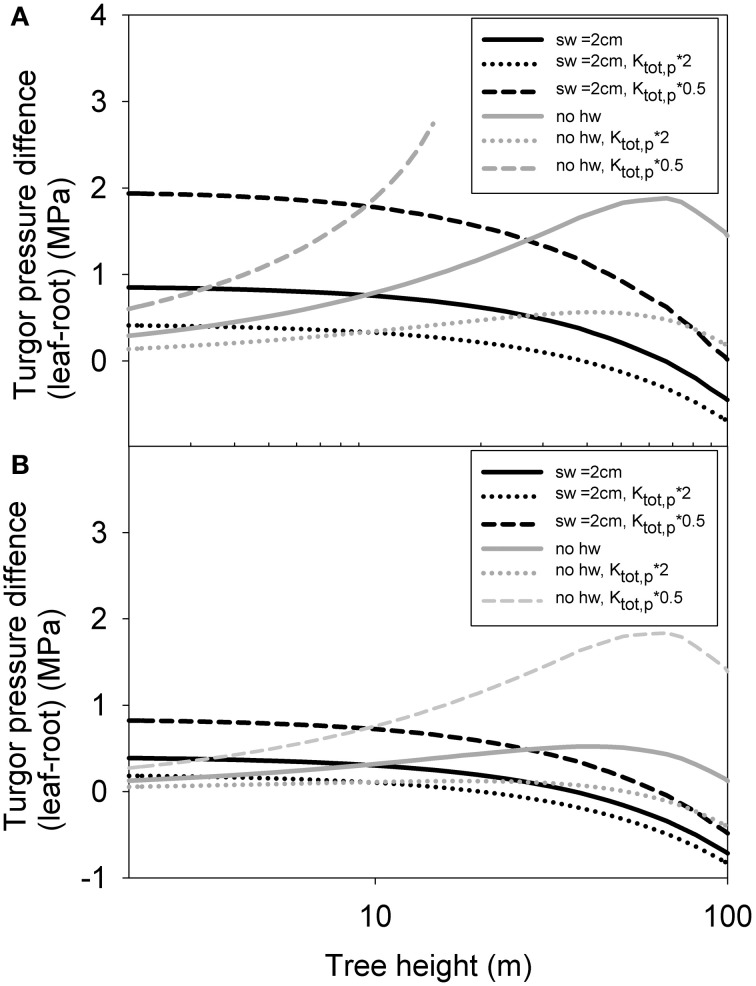
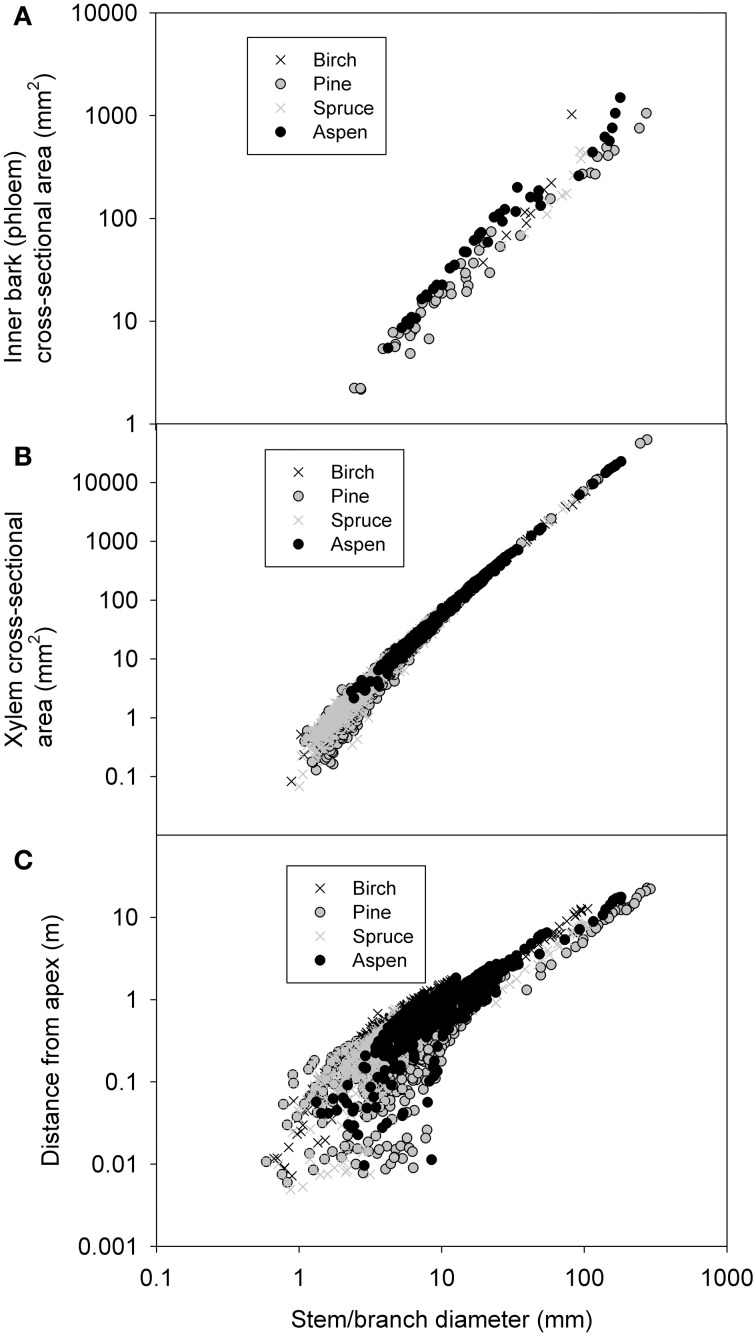
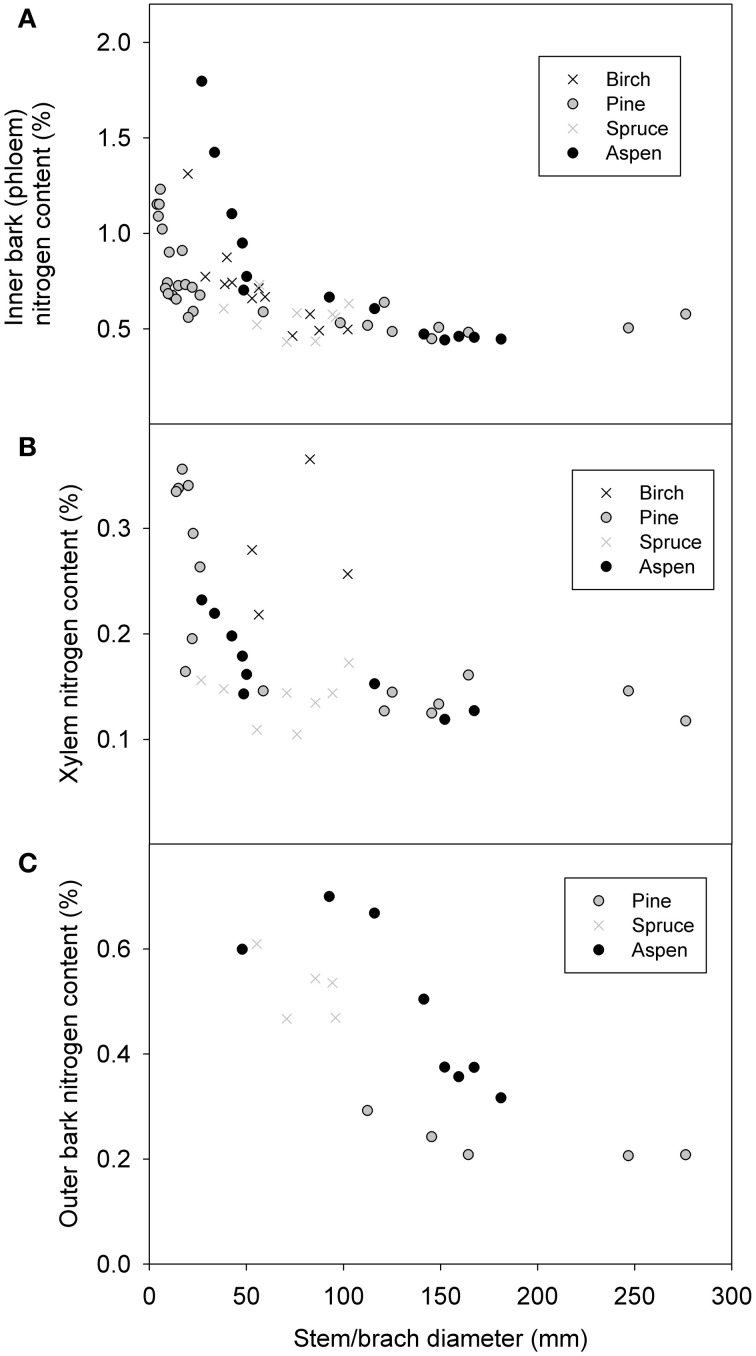
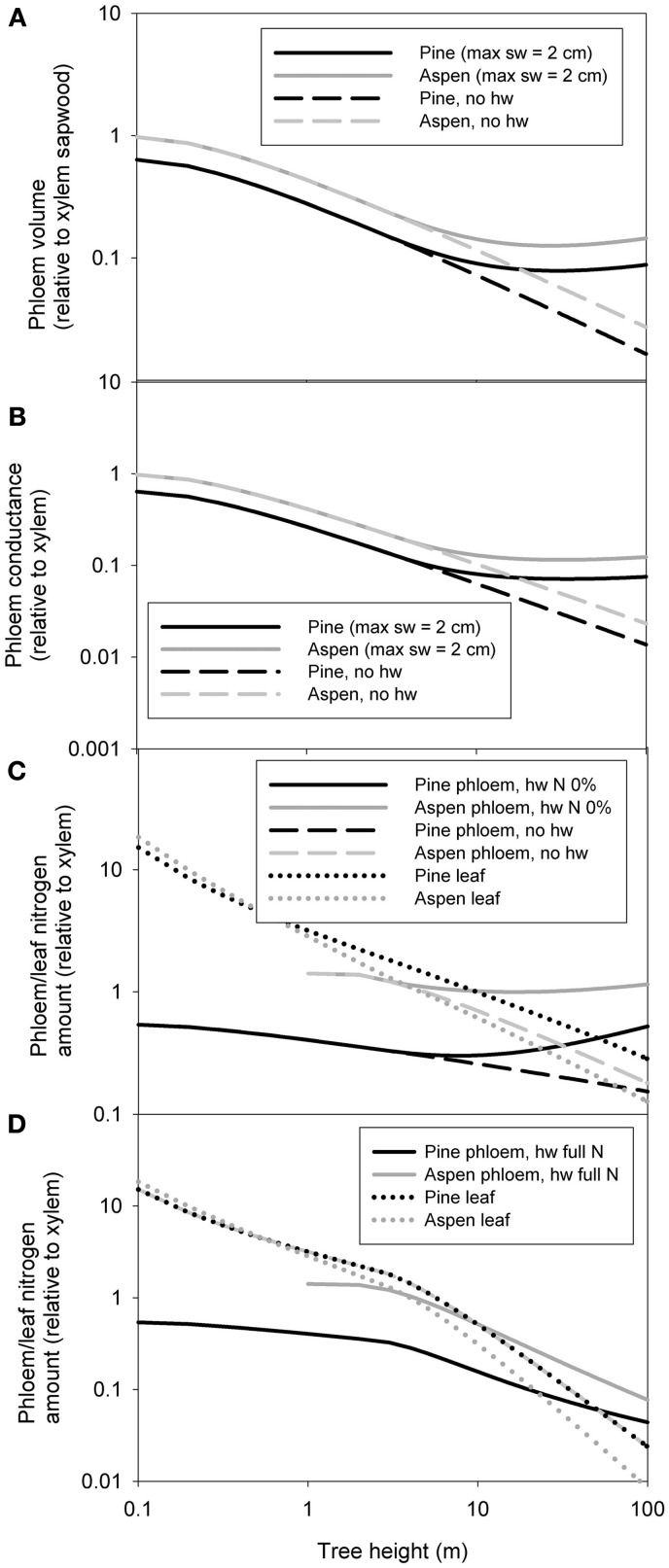
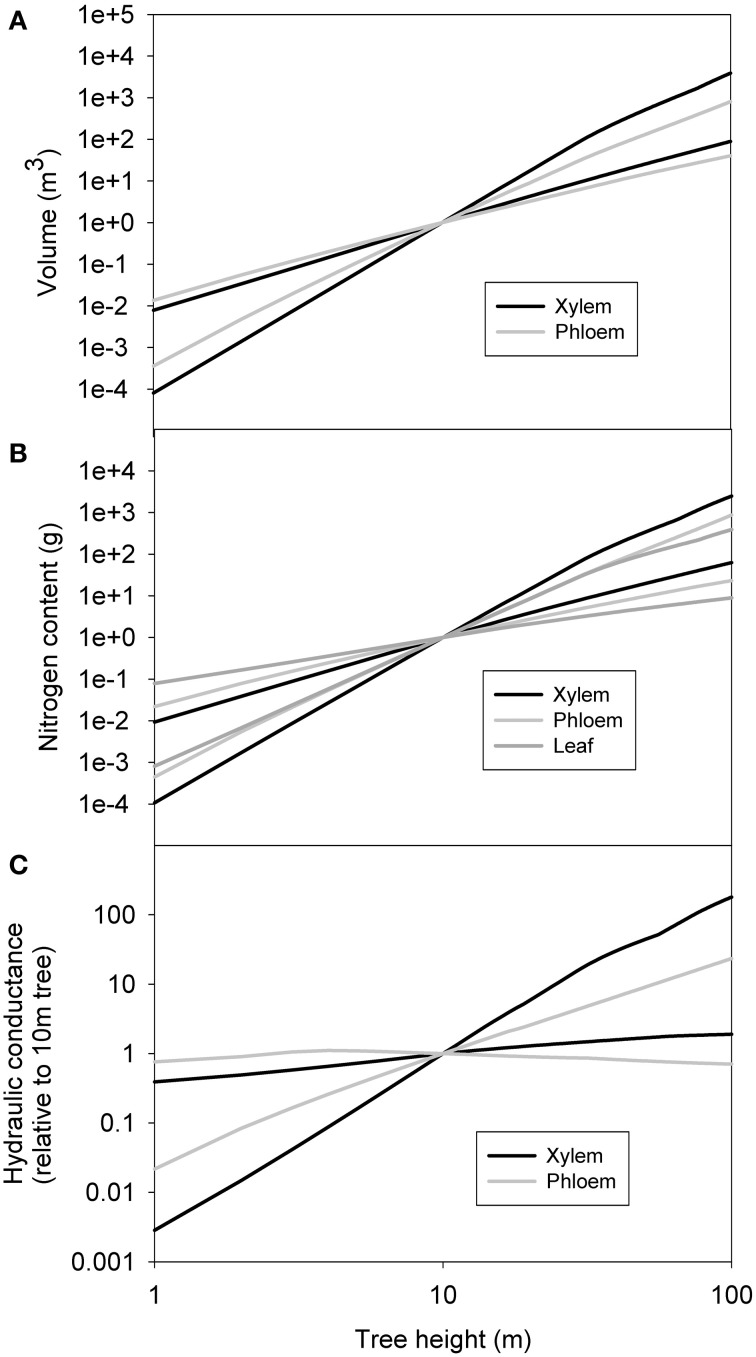
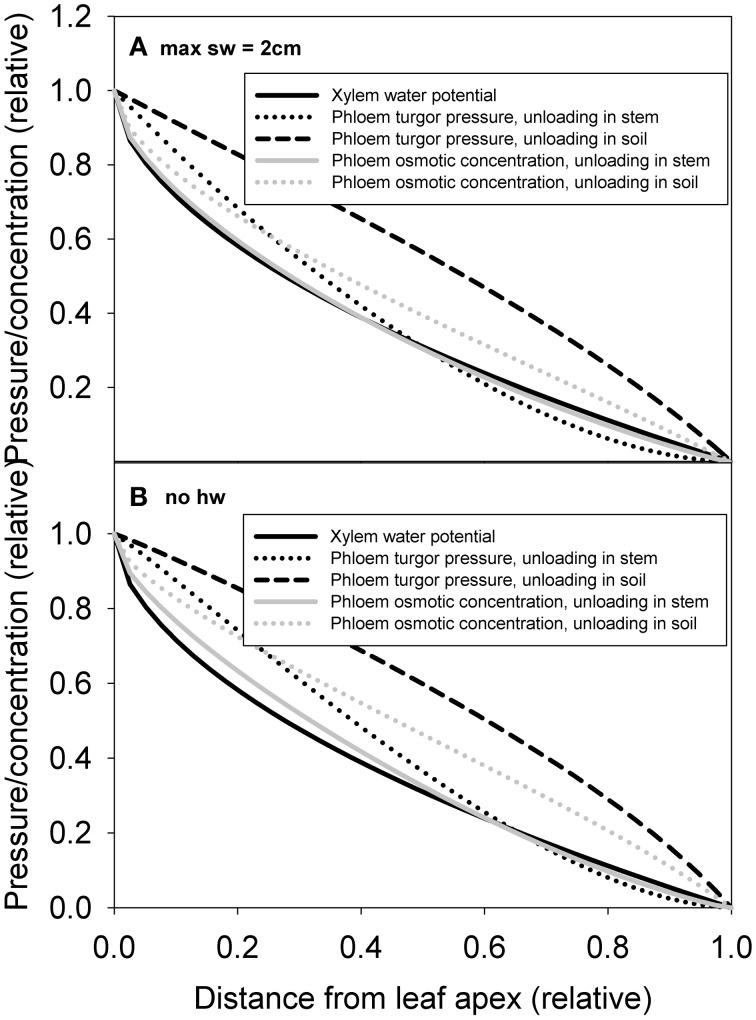
Xylem and phloem need to maintain steady transport rates of water and carbohydrates to match the exchange rates of these compounds at the leaves. A major proportion of the carbon and nitrogen assimilated by a tree is allocated to the construction and maintenance of the xylem and phloem long distance transport tissues. This proportion can be expected to increase with increasing tree size due to the growing transport distances between the assimilating tissues, i.e., leaves and fine roots, at the expense of their growth. We formulated whole tree level scaling relations to estimate how xylem and phloem volume, nitrogen content and hydraulic conductance scale with tree size, and how these properties are distributed along a tree height. Xylem and phloem thicknesses and nitrogen contents were measured within varying positions in four tree species from Southern Finland. Phloem volume, nitrogen amount and hydraulic conductance were found to be concentrated toward the branch and stem apices, in contrast to the xylem where these properties were more concentrated toward the tree base. All of the species under study demonstrated very similar trends. Total nitrogen amount allocated to xylem and phloem was predicted to be comparable to the nitrogen amount allocated to the leaves in small and medium size trees, and to increase significantly above the nitrogen content of the leaves in larger trees. Total volume, hydraulic conductance and nitrogen content of the xylem were predicted to increase faster than that of the phloem with increasing tree height in small trees (<~10 m in height). In larger trees, xylem sapwood turnover to heartwood, if present, would maintain phloem conductance at the same level with xylem conductance with further increases in tree height. Further simulations with a previously published xylem-phloem transport model demonstrated that the Münch pressure flow hypothesis could explain phloem transport with increasing tree height even for the tallest trees.
木质部和韧皮部需要维持稳定的水分和碳水化合物运输速率,以匹配叶片处这些化合物的交换速率。树木同化的碳和氮的很大一部分分配给木质部和韧皮部长距离运输组织的构建和维护。由于同化组织(即叶片和细根)之间的运输距离不断增加,这种比例预计会随着树木的增大而增加,从而牺牲其生长。我们制定了全树尺度的比例关系来估计木质部和韧皮部的体积、氮含量和水力传导率如何随树木大小而变化,以及这些特性如何沿树高分布。在芬兰南部的四个树种中,我们在不同位置测量了木质部和韧皮部的厚度和氮含量。发现韧皮部体积、氮含量和水力传导率集中在树枝和树干的顶端,而木质部的这些特性则更集中在树干的底部。所有研究的物种都表现出非常相似的趋势。分配给木质部和韧皮部的总氮量预计与小中和大树木中分配给叶片的氮量相当,并在更大的树木中显著高于叶片的氮含量。预测随着树木高度的增加,木质部的总体积、水力传导率和氮含量的增加速度将快于韧皮部。在小树(<~10 米高)中,木质部边材向心材的更替(如果存在)将随着树木高度的增加,使韧皮部传导率与木质部传导率保持相同水平。使用之前发表的木质部-韧皮部运输模型进行的进一步模拟表明,即使对于最高的树木,Münch 压力流假说也可以解释韧皮部运输随树木高度的增加。