Department of Pharmacology, Penn State College of Medicine, Hershey, Pennsylvania, United States of America ; Penn State Hershey Cancer Institute, Penn State College of Medicine, Hershey, Pennsylvania, United States of America.
Department of Pharmacology, Penn State College of Medicine, Hershey, Pennsylvania, United States of America.
PLoS One. 2013 Dec 19;8(12):e84648. doi: 10.1371/journal.pone.0084648. eCollection 2013.
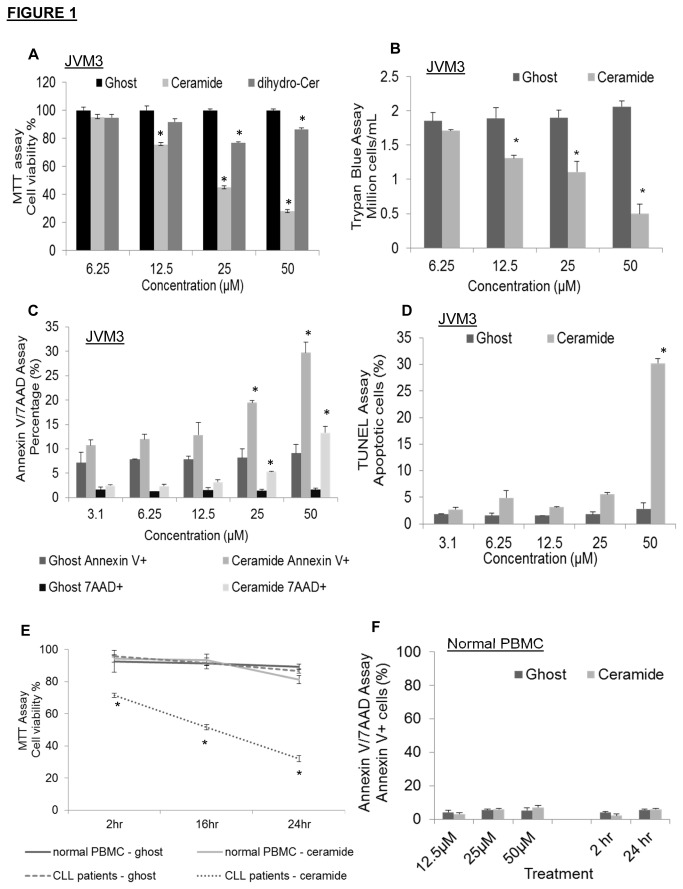
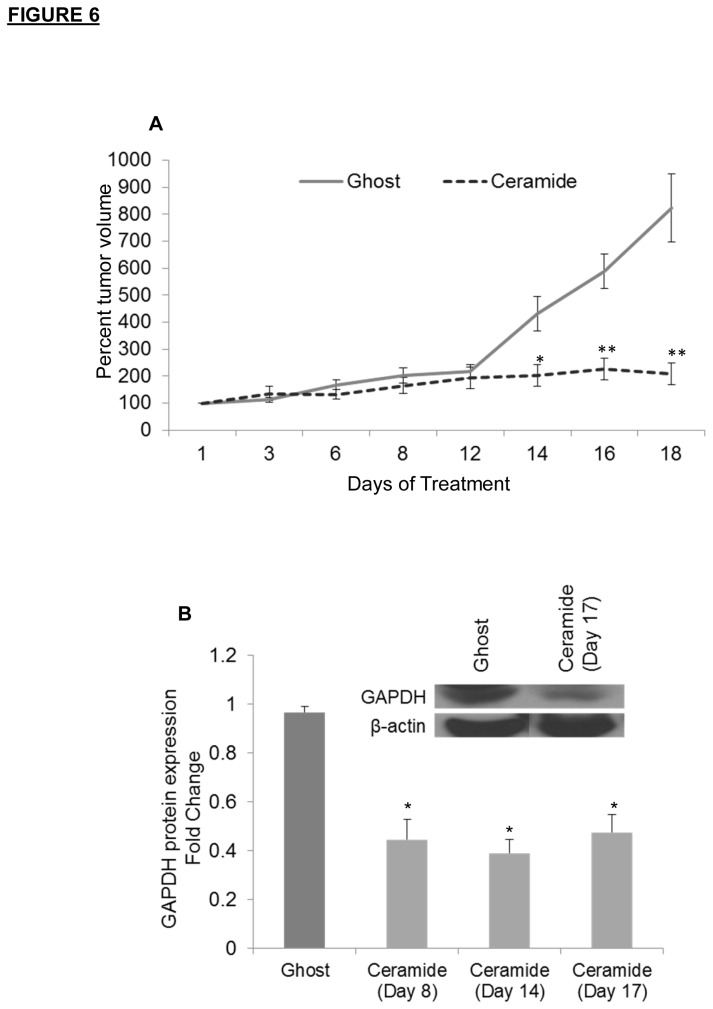
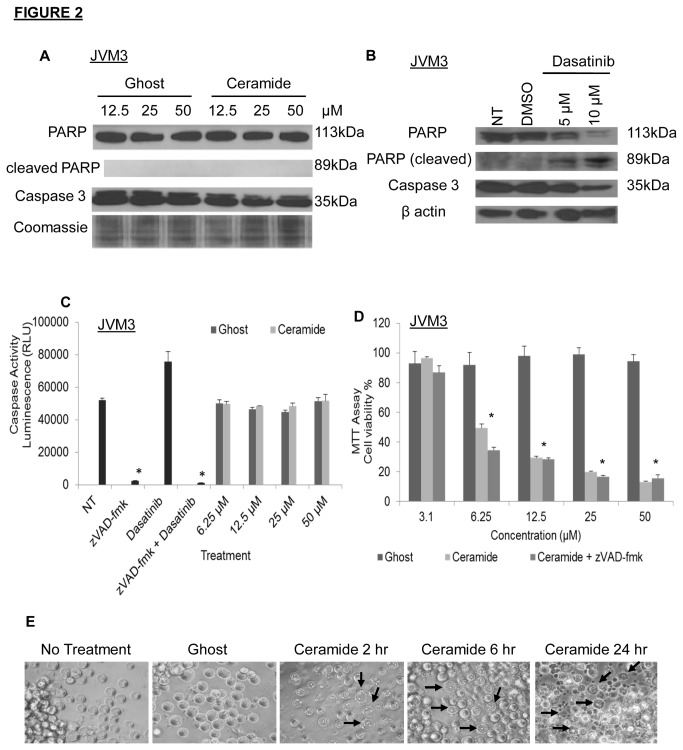
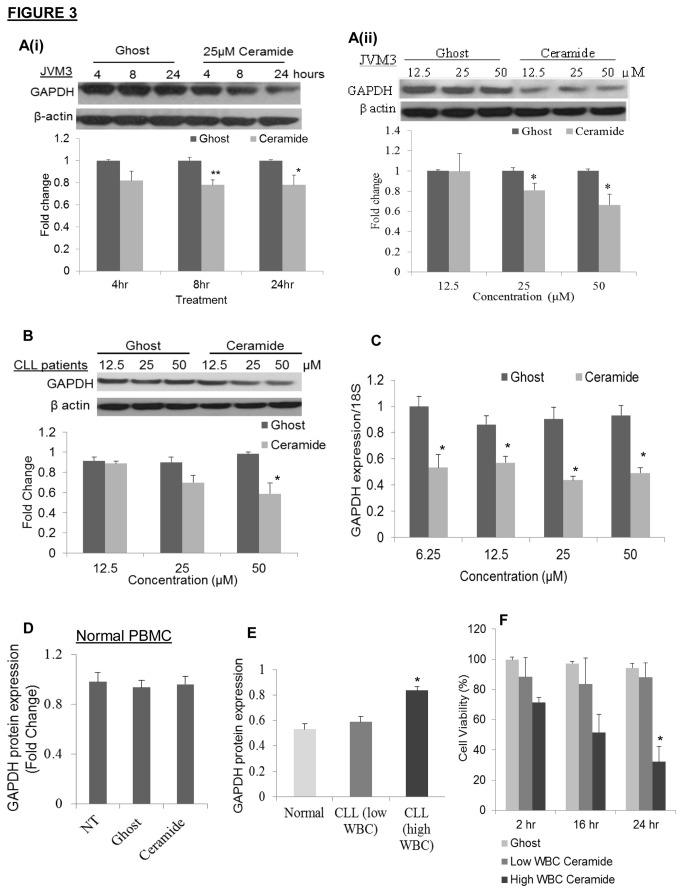
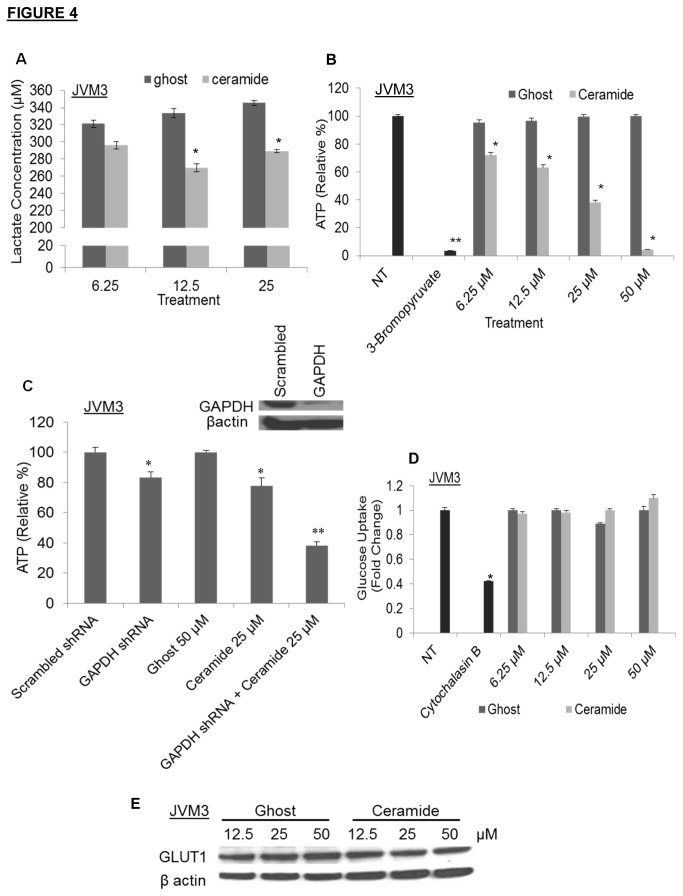
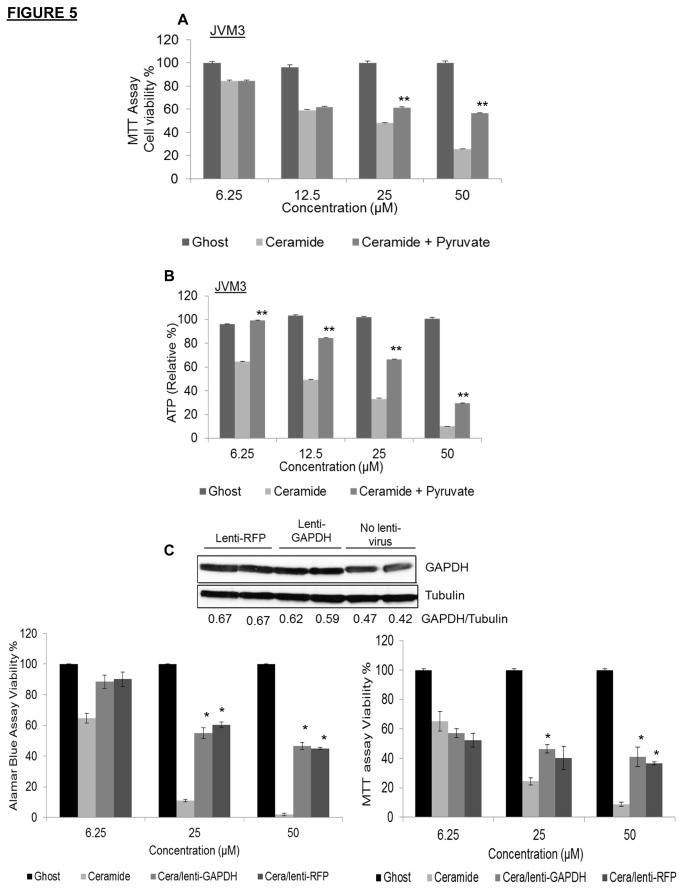
Ceramide is a sphingolipid metabolite that induces cancer cell death. When C6-ceramide is encapsulated in a nanoliposome bilayer formulation, cell death is selectively induced in tumor models. However, the mechanism underlying this selectivity is unknown. As most tumors exhibit a preferential switch to glycolysis, as described in the "Warburg effect", we hypothesize that ceramide nanoliposomes selectively target this glycolytic pathway in cancer. We utilize chronic lymphocytic leukemia (CLL) as a cancer model, which has an increased dependency on glycolysis. In CLL cells, we demonstrate that C6-ceramide nanoliposomes, but not control nanoliposomes, induce caspase 3/7-independent necrotic cell death. Nanoliposomal ceramide inhibits both the RNA and protein expression of GAPDH, an enzyme in the glycolytic pathway, which is overexpressed in CLL. To confirm that ceramide targets GAPDH, we demonstrate that downregulation of GAPDH potentiates the decrease in ATP after ceramide treatment and exogenous pyruvate treatment as well as GAPDH overexpression partially rescues ceramide-induced necrosis. Finally, an in vivo murine model of CLL shows that nanoliposomal C6-ceramide treatment elicits tumor regression, concomitant with GAPDH downregulation. We conclude that selective inhibition of the glycolytic pathway in CLL cells with nanoliposomal C6-ceramide could potentially be an effective therapy for leukemia by targeting the Warburg effect.
神经酰胺是一种神经鞘脂代谢物,可诱导癌细胞死亡。当 C6-神经酰胺被包裹在纳米脂质体双层制剂中时,会选择性地诱导肿瘤模型中的细胞死亡。然而,这种选择性的机制尚不清楚。由于大多数肿瘤表现出优先转向糖酵解,如“Warburg 效应”所述,我们假设神经酰胺纳米脂质体选择性地针对癌症中的这条糖酵解途径。我们利用慢性淋巴细胞白血病 (CLL) 作为癌症模型,该模型对糖酵解的依赖性增加。在 CLL 细胞中,我们证明 C6-神经酰胺纳米脂质体而非对照纳米脂质体诱导 caspase 3/7 非依赖性坏死性细胞死亡。纳米脂质体神经酰胺抑制糖酵解途径中酶 GAPDH 的 RNA 和蛋白表达,CLL 中 GAPDH 过表达。为了证实神经酰胺靶向 GAPDH,我们证明下调 GAPDH 可增强神经酰胺处理后 ATP 的减少以及外源性丙酮酸处理以及 GAPDH 过表达部分挽救神经酰胺诱导的坏死。最后,CLL 的体内小鼠模型表明,纳米脂质体 C6-神经酰胺处理会引起肿瘤消退,同时伴有 GAPDH 下调。我们得出结论,用纳米脂质体 C6-神经酰胺选择性抑制 CLL 细胞中的糖酵解途径可能通过靶向 Warburg 效应成为白血病的有效治疗方法。