Do Anthony T, Brooks Joseph T, Le Neveu Margot K, LaRocque Jeannine R
Department of Human Science, Georgetown University Medical Center, Washington, DC 20057.
G3 (Bethesda). 2014 Mar 20;4(3):425-32. doi: 10.1534/g3.113.010074.
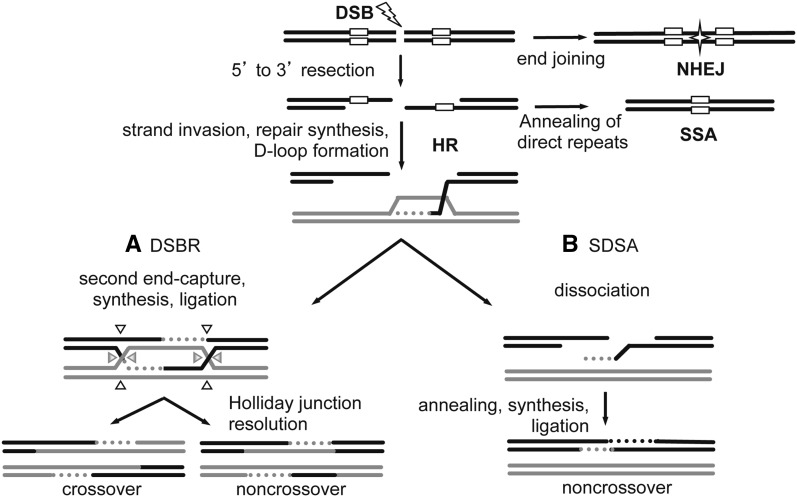
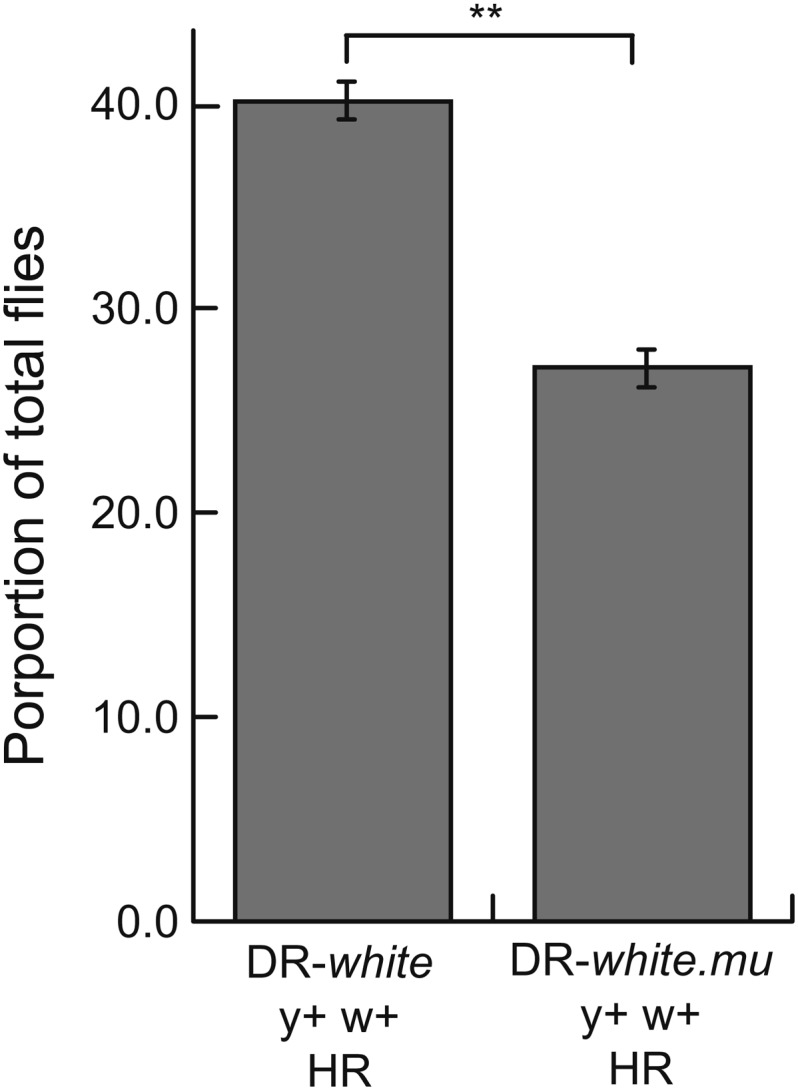
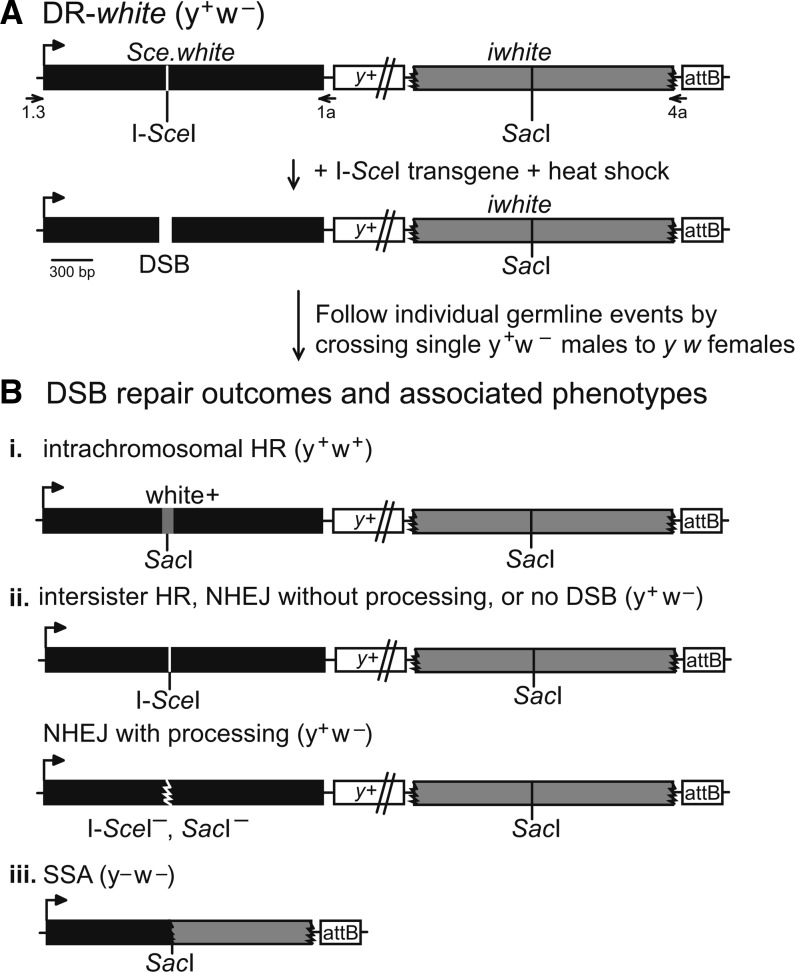
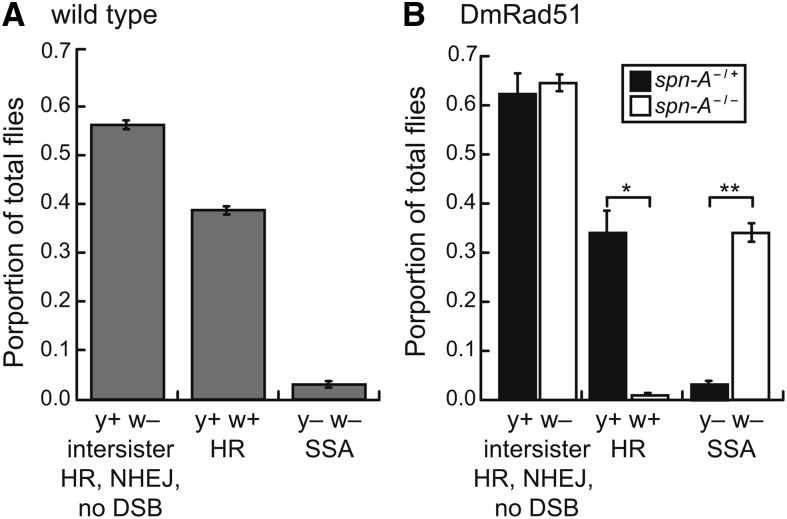
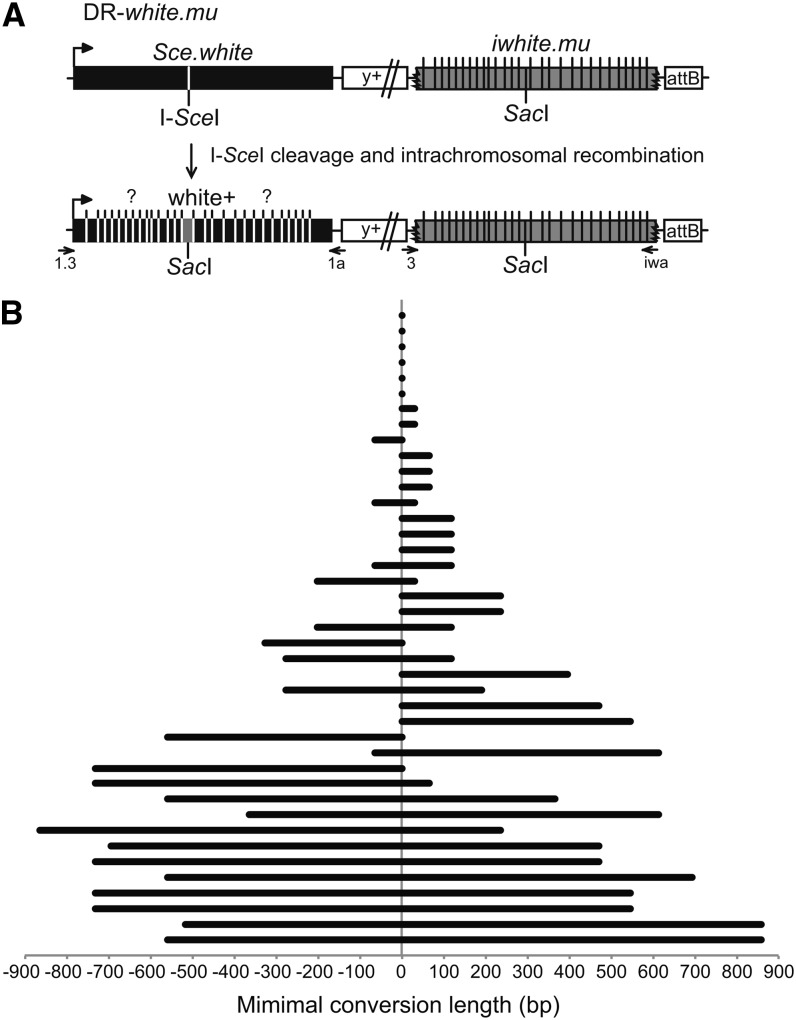
Double-strand breaks (DSBs) must be accurately and efficiently repaired to maintain genome integrity. Depending on the organism receiving the break, the genomic location of the DSB, and the cell-cycle phase in which it occurs, a DSB can be repaired by homologous recombination (HR), nonhomologous end-joining (NHEJ), or single-strand annealing (SSA). Two novel DSB repair assays were developed to determine the contributions of these repair pathways and to finely resolve repair event structures in Drosophila melanogaster. Rad51-dependent homologous recombination is the preferred DSB repair pathway in mitotically dividing cells, and the pathway choice between HR and SSA occurs after end resection and before Rad51-dependent strand invasion. HR events are associated with long gene conversion tracts and are both bidirectional and unidirectional, consistent with repair via the synthesis-dependent strand annealing pathway. Additionally, HR between diverged sequences is suppressed in Drosophila, similar to levels reported in human cells. Junction analyses of rare NHEJ events reveal that canonical NHEJ is utilized in this system.
双链断裂(DSB)必须被准确且高效地修复,以维持基因组完整性。根据接受断裂的生物体、DSB在基因组中的位置以及其发生时的细胞周期阶段,DSB可通过同源重组(HR)、非同源末端连接(NHEJ)或单链退火(SSA)进行修复。我们开发了两种新型的DSB修复检测方法,以确定这些修复途径的作用,并精细解析黑腹果蝇中的修复事件结构。依赖Rad51的同源重组是有丝分裂细胞中首选的DSB修复途径,HR和SSA之间的途径选择发生在末端切除后且Rad51依赖的链侵入之前。HR事件与长基因转换片段相关,并且是双向和单向的,这与通过合成依赖链退火途径进行的修复一致。此外,果蝇中不同序列之间的HR受到抑制,类似于人类细胞中报道的水平。对罕见NHEJ事件的连接分析表明,该系统中使用了经典的NHEJ。