Lee Chi-Ming, Gu Jiun-An, Rau Tin-Gan, Yang Che-Hsiung, Yang Wei-Chi, Huang Shih-Hao, Lin Feng-Yen, Lin Chun-Mao, Huang Sheng-Tung
Graduate Institute of Medical Sciences, College of Medicine, Taipei Medical University, No. 250, Wu-xing Street, Taipei 110, Taiwan.
Institute of Chemical Engineering, College of Engineering, National Taipei University of Technology, Taipei, Taiwan.
Biomed Res Int. 2013;2013:795095. doi: 10.1155/2013/795095. Epub 2013 Nov 28.
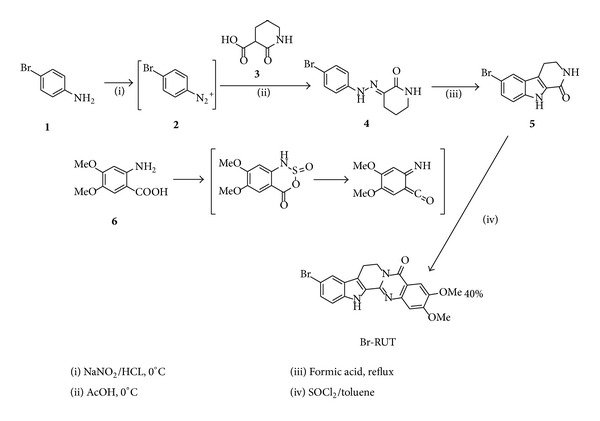
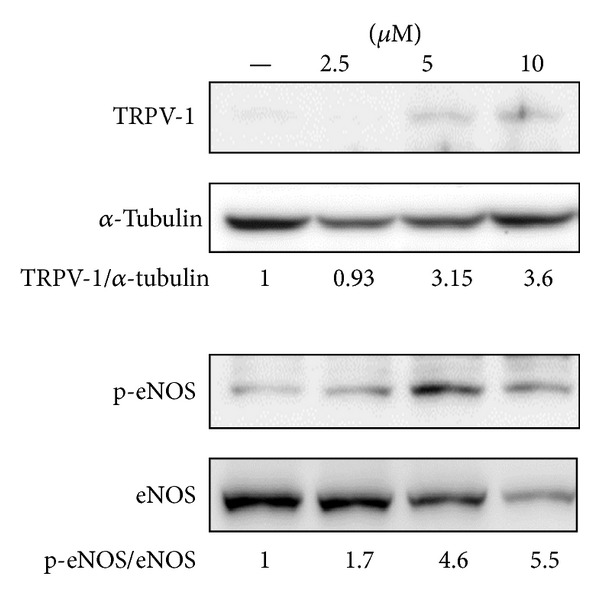
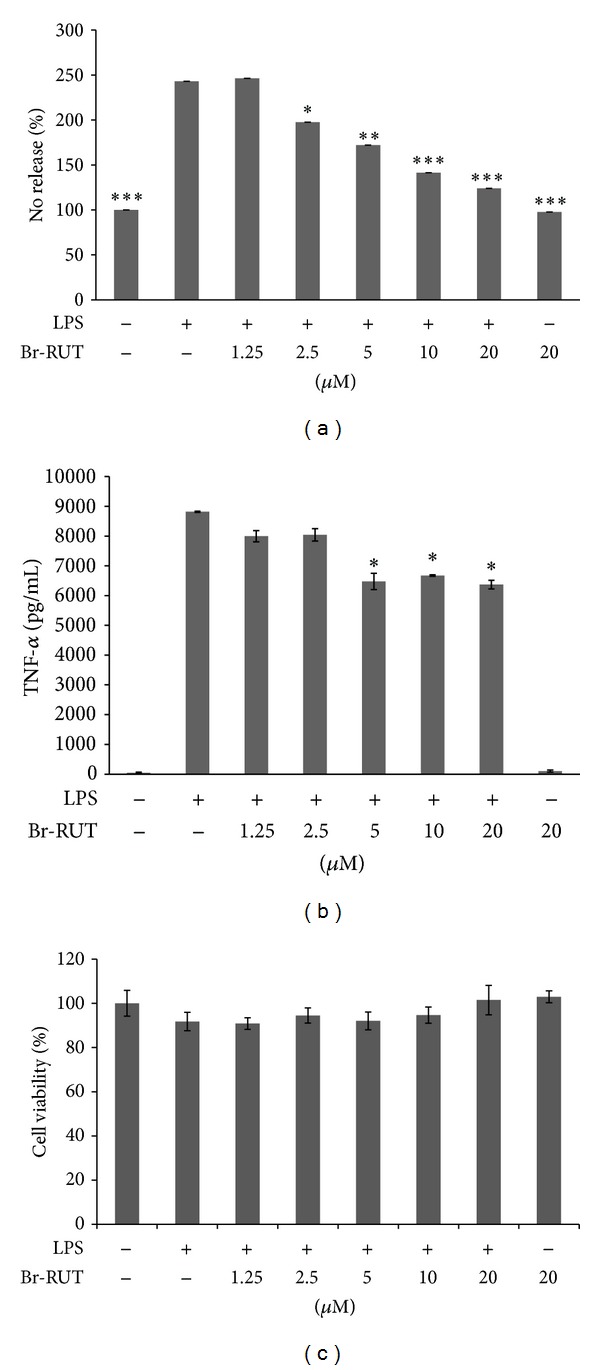
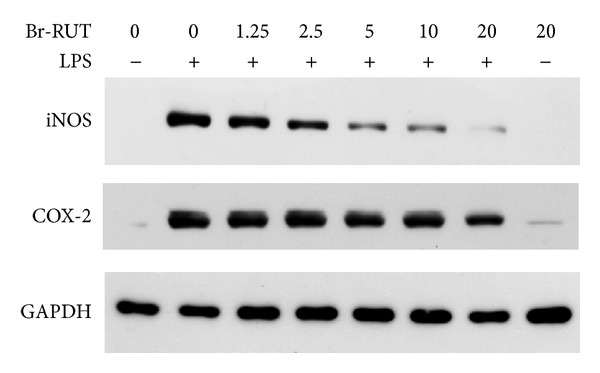
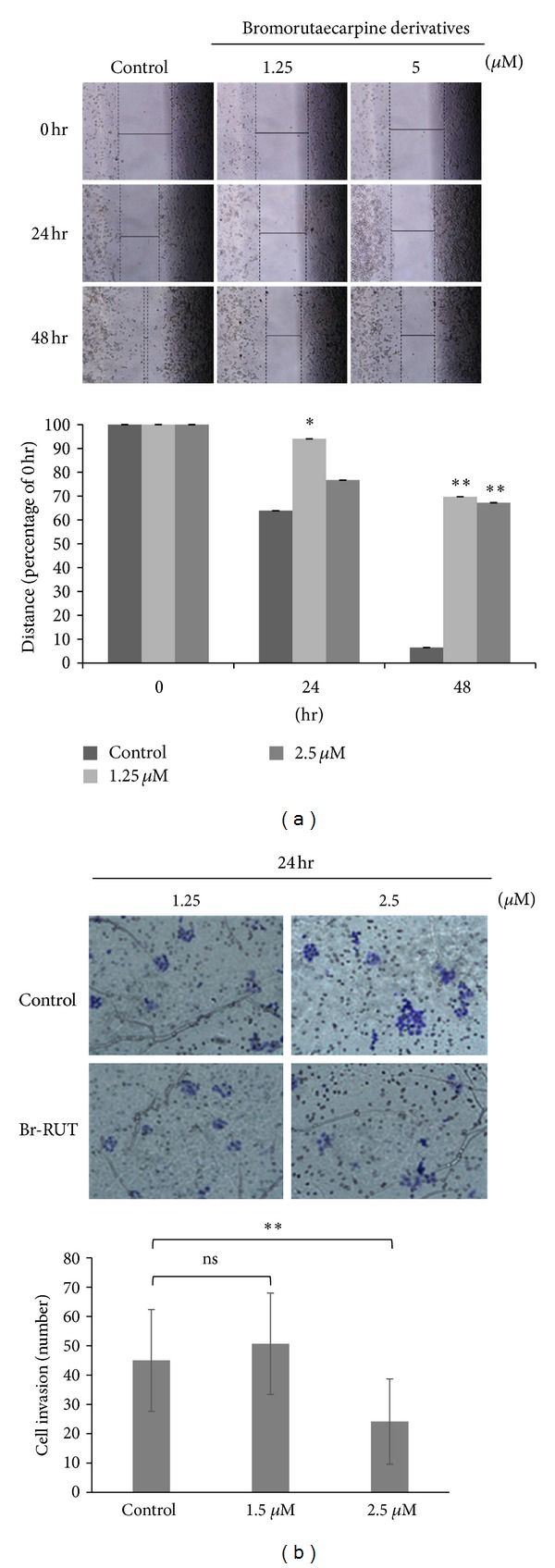
Rutaecarpine (RUT), the major bioactive ingredient isolated from the Chinese herb Evodia rutaecarpa, possesses a wide spectrum of biological activities, including anti-inflammation and preventing cardiovascular diseases. However, its high cytotoxicity hampers pharmaceutical development. We designed and synthesized a derivative of RUT, bromo-dimethoxyrutaecarpine (Br-RUT), which showed no cytotoxicity at 20 μM. Br-RUT suppressed nitric oxide (NO) production and tumor necrosis factor-α release in concentration-dependent (020 μM) manners in lipopolysaccharide (LPS)-treated RAW 264.7 macrophages; protein levels of inducible NO synthase (iNOS) and cyclooxygenase-2 induced by LPS were downregulated. Br-RUT inhibited cell migration and invasion of ovarian carcinoma A2780 cells with 048 h of treatment. Furthermore, Br-RUT enhanced the expression of transient receptor potential vanilloid type 1 and activated endothelial NOS in human aortic endothelial cells. These results suggest that the synthetic Br-RUT possesses very low cytotoxicity but retains its activities against inflammation and vasodilation that could be beneficial for cardiovascular disease therapeutics.
吴茱萸次碱(RUT)是从中药吴茱萸中分离出的主要生物活性成分,具有广泛的生物活性,包括抗炎和预防心血管疾病。然而,其高细胞毒性阻碍了药物开发。我们设计并合成了一种RUT衍生物,溴代二甲氧基吴茱萸次碱(Br-RUT),在20 μM时无细胞毒性。Br-RUT在脂多糖(LPS)处理的RAW 264.7巨噬细胞中,以浓度依赖性(020 μM)的方式抑制一氧化氮(NO)生成和肿瘤坏死因子-α释放;LPS诱导的诱导型NO合酶(iNOS)和环氧化酶-2的蛋白水平下调。Br-RUT在处理048小时后抑制卵巢癌A2780细胞的迁移和侵袭。此外,Br-RUT增强了人主动脉内皮细胞中瞬时受体电位香草酸亚型1的表达并激活了内皮型一氧化氮合酶。这些结果表明,合成的Br-RUT具有非常低的细胞毒性,但保留了其抗炎和血管舒张活性,这可能对心血管疾病治疗有益。