Ronayne Erin A, Cox Michael M
Department of Biochemistry, University of Wisconsin-Madison, Madison, WI 53706, USA.
Nucleic Acids Res. 2014 Apr;42(6):3871-83. doi: 10.1093/nar/gkt1342. Epub 2013 Dec 26.
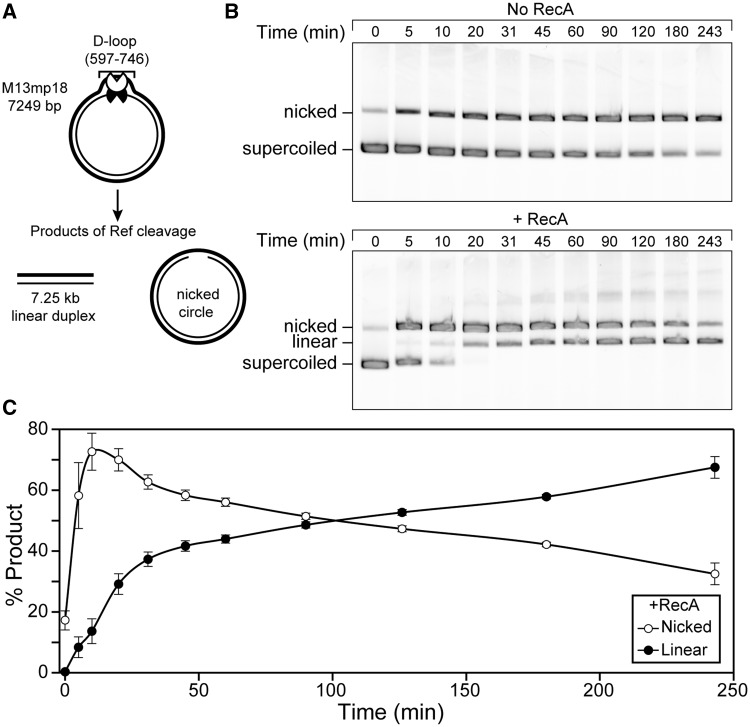
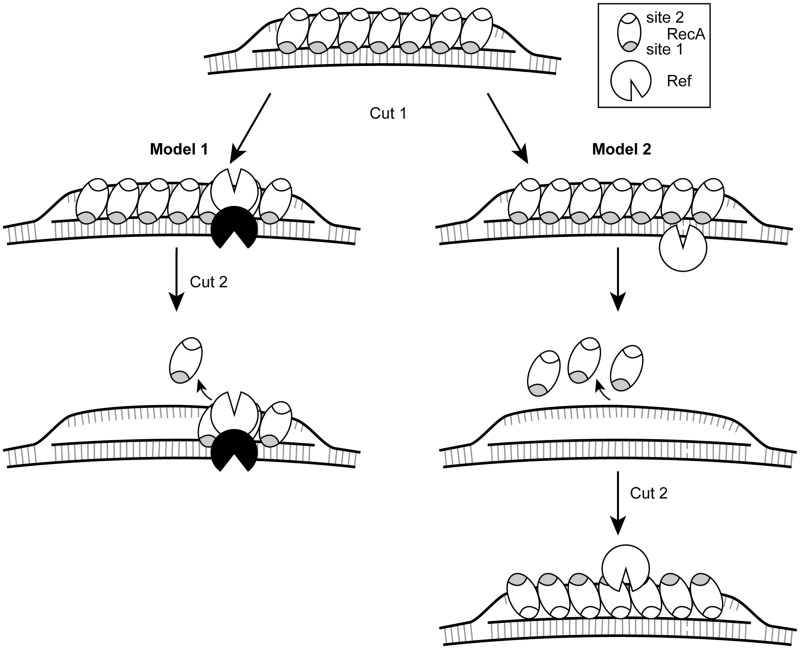
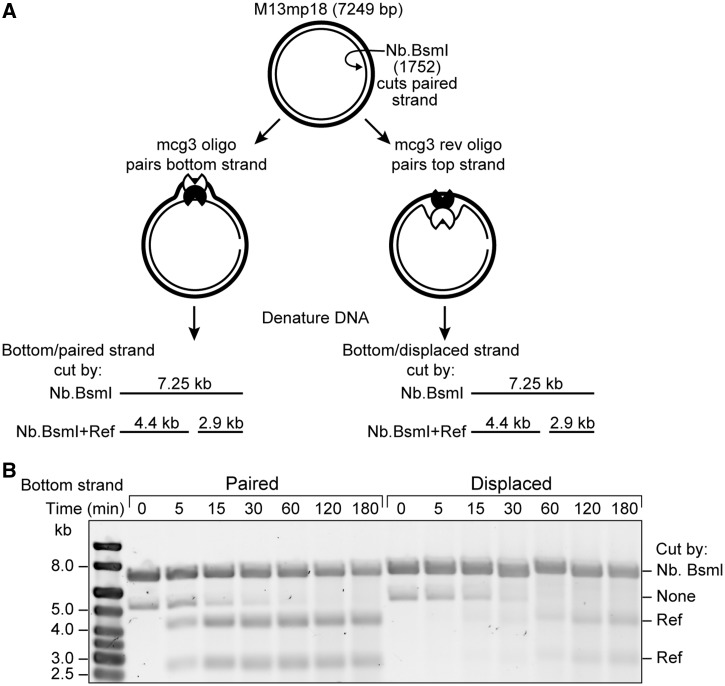
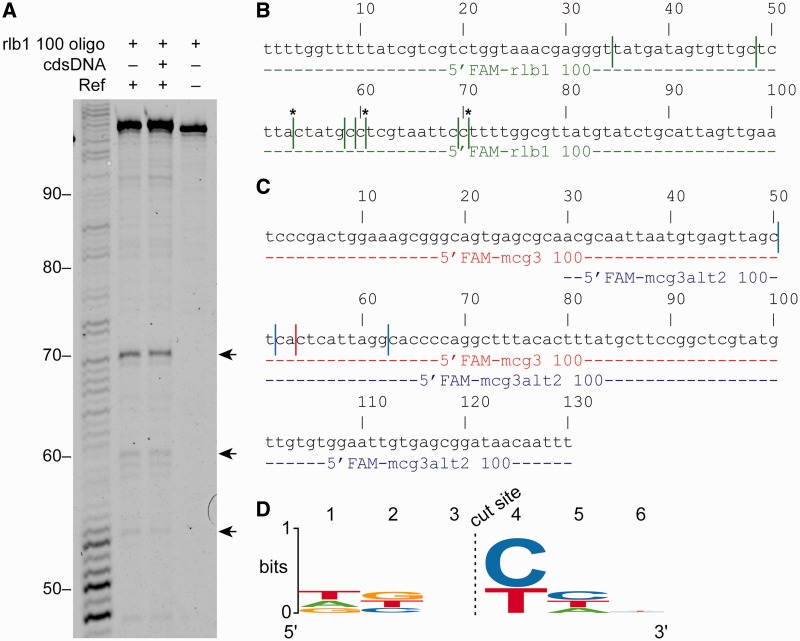
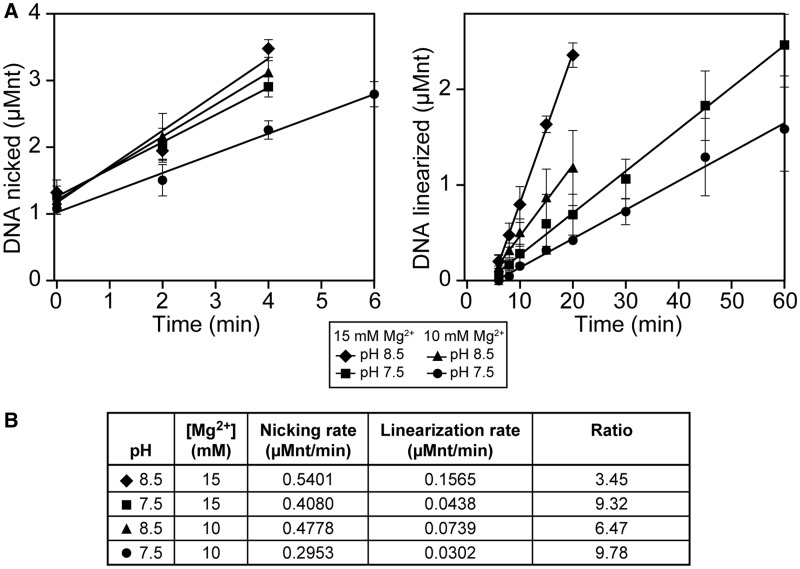
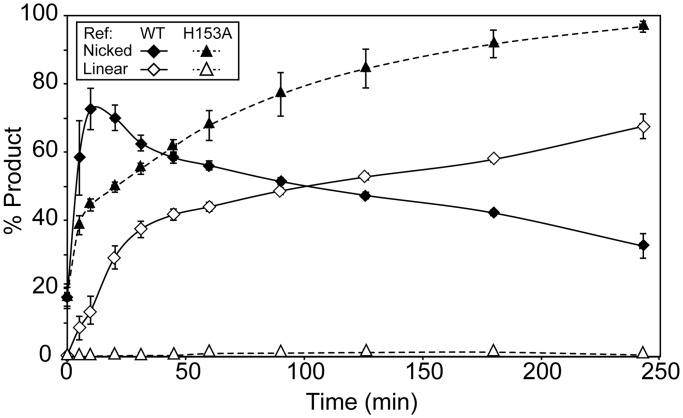
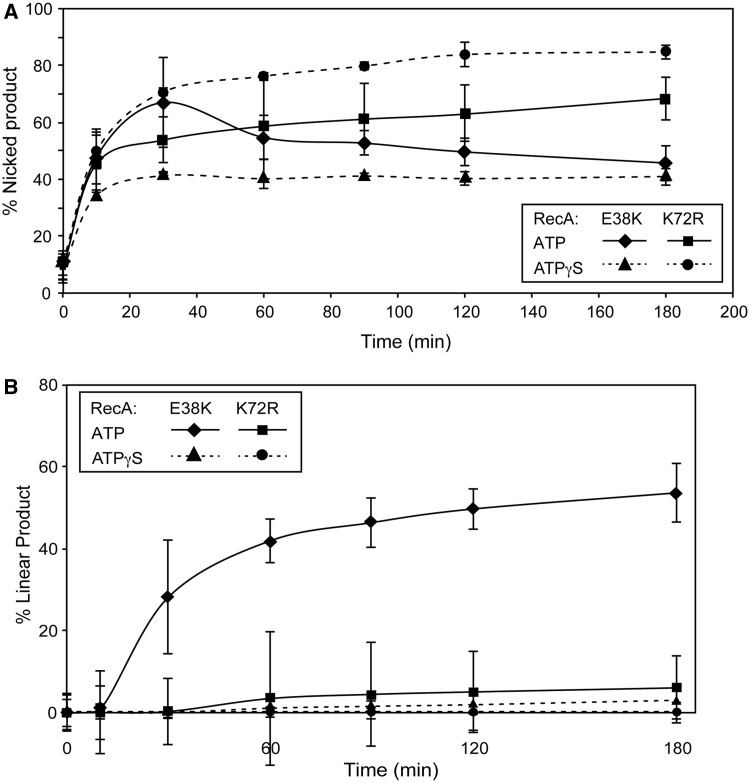
The bacteriophage P1 recombination enhancement function (Ref) protein is a RecA-dependent programmable endonuclease. Ref targets displacement loops formed when an oligonucleotide is bound by a RecA filament and invades homologous double-stranded DNA sequences. Mechanistic details of this reaction have been explored, revealing that (i) Ref is nickase, cleaving the two target strands of a displacement loop sequentially, (ii) the two strands are cleaved in a prescribed order, with the paired strand cut first and (iii) the two cleavage events have different requirements. Cutting the paired strand is rapid, does not require RecA-mediated ATP hydrolysis and is promoted even by Ref active site variant H153A. The displaced strand is cleaved much more slowly, requires RecA-mediated ATP hydrolysis and does not occur with Ref H153A. The two cleavage events are also affected differently by solution conditions. We postulate that the second cleavage (displaced strand) is limited by some activity of RecA protein.
噬菌体P1重组增强功能(Ref)蛋白是一种依赖RecA的可编程核酸内切酶。Ref靶向由RecA细丝结合寡核苷酸并侵入同源双链DNA序列时形成的置换环。已经探究了该反应的机制细节,结果表明:(i)Ref是切口酶,依次切割置换环的两条靶链;(ii)两条链按规定顺序切割,配对链先被切割;(iii)两次切割事件有不同的要求。切割配对链速度很快,不需要RecA介导的ATP水解,甚至Ref活性位点变体H153A也能促进该切割。被置换链的切割要慢得多,需要RecA介导的ATP水解,且Ref H153A不会引发该切割。两次切割事件也受溶液条件的不同影响。我们推测第二次切割(被置换链)受RecA蛋白的某些活性限制。