Epilepsy Research Group, Institute of Neuroscience and Physiology, The Sahlgrenska Academy at the University of Gothenburg, Gothenburg, Sweden.
Epilepsia. 2014 Feb;55(2):316-21. doi: 10.1111/epi.12488. Epub 2013 Dec 24.
Analyze the long-term outcome of callosotomies with regard to seizure types and frequencies and antiepileptic drug treatment.
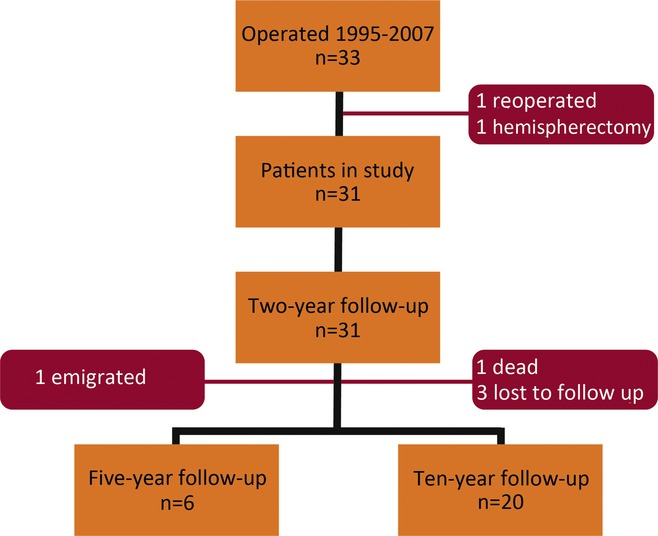
This longitudinal observational study is based on data from the prospective Swedish National Epilepsy Surgery Register. Thirty-one patients had undergone callosotomy in Sweden 1995-2007 and had been followed for 2 and 5 or 10 years after surgery. Data on their seizure types and frequencies, associated impairments, and use of antiepileptic drugs have been analyzed.
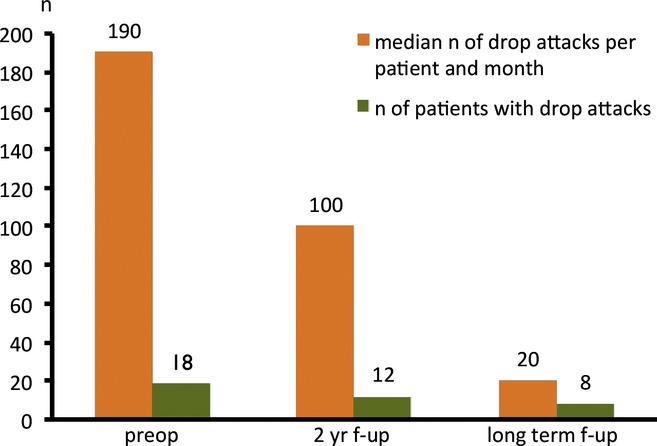
The median total number of seizures per patient and month was reduced from 195 before surgery to 110 two years after surgery and 90 at the long-term follow-up (5 or 10 years). The corresponding figures for drop attacks (tonic or atonic) were 190 before surgery, 100 2 years after surgery, and 20 at the long-term follow-up. Ten (56%) of the 18 patients with drop attacks were free from drop attacks at long-term follow-up. Three of the remaining eight patients had a reduction of >75%. At long-term follow-up, four were off medication. Only one of the 31 patients had no neurologic impairment.
The present population-based, prospective observational study shows that the corpus callosotomy reduces seizure frequency effectively and sustainably over the years. Most improvement was seen in drop attacks. The improvement in seizure frequency over time shown in this study suggests that callosotomy should be considered at an early age in children with intractable epilepsy and traumatizing drop attacks.
分析胼胝体切开术治疗癫痫的长期疗效,包括癫痫发作类型和频率以及抗癫痫药物治疗情况。
本纵向观察性研究基于前瞻性瑞典国家癫痫手术登记处的数据。1995-2007 年,31 例患者在瑞典行胼胝体切开术,术后 2 年和 5 年或 10 年进行随访。分析其癫痫发作类型和频率、相关损害以及抗癫痫药物的使用情况。
患者的癫痫发作总数中位数从术前的每月 195 次降至术后 2 年的每月 110 次和 5 或 10 年时的每月 90 次。相应的跌倒发作(强直或失神)总数从术前的每月 190 次降至术后 2 年的每月 100 次和 5 或 10 年时的每月 20 次。18 例跌倒发作患者中,10 例(56%)在长期随访时无跌倒发作,8 例中仍有发作的 3 例发作减少了>75%。在长期随访时,4 例患者停药。31 例患者中只有 1 例无神经功能损害。
本基于人群的前瞻性观察性研究表明,胼胝体切开术可有效、持续地降低癫痫发作频率多年。跌倒发作的改善最为显著。本研究中随时间推移癫痫发作频率的改善提示,对于耐药性癫痫和致残性跌倒发作的儿童,应考虑早期行胼胝体切开术。