Department of Neurosurgery, The First Affiliated Hospital of Soochow University, 188 Shizi Street, Suzhou 215006, Jiangsu Province, China.
J Neuroinflammation. 2013 Dec 28;10:157. doi: 10.1186/1742-2094-10-157.
Tamoxifen, a selective estrogen receptor modulator, has successfully been used to treat several animal models of brain injury, but the underlying mechanisms remain unclear. This study was undertaken to evaluate the effect of tamoxifen on the toll-like receptor 4 (TLR4)- and nuclear factor-κB (NF-κB)-related inflammatory signaling pathway and secondary brain injury in rats after subarachnoid hemorrhage (SAH).
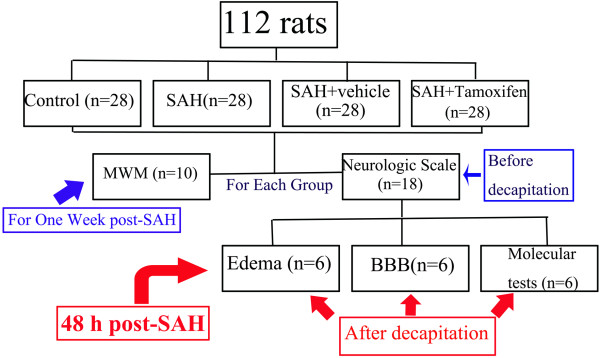
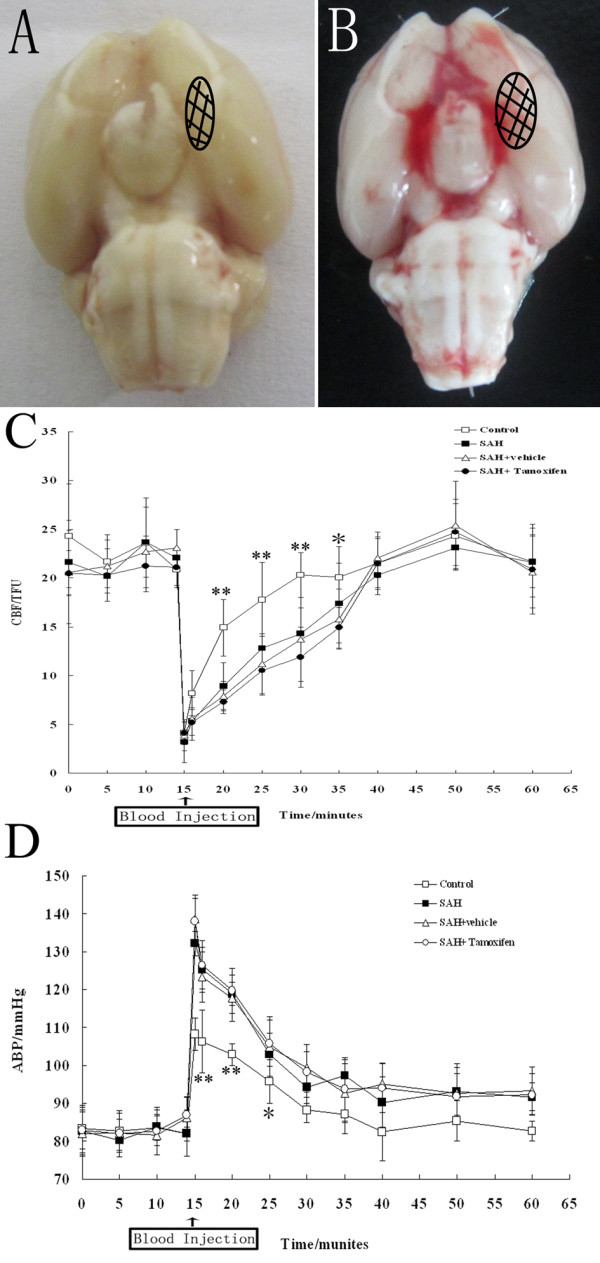
Adult male Sprague-Dawley rats were divided into four groups: (1) control group (n = 28); (2) SAH group (n = 28); (3) SAH + vehicle group (n = 28); and (4) SAH + tamoxifen group (n = 28). All SAH animals were subjected to injection of autologous blood into the prechiasmatic cistern once on day 0. In SAH + tamoxifen group, tamoxifen was administered intraperitoneally at a dose of 5 mg/kg at 2 h, 12 h, and 36 h after SAH. In the first set of experiments, brain samples were extracted and evaluated at 48 h after SAH. In the second set of experiments, the Morris water maze was used to investigate cognitive and memory changes.
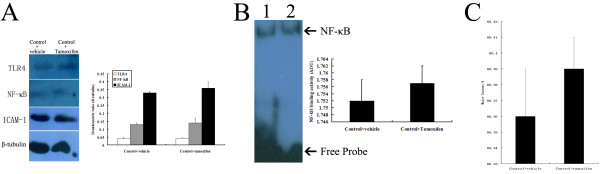
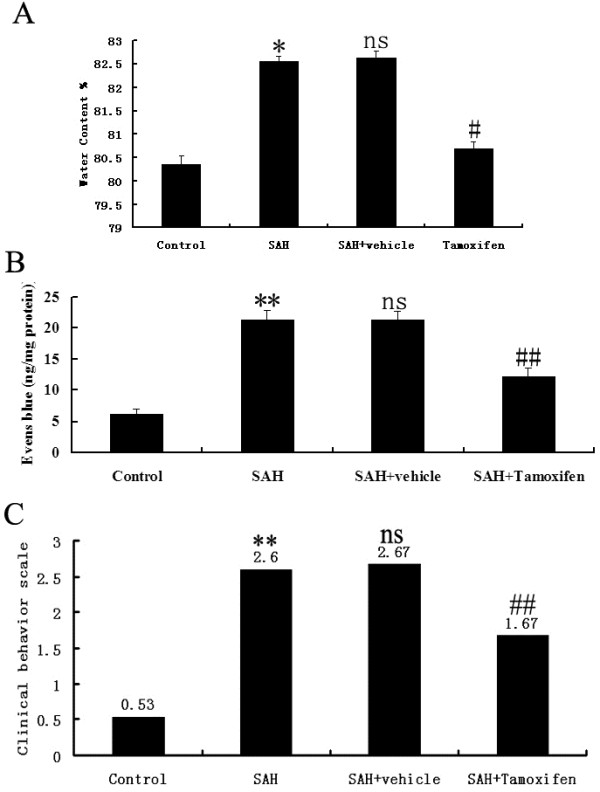
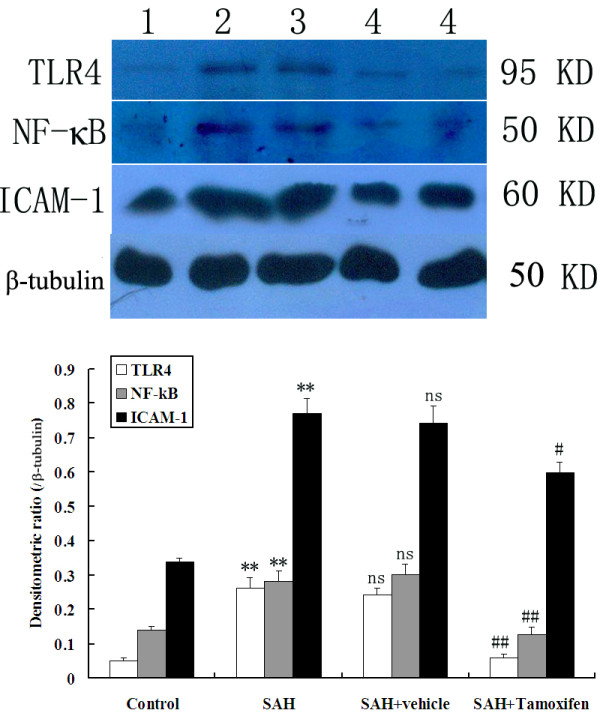
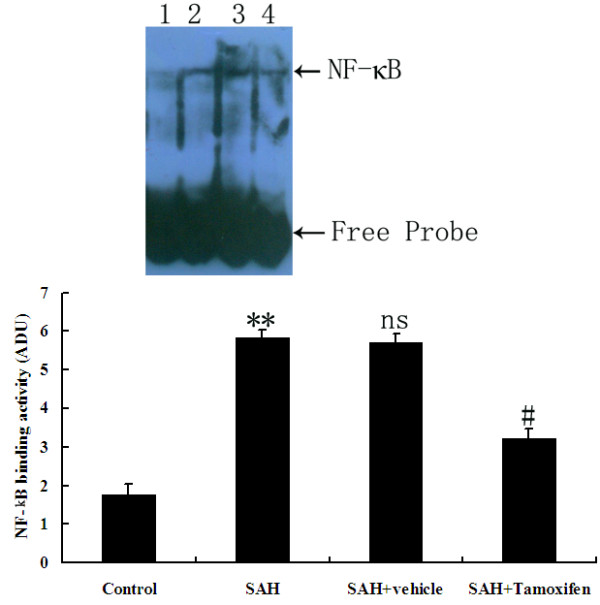
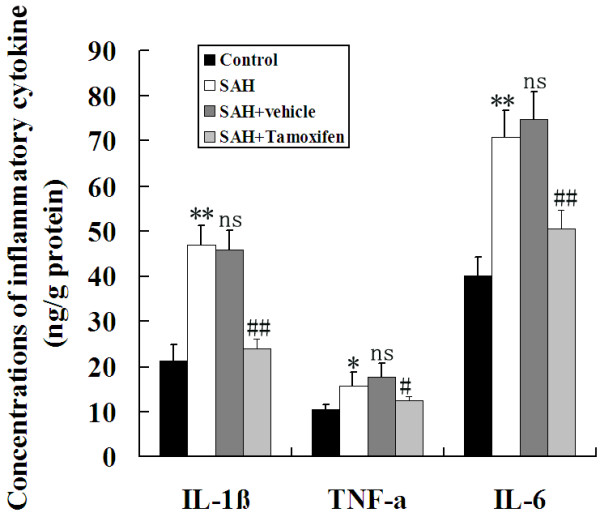
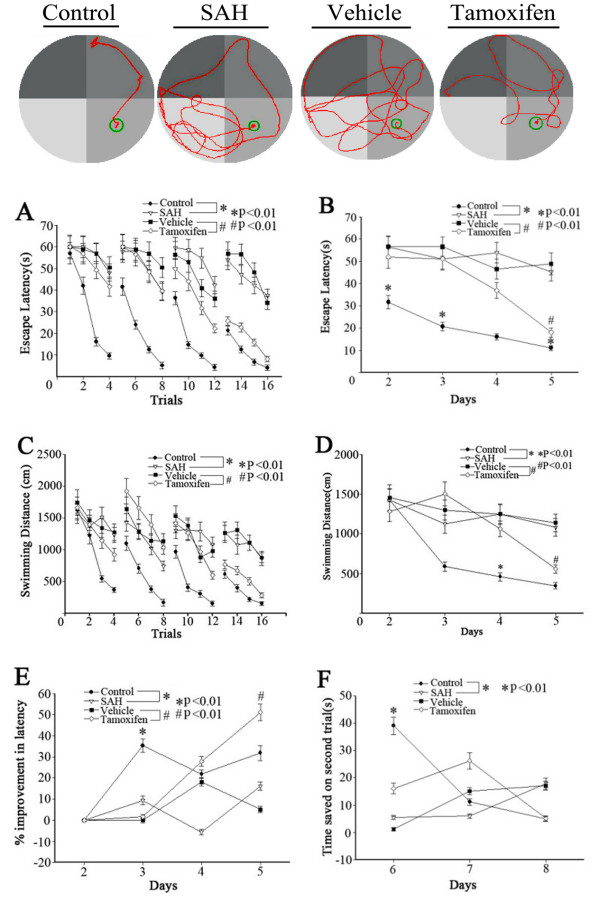
We found that treatment with tamoxifen markedly inhibited the protein expressions of TLR4, NF-κB and the downstream inflammatory agents, such as interleukin-1β (IL-1β), tumor necrosis factor-α (TNF-α), interleukin-6 (IL-6), and intercellular adhesion molecule-1 (ICAM-1). Administration of tamoxifen following SAH significantly ameliorated the early brain injury (EBI), such as brain edema, blood-brain barrier (BBB) impairment, and clinical behavior scale. Learning deficits induced by SAH were markedly alleviated after tamoxifen treatment.
Post-SAH tamoxifen administration may attenuate TLR4/NF-kappaB-mediated inflammatory response in the rat brain and result in abatement of the development of EBI and cognitive dysfunction after SAH.
他莫昔芬是一种选择性雌激素受体调节剂,已成功用于治疗多种脑损伤动物模型,但潜在机制尚不清楚。本研究旨在评估他莫昔芬对蛛网膜下腔出血(SAH)后大鼠 Toll 样受体 4(TLR4)和核因子-κB(NF-κB)相关炎症信号通路及继发性脑损伤的影响。
成年雄性 Sprague-Dawley 大鼠分为四组:(1)对照组(n=28);(2)SAH 组(n=28);(3)SAH+载体组(n=28);(4)SAH+他莫昔芬组(n=28)。所有 SAH 动物于 0 日在视交叉前池内注射自体血一次。SAH+他莫昔芬组在 SAH 后 2 h、12 h 和 36 h 时腹腔内给予他莫昔芬 5 mg/kg。在第一组实验中,在 SAH 后 48 h 提取并评估脑样本。在第二组实验中,采用 Morris 水迷宫评估认知和记忆变化。
我们发现,他莫昔芬治疗可显著抑制 TLR4、NF-κB 及其下游炎症因子如白细胞介素-1β(IL-1β)、肿瘤坏死因子-α(TNF-α)、白细胞介素-6(IL-6)和细胞间黏附分子-1(ICAM-1)的蛋白表达。SAH 后给予他莫昔芬治疗可显著改善早期脑损伤(EBI),如脑水肿、血脑屏障(BBB)损伤和临床行为评分。他莫昔芬治疗后,SAH 引起的学习缺陷明显减轻。
SAH 后给予他莫昔芬可减轻 TLR4/NF-κB 介导的大鼠脑内炎症反应,减轻 SAH 后 EBI 及认知功能障碍的发展。