Charrua Ana, Pinto Rui, Taylor Anna, Canelas André, Ribeiro-da-Silva Alfredo, Cruz Célia D, Birder Lori Ann, Cruz Francisco
Department of Experimental Biology, Faculty of Medicine, University of Porto, Porto, Portugal.
IBMC - Instituto de Biologia Molecular e Celular, University of Porto, Porto, Portugal.
Neurourol Urodyn. 2015 Jun;34(5):489-96. doi: 10.1002/nau.22542. Epub 2013 Dec 24.
To evaluate sympathetic system activity in bladder pain syndrome/interstitial cystitis (BPS/IC) patients and to investigate if chronic adrenergic stimulation in intact rats induces BPS/IC-like bladder modifications.
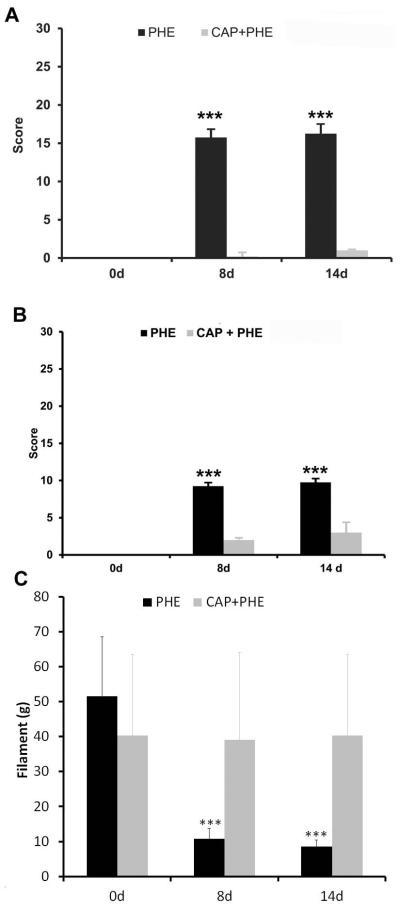
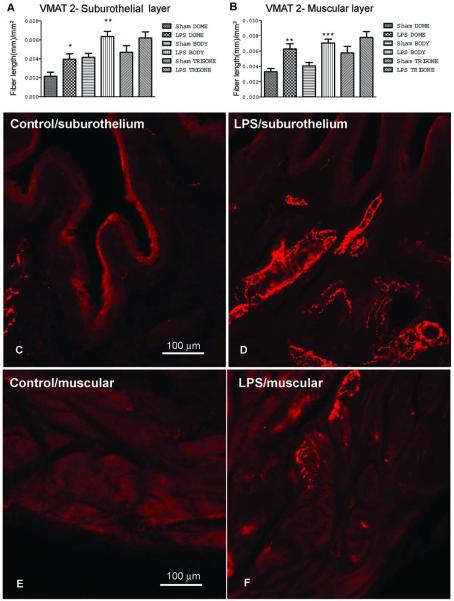
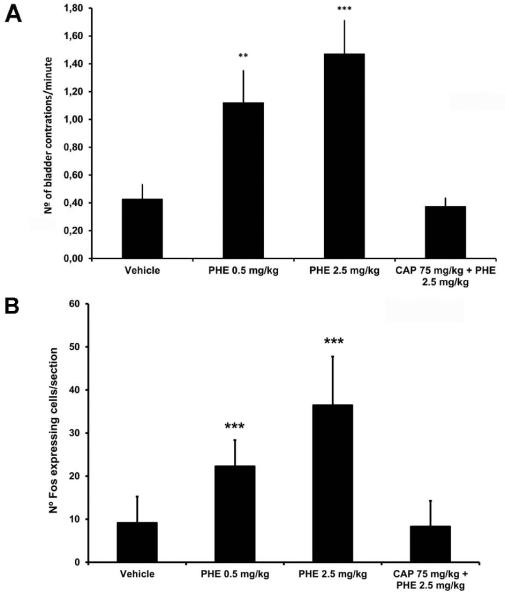
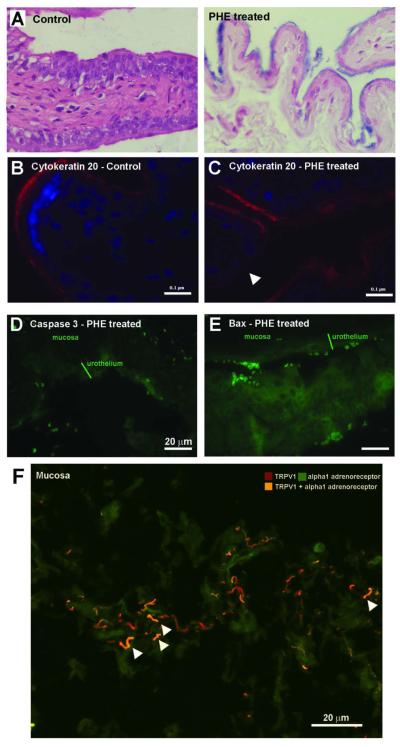
Clinical study--In BPS/IC patients and aged and body mass index matched volunteers TILT test was undertaken and catecholamines were measured in plasma and 24 hr urine samples. Experimental study--Phenylephrine was injected subcutaneously (14 days) to female Wistar rats. Pain behavior, spinal Fos expression, urinary spotting, number of fecal pellets expelled, frequency of reflex bladder contractions, and urothelial height were analyzed. Urothelium permeability was investigated by trypan blue staining. Immunoreactivity against caspase 3 and bax were studied in the urothelium and against alpha-1-adrenoreceptor and TRPV1 in suburothelial nerves. Mast cell number was determined in the sub-urothelium. In rats with lipopolysaccharide-induced cystitis, urinary catecholamines, and Vesicular Monoamine Transporter 2 (VMAT2) expression in bladder nerves were analyzed.
The TILT test showed an increase of sympathetic activity. Noradrenaline levels in blood at resting conditions and in 24-hr urine samples were higher in BPS/IC patients. Phenylephrine administration increased visceral pain, spinal Fos expression, bladder reflex activity, urinary spotting and the number of expelled fecal pellets. The mucosa showed urothelial thinning and increased immunoreactivity for caspase 3 and bax. Trypan blue staining was only observed in phenylephrine treated animals. Suburothelial nerves co-expressed alpha1 and TRPV1. Mastocytosis was present in the suburothelium. Cystitis increased sympathetic nerve density and urinary noradrenaline levels.
Excessive adrenergic stimulation of the bladder may contribute to the pathophysiological mechanisms of BPS/IC.
评估膀胱疼痛综合征/间质性膀胱炎(BPS/IC)患者的交感神经系统活动,并研究完整大鼠的慢性肾上腺素能刺激是否会诱发类似BPS/IC的膀胱改变。
临床研究——对BPS/IC患者以及年龄和体重指数匹配的志愿者进行倾斜试验,并检测血浆和24小时尿液样本中的儿茶酚胺。实验研究——对雌性Wistar大鼠皮下注射去氧肾上腺素(持续14天)。分析疼痛行为、脊髓Fos表达、尿斑、排出的粪便颗粒数量、膀胱反射收缩频率和尿路上皮高度。通过台盼蓝染色研究尿路上皮通透性。研究尿路上皮中半胱天冬酶3和bax的免疫反应性以及膀胱下神经中α-1-肾上腺素能受体和TRPV1的免疫反应性。测定膀胱下组织中的肥大细胞数量。分析脂多糖诱导膀胱炎大鼠的尿儿茶酚胺和膀胱神经中囊泡单胺转运体2(VMAT2)的表达。
倾斜试验显示交感神经活动增加。BPS/IC患者静息状态下血液和24小时尿液样本中的去甲肾上腺素水平较高。注射去氧肾上腺素会增加内脏疼痛、脊髓Fos表达、膀胱反射活动、尿斑和排出的粪便颗粒数量。黏膜显示尿路上皮变薄,半胱天冬酶3和bax的免疫反应性增加。仅在去氧肾上腺素处理的动物中观察到台盼蓝染色。膀胱下神经共表达α1和TRPV1。膀胱下组织中存在肥大细胞增多。膀胱炎增加了交感神经密度和尿去甲肾上腺素水平。
膀胱的肾上腺素能刺激过度可能有助于BPS/IC的病理生理机制。