Lao Xintian, Suwabe Keita, Niikura Satoshi, Kakita Mitsuru, Iwano Megumi, Takayama Seiji
Graduate School of Biological Sciences, Nara Institute of Science and Technology, Ikoma, Nara 630-0192, Japan.
J Exp Bot. 2014 Mar;65(4):939-51. doi: 10.1093/jxb/ert438. Epub 2013 Dec 27.
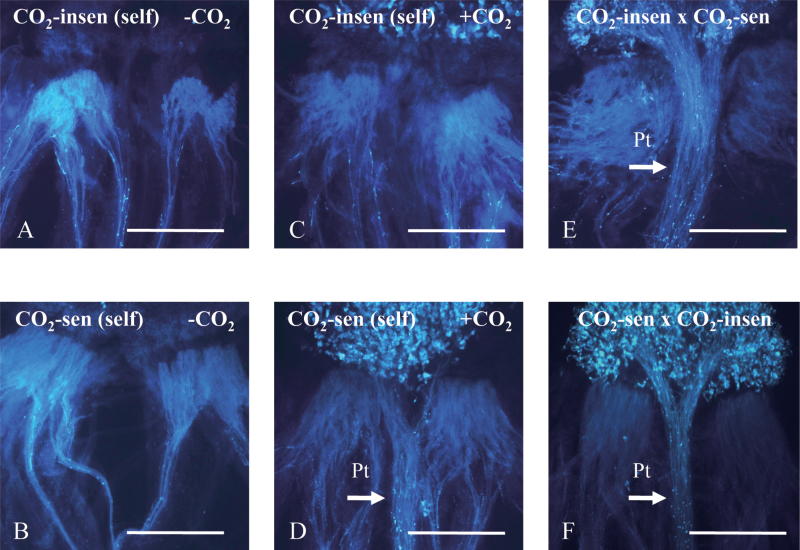
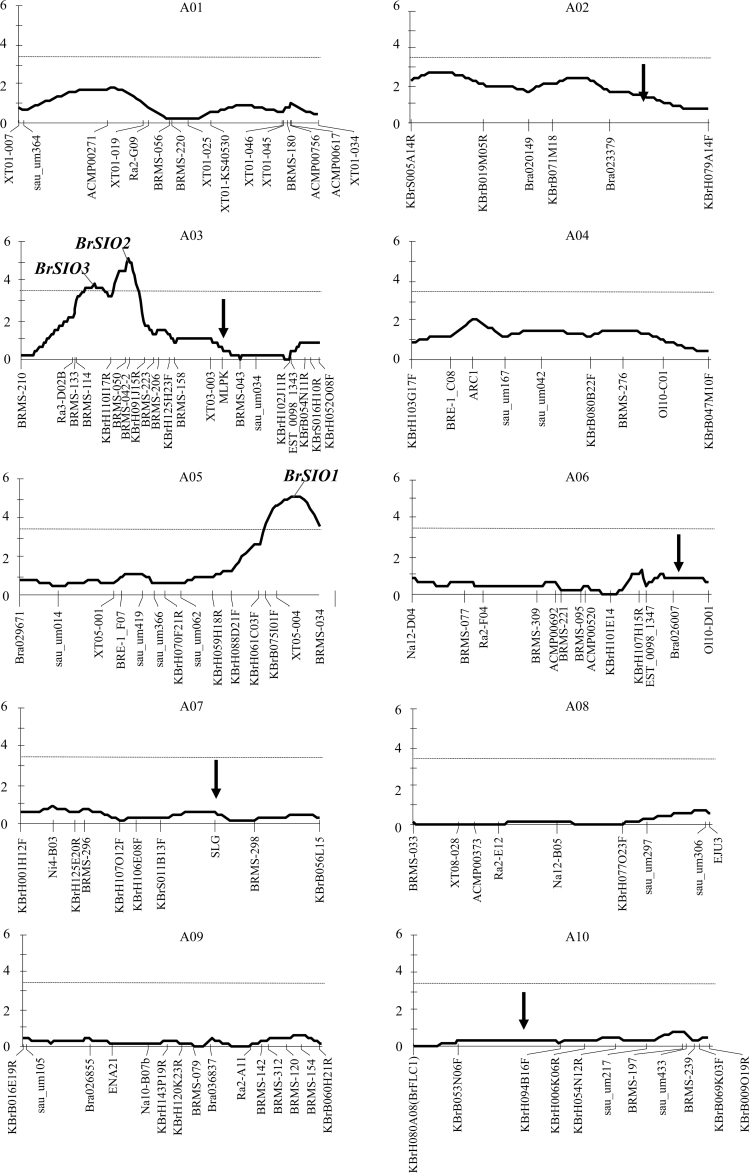
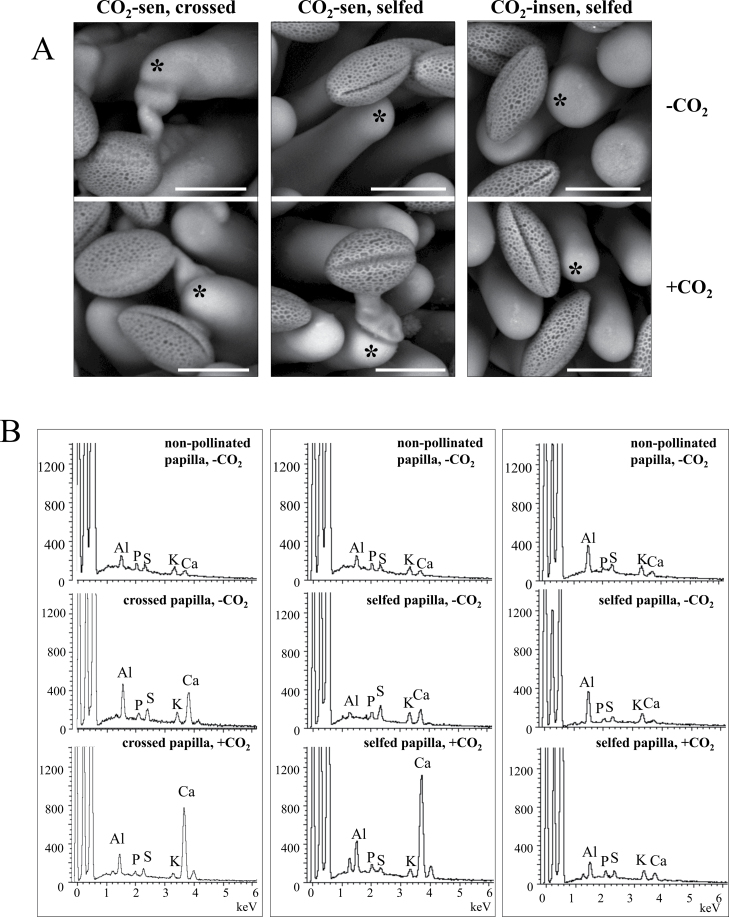
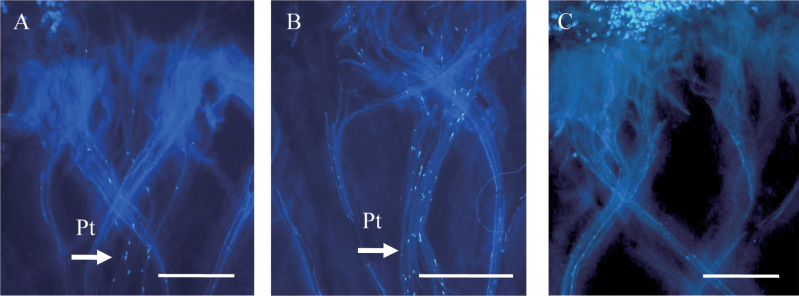
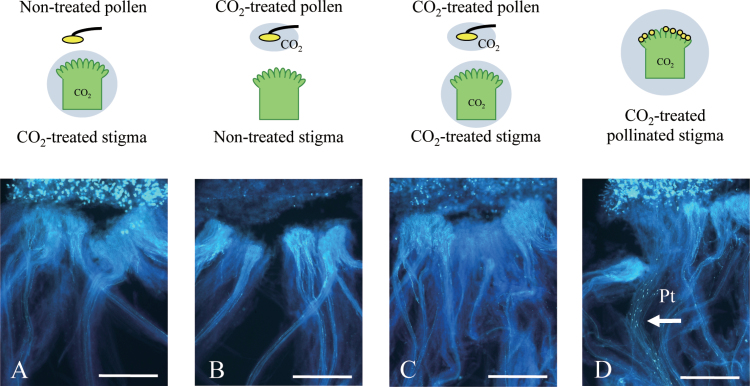
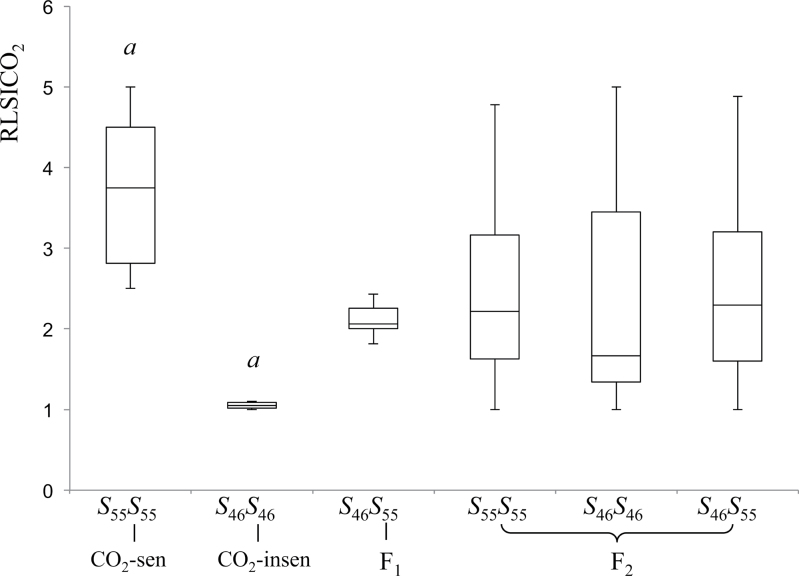
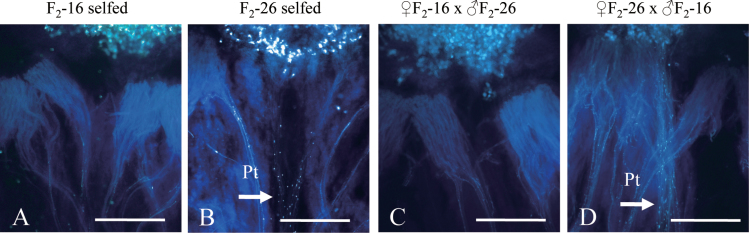
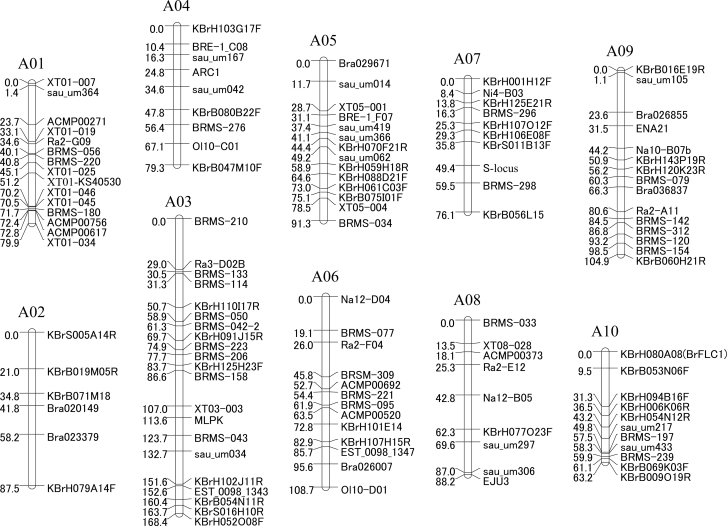
Self-incompatibility (SI) of the Brassicaceae family can be overcome by CO2 gas treatment. This method has been used for decades as an effective means to obtain a large amount of inbred seeds which can then be used for F1 hybrid seed production; however, the molecular mechanism by which CO2 alters the SI pathway has not been elucidated. In this study, to obtain new insights into the mechanism of CO2-induced SI breakdown, the focus was on two inbred lines of Brassica rapa (syn. campestris) with different CO2 sensitivity. Physiological examination using X-ray microanalysis suggested that SI breakdown in the CO2-sensitive line was accompanied by a significant accumulation of calcium at the pollen-stigma interface. Pre-treatment of pollen or pistil with CO2 gas before pollination showed no effect on the SI reaction, suggesting that some physiological process after pollination is necessary for SI to be overcome. Genetic analyses using F1 progeny of a CO2-sensitive × CO2-insensitive cross suggested that CO2 sensitivity is a semi-dominant trait in these lines. Analysis of F2 progeny suggested that CO2 sensitivity could be a quantitative trait, which is controlled by more than one gene. Quantitative trait locus (QTL) analyses identified two major loci, BrSIO1 and BrSIO2, which work additively in overcoming SI during CO2 treatment. No QTL was detected at the loci previously shown to affect SI stability, suggesting that CO2 sensitivity is determined by novel genes. The QTL data presented here should be useful for determining the responsible genes, and for the marker-assisted selection of desirable parental lines with stable but CO2-sensitive SI in F1 hybrid breeding.
十字花科植物的自交不亲和性(SI)可通过二氧化碳气体处理来克服。几十年来,该方法一直被用作获取大量自交种子的有效手段,这些种子随后可用于F1杂交种子生产;然而,二氧化碳改变SI途径的分子机制尚未阐明。在本研究中,为了深入了解二氧化碳诱导SI打破的机制,重点关注了两个对二氧化碳敏感性不同的白菜型油菜(syn. campestris)自交系。利用X射线微分析进行的生理检查表明,对二氧化碳敏感的自交系中SI的打破伴随着花粉 - 柱头界面钙的大量积累。授粉前用二氧化碳气体对花粉或雌蕊进行预处理对SI反应没有影响,这表明授粉后的某些生理过程对于克服SI是必要的。利用对二氧化碳敏感×对二氧化碳不敏感杂交的F1后代进行的遗传分析表明,在这些品系中,二氧化碳敏感性是一个半显性性状。对F2后代的分析表明,二氧化碳敏感性可能是一个数量性状,由多个基因控制。数量性状位点(QTL)分析确定了两个主要位点BrSIO1和BrSIO2,它们在二氧化碳处理过程中克服SI时起累加作用。在先前显示影响SI稳定性的位点未检测到QTL,这表明二氧化碳敏感性由新基因决定。本文提供的QTL数据对于确定相关基因以及在F1杂交育种中对具有稳定但对二氧化碳敏感的SI的理想亲本系进行标记辅助选择应该是有用的。