Department of Biopharmaceutical Sciences, College of Pharmacy, Harbin Medical University (Daqing), Daqing, Heilongjiang Province, China.
Department of Pharmacology (the State-Province Key Laboratories of Biomedicine-Pharmaceutics of China, Key Laboratory of Cardiovascular Research, Ministry of Education), Harbin Medical University, Harbin, Heilongjiang Province, China.
PLoS One. 2013 Dec 23;8(12):e83132. doi: 10.1371/journal.pone.0083132. eCollection 2013.
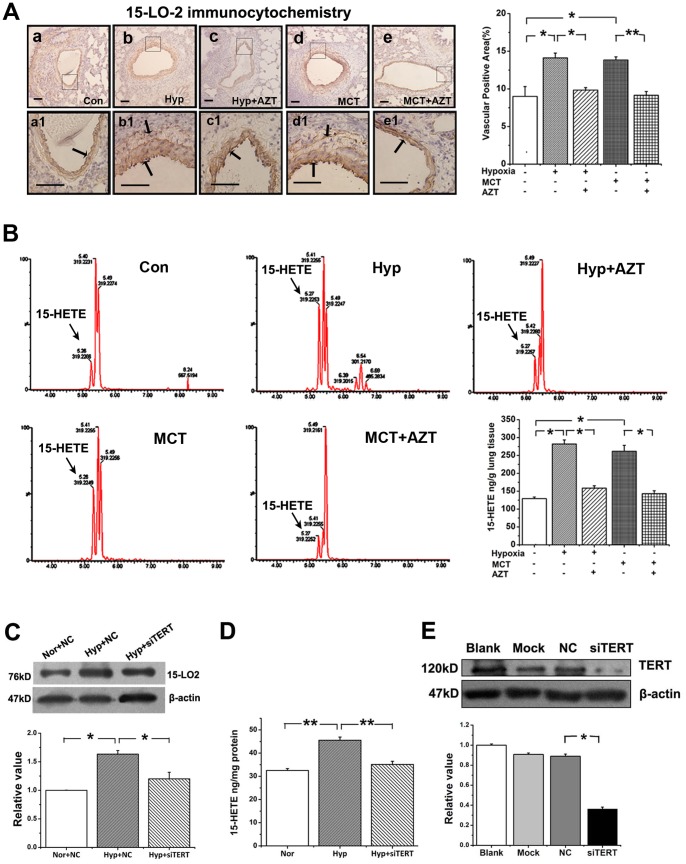
Pulmonary hypertension (PH) is characterized with pulmonary vasoconstriction and vascular remodeling mediated by 15-lipoxygenase (15-LO)/15-hydroxyeicosatetraenoic acid (15-HETE) according to our previous studies. Meanwhile, telomerase reverse transcriptase (TERT) activity is highly correlated with vascular injury and remodeling, suggesting that TERT may be an essential determinant in the development of PH. The aim of this study was to determine the contribution and molecular mechanisms of TERT in the pathogenesis of PH.
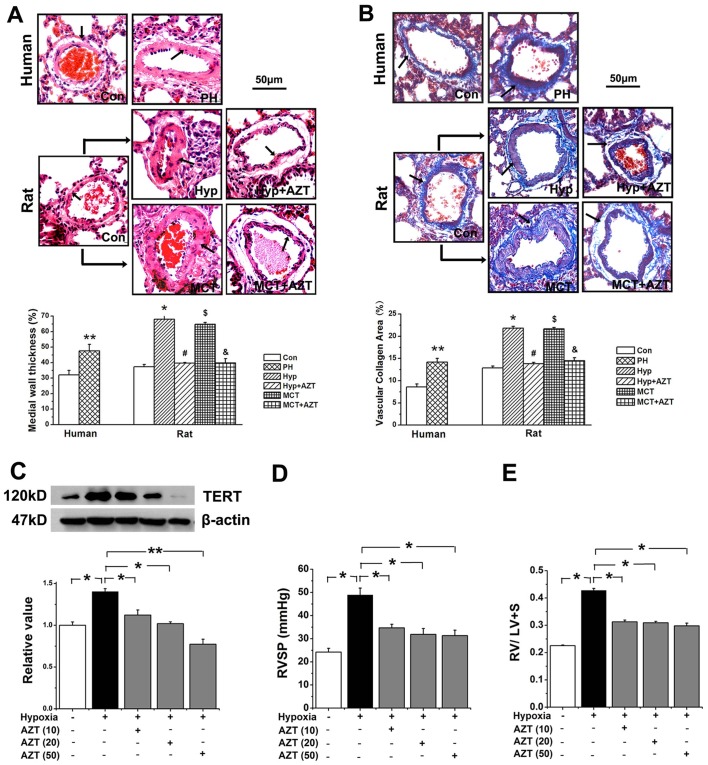
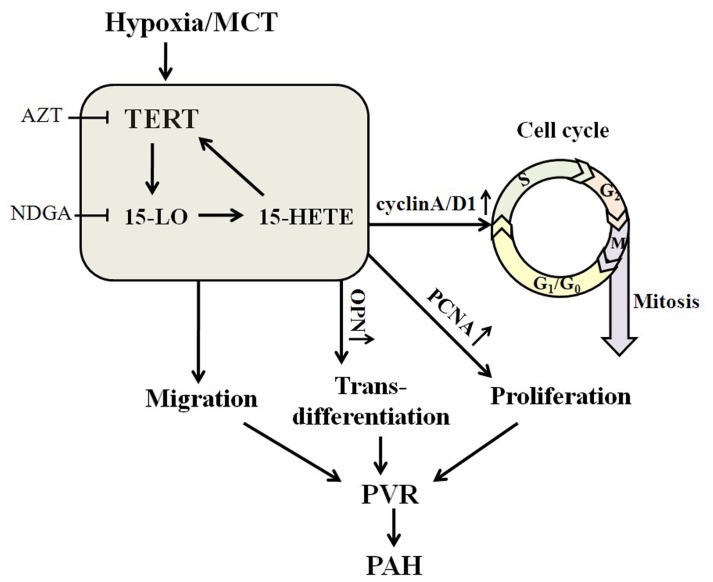
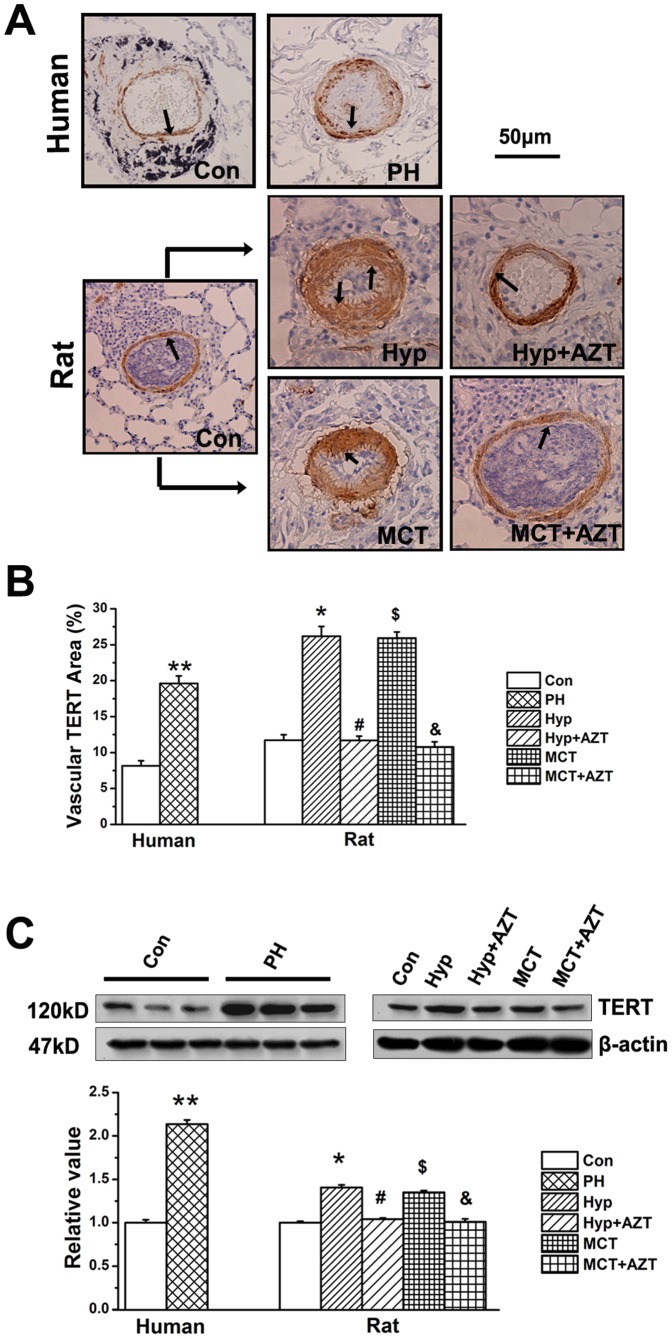
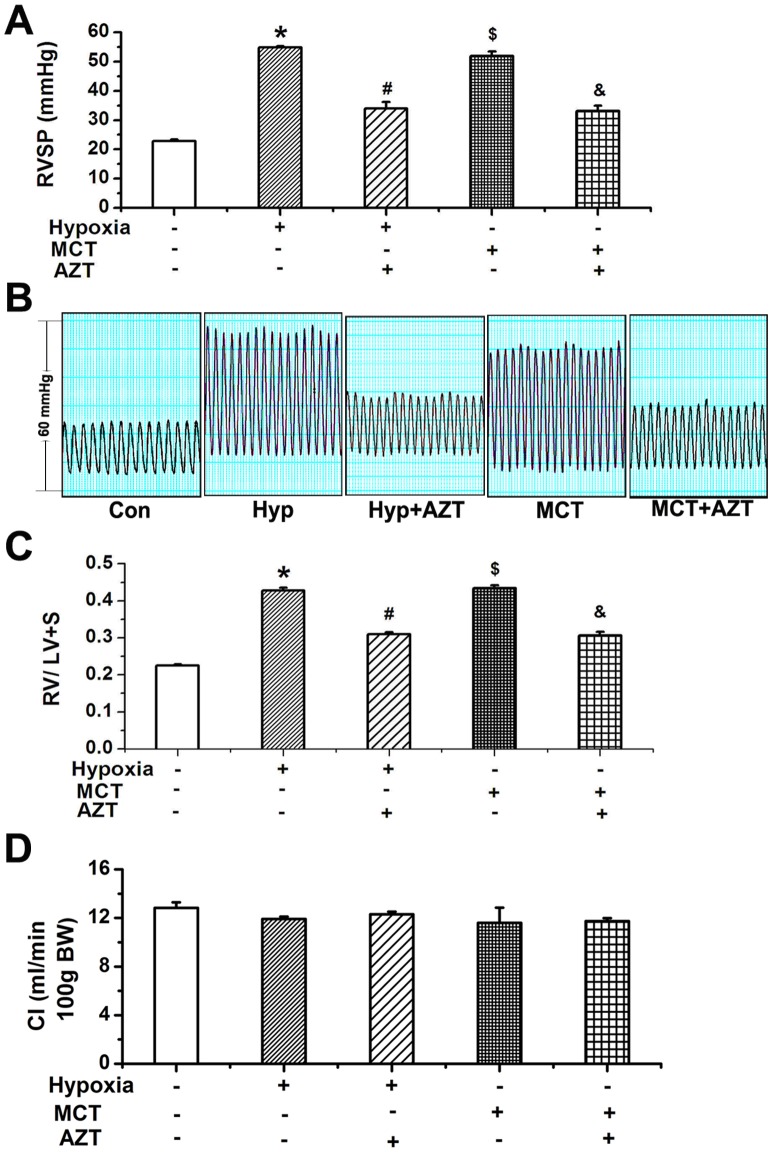
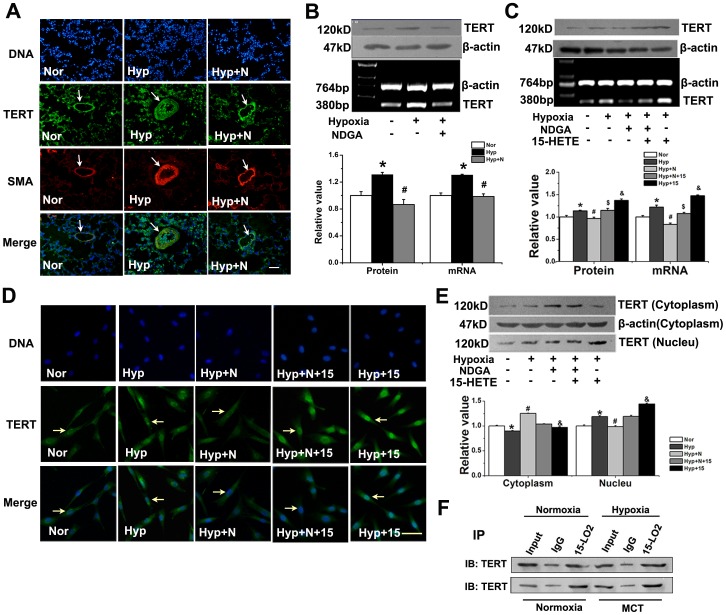
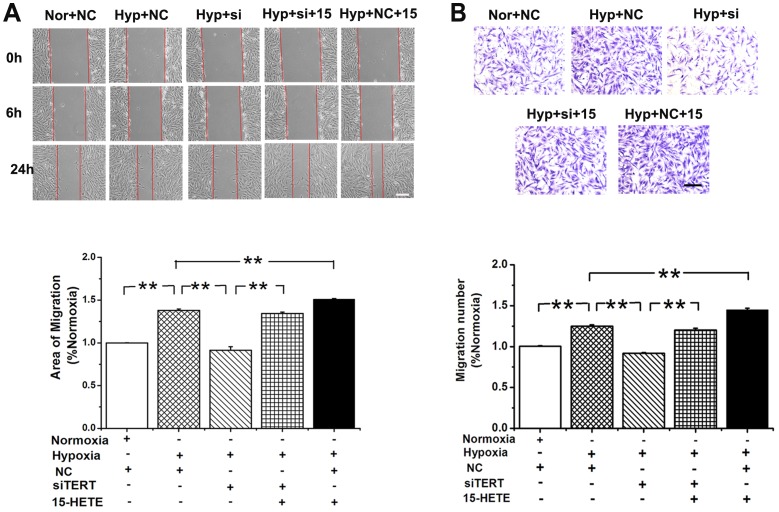
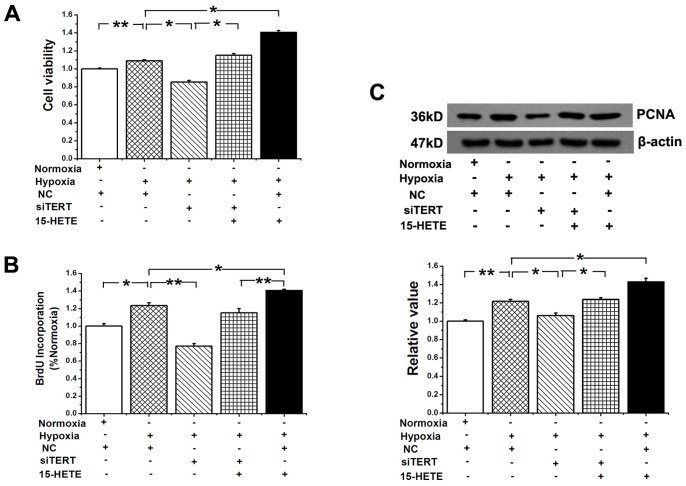
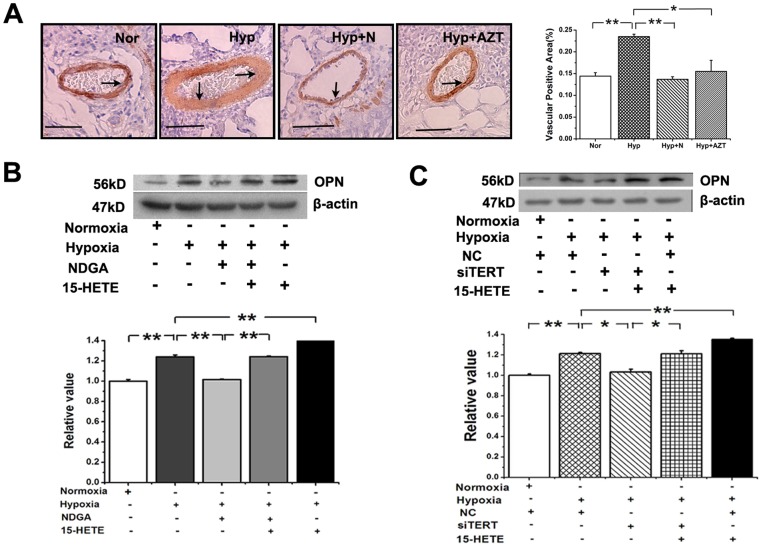
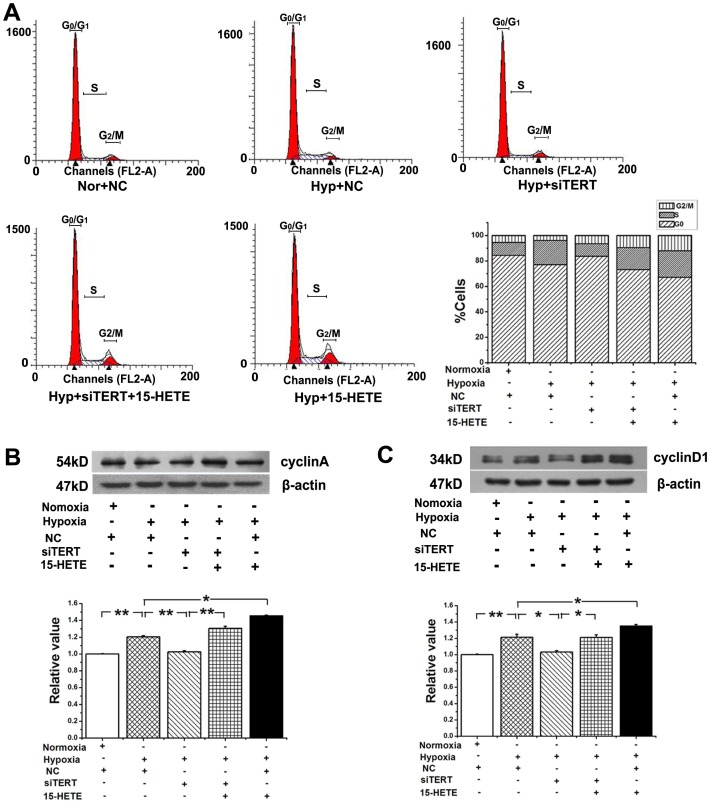
We measured the right ventricular systolic pressure (RVSP) and ventricular weight, analyzed morphometric change of the pulmonary vessels in the hypoxia or monocrotaline treated rats. Bromodeoxyuridine incorporation, transwell assay and flow cytometry in pulmonary smooth muscle cells were performed to investigate the roles and relationship of TERT and 15-LO/15-HETE in PH. We revealed that the expression of TERT was increased in pulmonary vasculature of patients with PH and in the monocrotaline or hypoxia rat model of PH. The up-regulation of TERT was associated with experimental elevated RVSP and pulmonary vascular remodeling. Coimmunoprecipitation experiments identified TERT as a novel interacting partner of 15-LO-2. TERT and 15-LO-2 augmented protein expression of each other. In addition, the proliferation, migration and cell-cycle transition from G0/G1 phase to S phase induced by hypoxia were inhibited by TERT knockdown, which were rescued by 15-HETE addition.
These results demonstrate that TERT regulates pulmonary vascular remodeling. TERT and 15-LO-2 form a positive feedback loop and together promote proliferation and migration of pulmonary artery smooth muscle cells, creating a self-amplifying circuit which propels pulmonary hypertension.
根据我们之前的研究,肺高血压(PH)的特征是由 15-脂氧合酶(15-LO)/15-羟二十碳四烯酸(15-HETE)介导的肺血管收缩和血管重塑。同时,端粒酶逆转录酶(TERT)活性与血管损伤和重塑高度相关,这表明 TERT 可能是 PH 发展的重要决定因素。本研究旨在确定 TERT 在 PH 发病机制中的作用和分子机制。
我们测量了右心室收缩压(RVSP)和心室重量,分析了缺氧或单克隆毒素处理大鼠的肺血管形态变化。在肺动脉平滑肌细胞中进行溴脱氧尿苷掺入、transwell 测定和流式细胞术,以研究 TERT 和 15-LO/15-HETE 在 PH 中的作用和关系。我们发现,PH 患者的肺血管和单克隆毒素或缺氧大鼠 PH 模型中 TERT 的表达增加。TERT 的上调与实验性 RVSP 升高和肺血管重塑有关。共免疫沉淀实验确定 TERT 是 15-LO-2 的一种新型相互作用伙伴。TERT 和 15-LO-2 增强彼此的蛋白表达。此外,TERT 敲低抑制了缺氧诱导的增殖、迁移和细胞周期从 G0/G1 期向 S 期的转变,而 15-HETE 的添加则挽救了这一转变。
这些结果表明 TERT 调节肺血管重塑。TERT 和 15-LO-2 形成正反馈回路,共同促进肺动脉平滑肌细胞的增殖和迁移,形成一个自我放大的回路,推动肺高血压的发展。