Heylmann Daniel, Bauer Martina, Becker Huong, van Gool Stefaan, Bacher Nicole, Steinbrink Kerstin, Kaina Bernd
Department of Toxicology, University Medical Center, Mainz, Germany.
Pediatric Neuro-Oncology, University Hospitals, Leuven, Belgium.
PLoS One. 2013 Dec 23;8(12):e83384. doi: 10.1371/journal.pone.0083384. eCollection 2013.
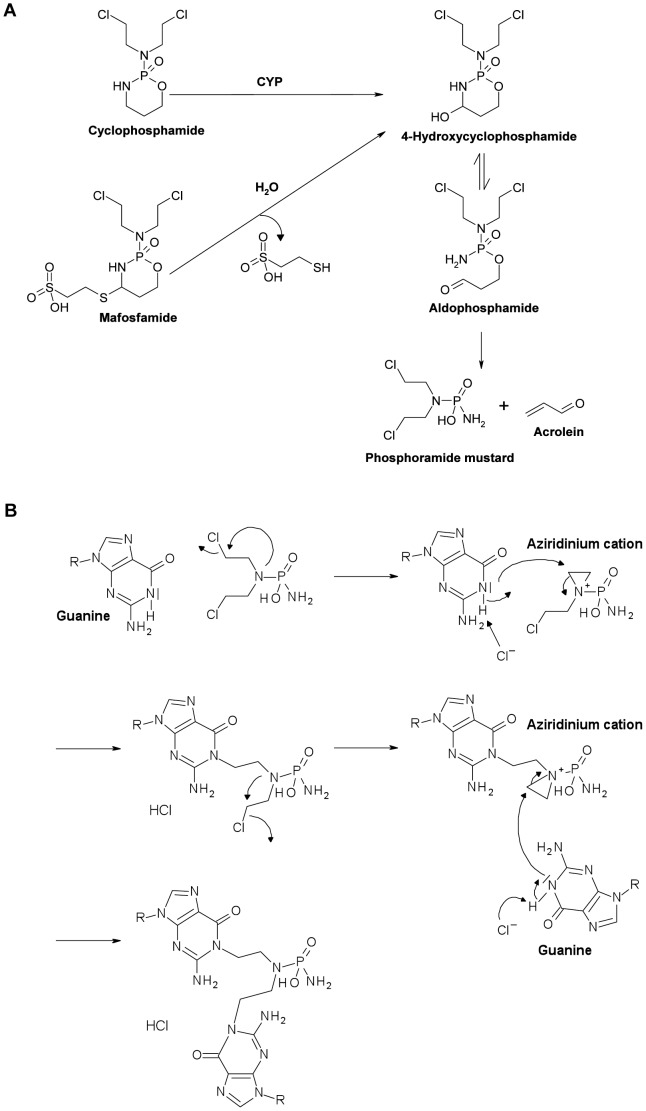
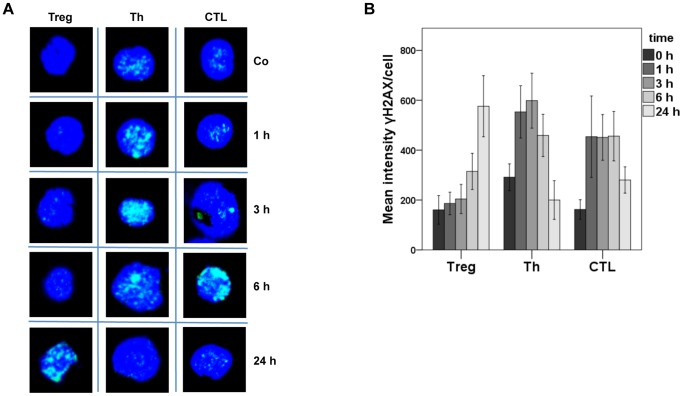
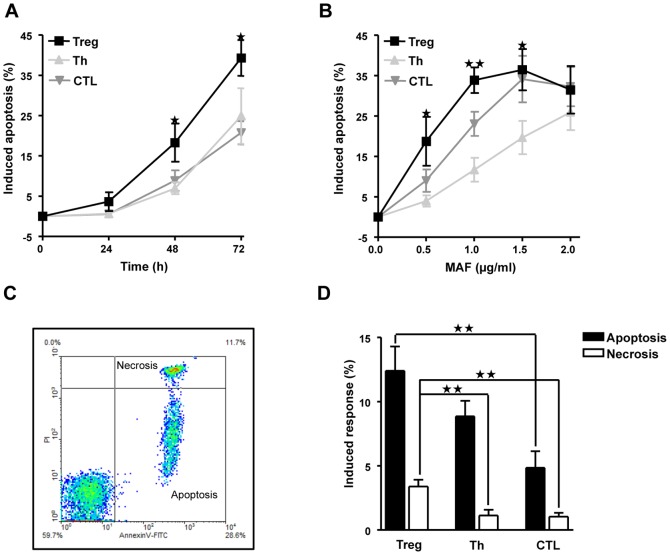
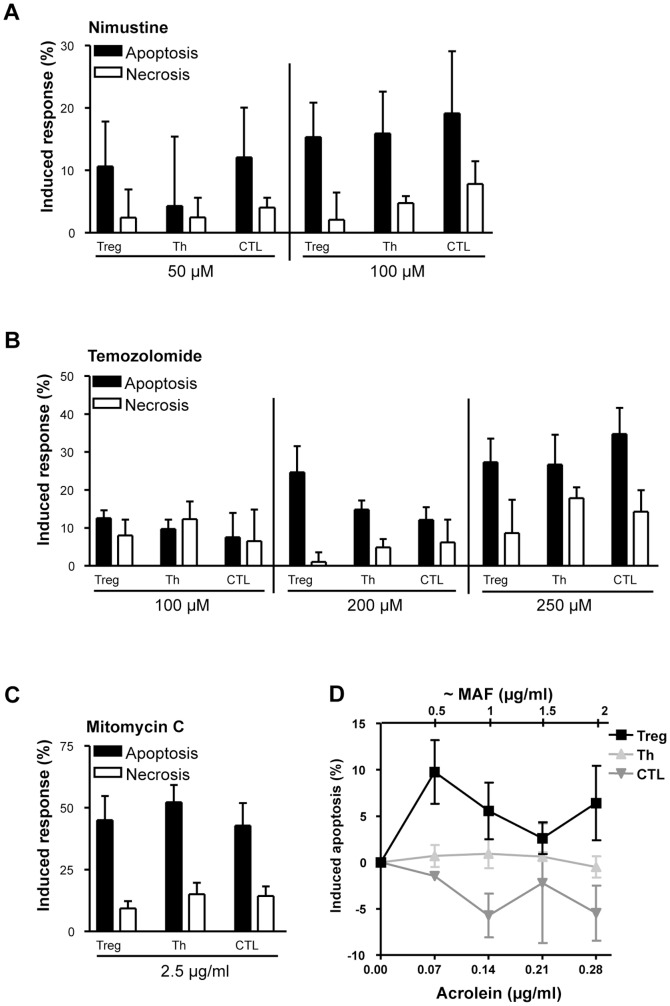
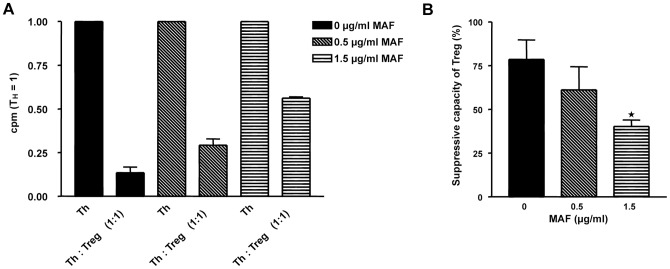
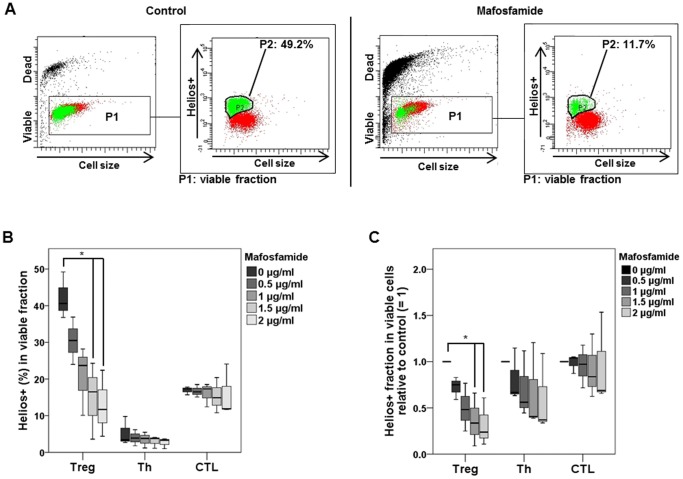
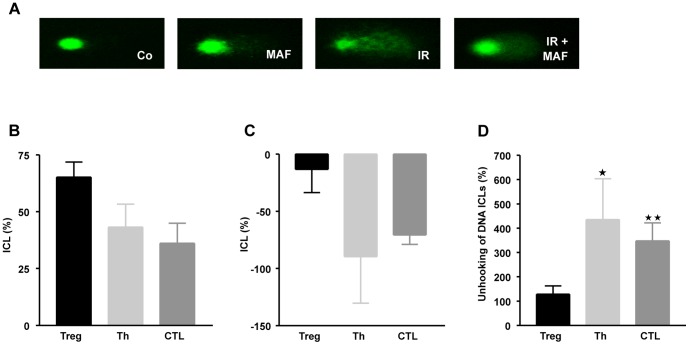
Regulatory T cells (Treg) play a pivotal role in the immune system since they inhibit the T cell response. It is well known that cyclophosphamide applied at low dose is able to stimulate the immune response while high dose cyclophosphamide exerts inhibitory activity. Data obtained in mice indicate that cyclophosphamide provokes a reduction in the number of Treg and impairs their suppressive activity, resulting in immune stimulation. Here, we addressed the question of the sensitivity of human Treg to cyclophosphamide, comparing Treg with cytotoxic T cells (CTL) and T helper cells (Th). We show that Treg are more sensitive than CTL and Th to mafosfamide, which is an active derivative of cyclophosphamide, which does not need metabolic activation. The high sensitivity of Treg was due to the induction of apoptosis. Treg compared to CTL and Th were not more sensitive to the alkylating drugs temozolomide and nimustine and also not to mitomycin C, indicating a specific Treg response to mafosfamide. The high sensitivity of Treg to mafosfamide resulted not only in enhanced cell death, but also in impaired Treg function as demonstrated by a decline in the suppressor activity of Treg in a co-culture model with Th and Helios positive Treg. Treatment of Treg with mafosfamide gave rise to a high level of DNA crosslinks, which were not repaired to the same extent as observed in Th and CTL. Also, Treg showed a low level of γH2AX foci up to 6 h and a high level 24 h after treatment, indicating alterations in the DNA damage response. Overall, this is the first demonstration that human Treg are, in comparison with Th and CTL, hypersensitive to cyclophosphamide, which is presumably due to a DNA repair defect.
调节性T细胞(Treg)在免疫系统中发挥着关键作用,因为它们能抑制T细胞反应。众所周知,低剂量应用的环磷酰胺能够刺激免疫反应,而高剂量的环磷酰胺则具有抑制活性。在小鼠中获得的数据表明,环磷酰胺会导致Treg数量减少并损害其抑制活性,从而引发免疫刺激。在此,我们探讨了人类Treg对环磷酰胺的敏感性问题,将Treg与细胞毒性T细胞(CTL)和辅助性T细胞(Th)进行了比较。我们发现,Treg比CTL和Th对马法兰更敏感,马法兰是环磷酰胺的一种活性衍生物,无需代谢激活。Treg的高敏感性是由于细胞凋亡的诱导。与CTL和Th相比,Treg对烷化剂替莫唑胺和尼莫司汀以及丝裂霉素C并不更敏感,这表明Treg对马法兰有特异性反应。Treg对马法兰的高敏感性不仅导致细胞死亡增加,还损害了Treg的功能,这在与Th和Helios阳性Treg的共培养模型中Treg抑制活性的下降中得到了证明。用马法兰处理Treg会导致高水平的DNA交联,其修复程度不如在Th和CTL中观察到的那样。此外,Treg在处理后6小时内γH2AX焦点水平较低,24小时后水平较高,表明DNA损伤反应发生了改变。总体而言,这是首次证明与Th和CTL相比,人类Treg对环磷酰胺高度敏感,这可能是由于DNA修复缺陷所致。