Lindinger Michael I, Leung Matthew J, Hawke Thomas J
Department of Human Health and Nutritional Sciences, University of Guelph, Guelph, Ontario, Canada.
Department of Pathology & Molecular Medicine, McMaster University, Hamilton, Ontario, Canada.
PLoS One. 2013 Dec 23;8(12):e84451. doi: 10.1371/journal.pone.0084451. eCollection 2013.
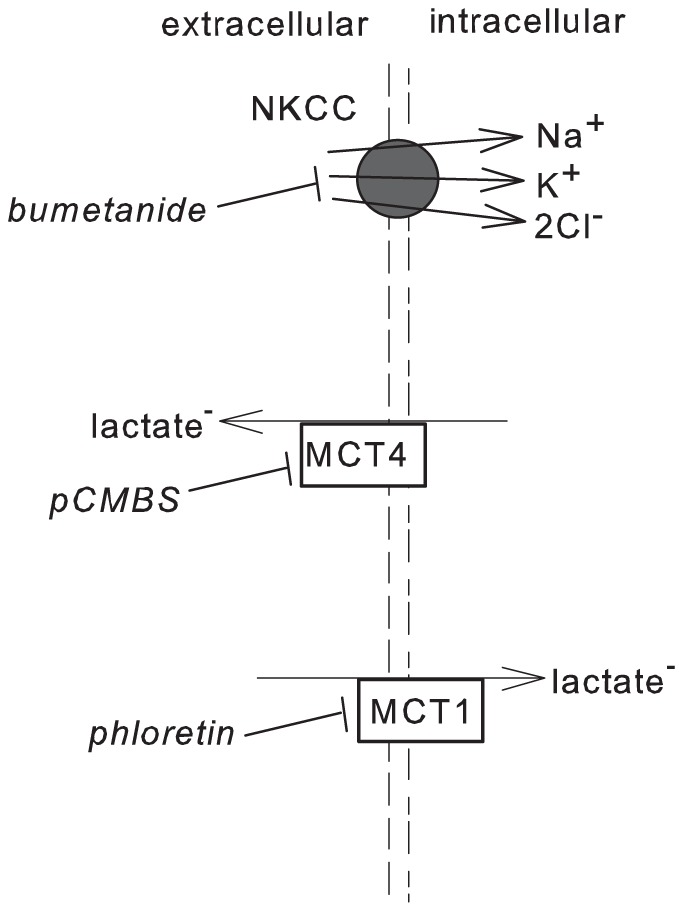
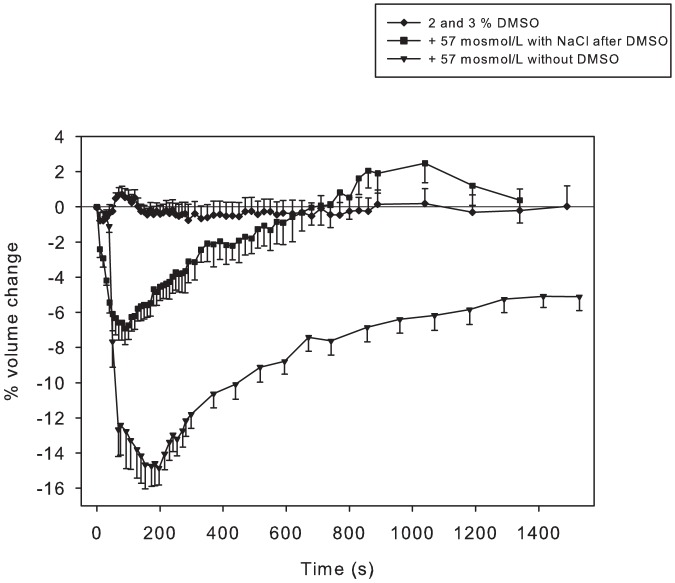
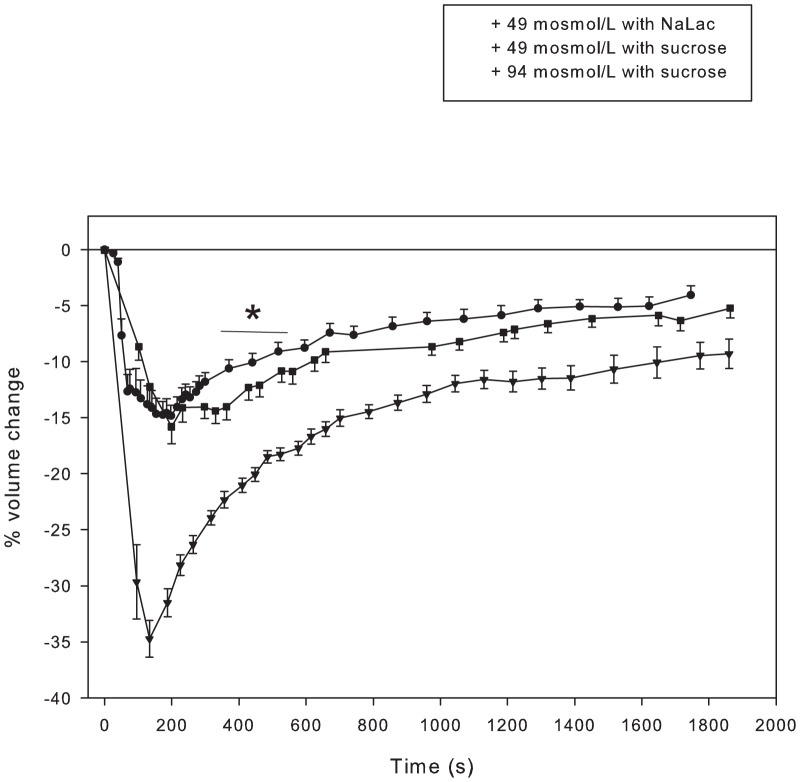
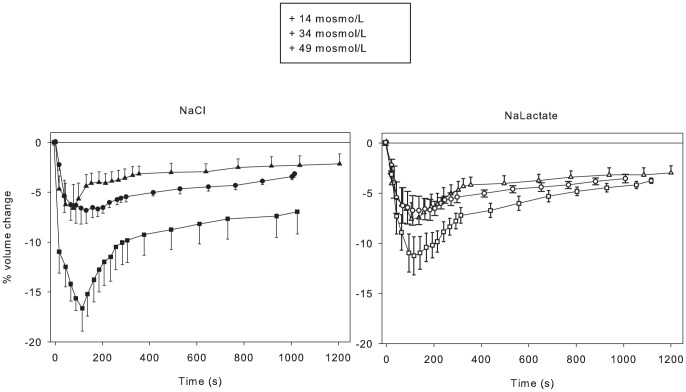
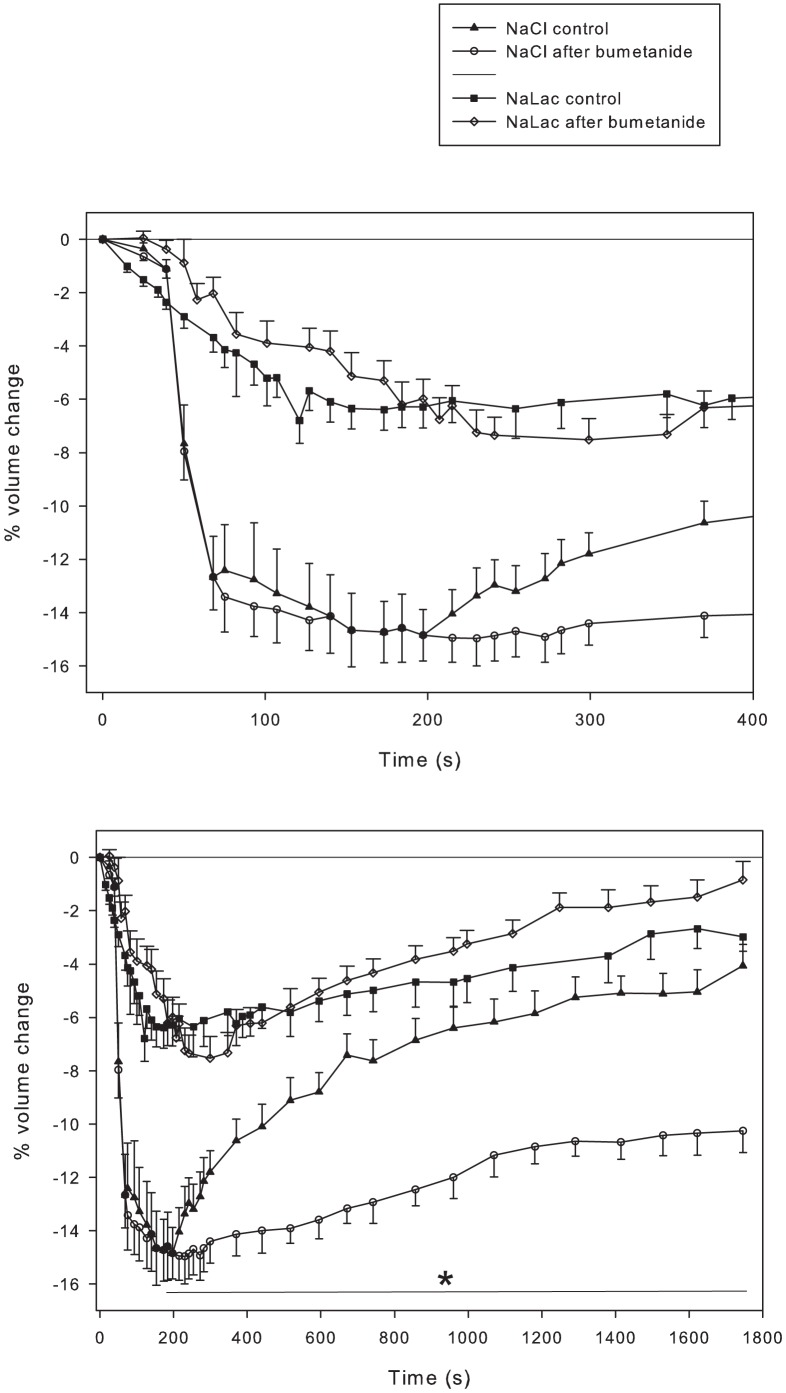
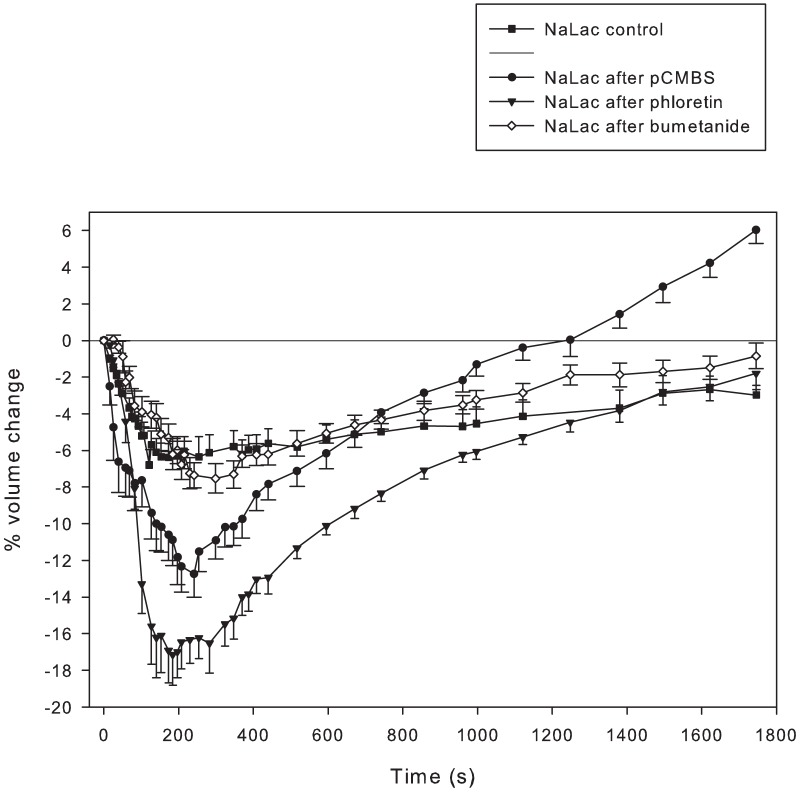
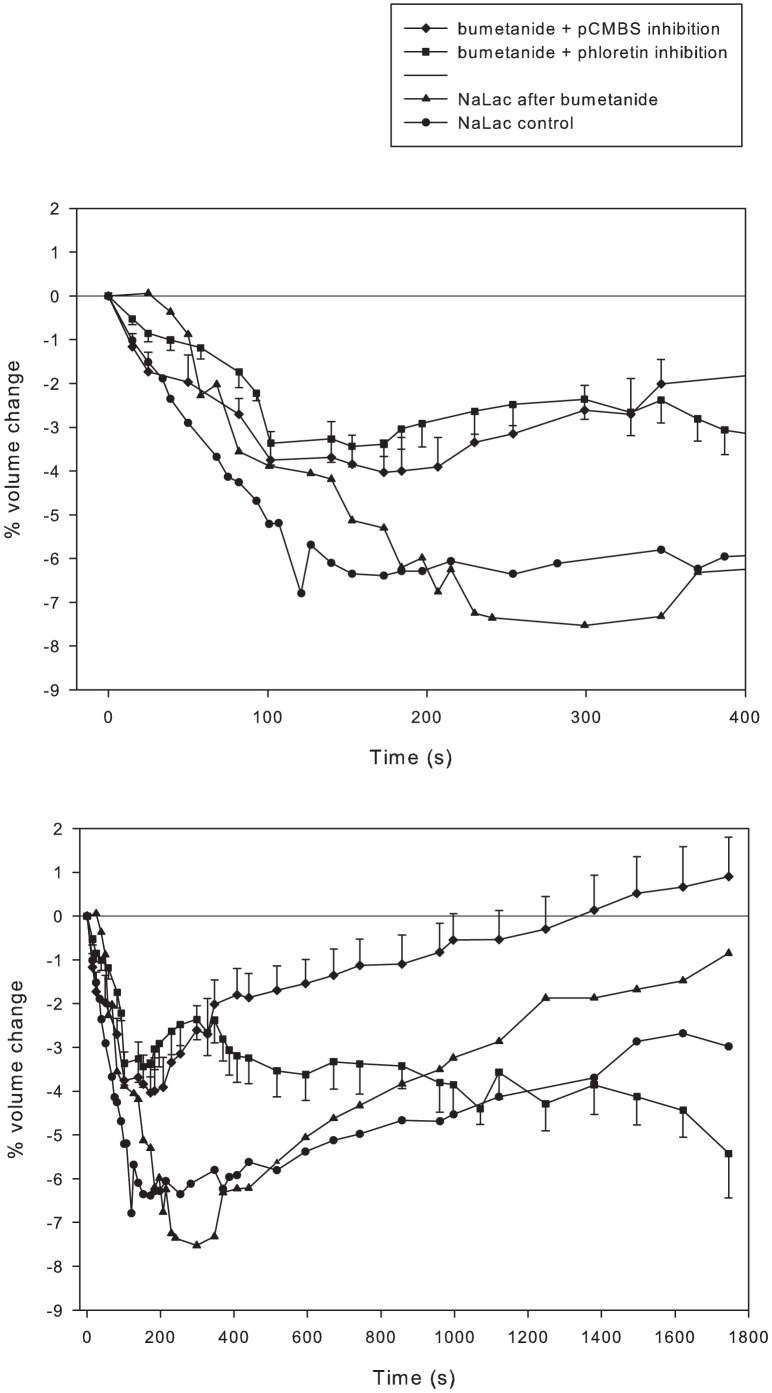
Mouse and rat skeletal muscles are capable of a regulatory volume increase (RVI) after they shrink (volume loss resultant from exposure to solutions of increased osmolarity) and that this RVI occurs mainly by a Na-K-Cl-Cotransporter (NKCC)-dependent mechanism. With high-intensity exercise, increased extracellular osmolarity is accompanied by large increases in extracellular [lactate⁻]. We hypothesized that large increases in [lactate⁻] and osmolarity augment the NKCC-dependent RVI response observed with a NaCl (or sucrose)-induced increase in osmolarity alone; a response that is dependent on lactate⁻ influx through monocarboxylate transporters (MCTs). Single mouse muscle fibres were isolated and visualized under light microscopy under varying osmolar conditions. When solution osmolarity was increased by adding NaLac by 30 or 60 mM, fibres lost significantly less volume and regained volume sooner compared to when NaCl was used. Phloretin (MCT1 inhibitor) accentuated the volume loss compared to both NaLac controls, supporting a role for MCT1 in the RVI response in the presence of elevated [lactate⁻]. Inhibition of MCT4 (with pCMBS) resulted in a volume loss, intermediate to that seen with phloretin and NaLac controls. Bumetanide (NKCC inhibitor), in combination with pCMBS, reduced the magnitude of volume loss, but volume recovery was complete. While combined phloretin-bumetanide also reduced the magnitude of the volume loss, it also largely abolished the cell volume recovery. In conclusion, RVI in skeletal muscle exposed to raised tonicity and [lactate⁻] is facilitated by inward flux of solute by NKCC- and MCT1-dependent mechanisms. This work demonstrates evidence of a RVI response in skeletal muscle that is facilitated by inward flux of solute by MCT-dependent mechanisms. These findings further expand our understanding of the capacities for skeletal muscle to volume regulate, particularly in instances of raised tonicity and lactate⁻ concentrations, as occurs with high intensity exercise.
小鼠和大鼠的骨骼肌在收缩后(因暴露于渗透压升高的溶液而导致体积减小)能够进行调节性容积增加(RVI),且这种RVI主要通过一种依赖钠 - 钾 - 氯协同转运蛋白(NKCC)的机制发生。高强度运动时,细胞外渗透压升高伴随着细胞外[乳酸⁻]的大幅增加。我们推测,[乳酸⁻]和渗透压的大幅增加会增强仅由NaCl(或蔗糖)诱导的渗透压升高所观察到的依赖NKCC的RVI反应;这种反应依赖于乳酸⁻通过单羧酸转运体(MCTs)的内流。分离单个小鼠肌纤维,并在不同渗透压条件下于光学显微镜下观察。当通过添加30或60 mM的乳酸钠使溶液渗透压升高时,与使用氯化钠时相比,纤维体积损失显著减少且更快恢复体积。与两个乳酸钠对照组相比,根皮素(MCT1抑制剂)加剧了体积损失,支持MCT1在[乳酸⁻]升高时的RVI反应中的作用。用对氯汞苯甲酸(pCMBS)抑制MCT4导致体积损失,介于根皮素和乳酸钠对照组之间。布美他尼(NKCC抑制剂)与pCMBS联合使用可降低体积损失的幅度,但体积恢复是完全的。虽然根皮素 - 布美他尼联合使用也降低了体积损失的幅度,但它也基本消除了细胞体积的恢复。总之,暴露于高渗和[乳酸⁻]环境中的骨骼肌中的RVI通过依赖NKCC和MCT1的机制促进溶质内流而得以实现。这项工作证明了骨骼肌中存在一种由依赖MCT的机制促进溶质内流而实现的RVI反应。这些发现进一步扩展了我们对骨骼肌容积调节能力的理解,特别是在高渗和乳酸⁻浓度升高的情况下,如高强度运动时。