Deja Stanisław, Dawiskiba Tomasz, Balcerzak Waldemar, Orczyk-Pawiłowicz Magdalena, Głód Mateusz, Pawełka Dorota, Młynarz Piotr
Faculty of Chemistry, Opole University, Opole, Poland.
Department of Vascular, General and Transplantation Surgery, Wrocław Medical University, Wrocław, Poland.
PLoS One. 2013 Dec 23;8(12):e84637. doi: 10.1371/journal.pone.0084637. eCollection 2013.
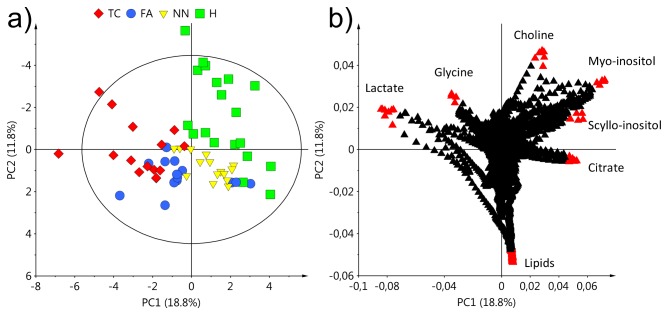
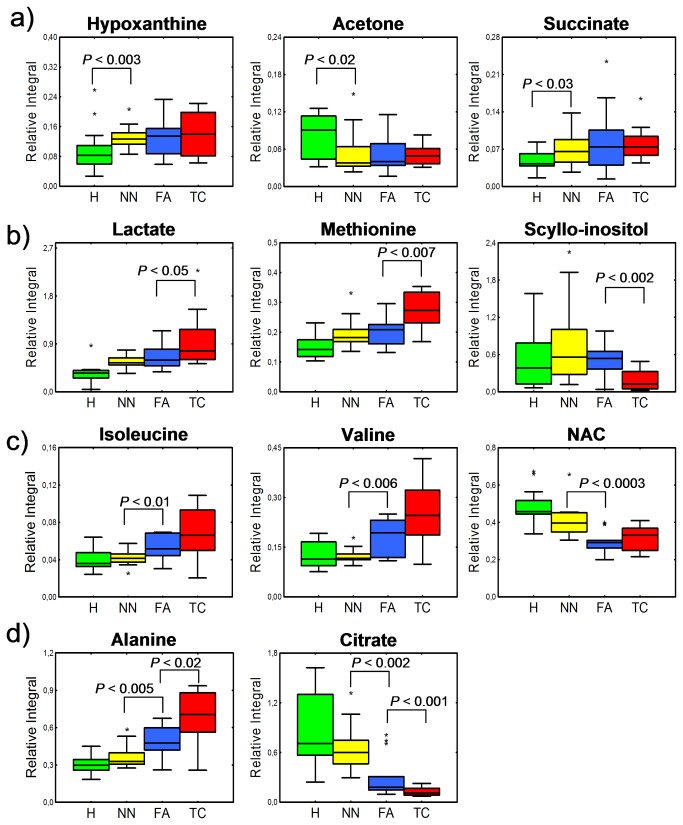
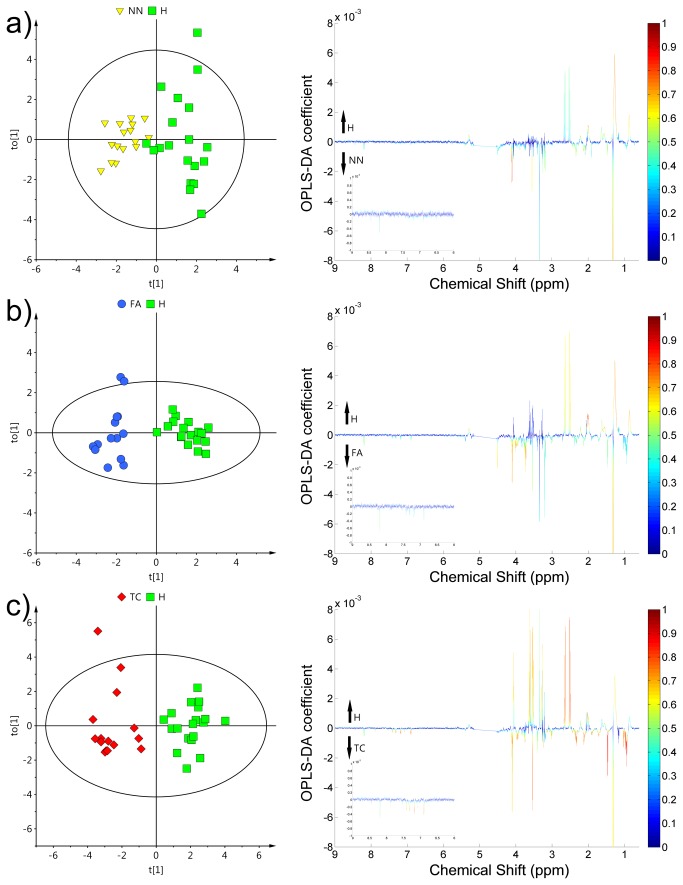
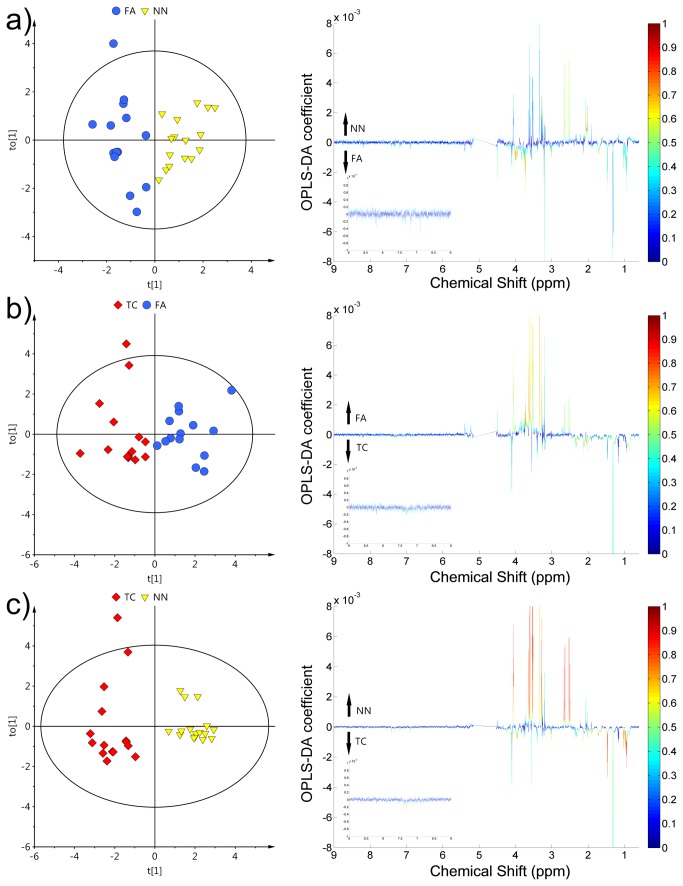
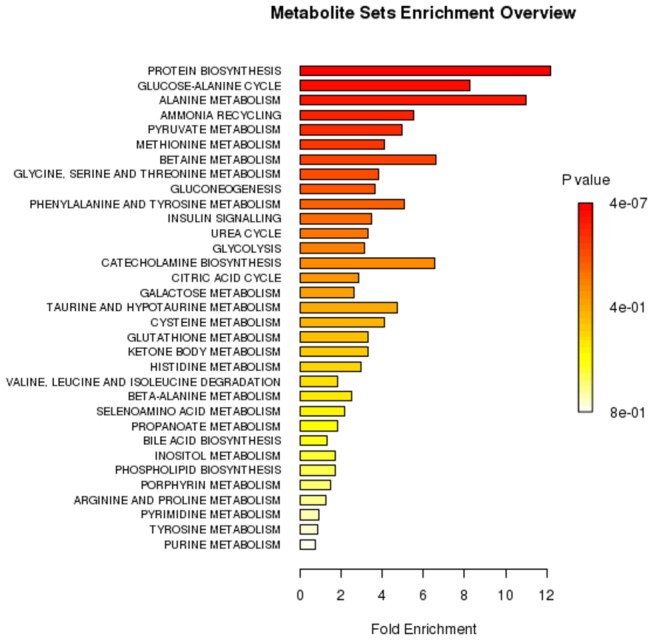
Thyroid cancer is the most common endocrine malignancy. However, more than 90% of thyroid nodules are benign. It remains unclear whether thyroid carcinoma arises from preexisting benign nodules. Metabolomics can provide valuable and comprehensive information about low molecular weight compounds present in living systems and further our understanding of the biology regulating pathological processes. Herein, we applied ¹H NMR-based metabolic profiling to identify the metabolites present in aqueous tissue extracts of healthy thyroid tissue (H), non-neoplastic nodules (NN), follicular adenomas (FA) and malignant thyroid cancer (TC) as an alternative way of investigating cancer lesions. Multivariate statistical methods provided clear discrimination not only between healthy thyroid tissue and pathological thyroid tissue but also between different types of thyroid lesions. Potential biomarkers common to all thyroid lesions were identified, namely, alanine, methionine, acetone, glutamate, glycine, lactate, tyrosine, phenylalanine and hypoxanthine. Metabolic changes in thyroid cancer were mainly related to osmotic regulators (taurine and scyllo- and myo-inositol), citrate, and amino acids supplying the TCA cycle. Thyroid follicular adenomas were found to display metabolic features of benign non-neoplastic nodules and simultaneously displayed a partial metabolic profile associated with malignancy. This finding allows the discrimination of follicular adenomas from benign non-neoplastic nodules and thyroid cancer with similar accuracy. Moreover, the presented data indicate that follicular adenoma could be an individual stage of thyroid cancer development.
甲状腺癌是最常见的内分泌系统恶性肿瘤。然而,超过90%的甲状腺结节是良性的。甲状腺癌是否由先前存在的良性结节发展而来仍不清楚。代谢组学能够提供有关生物系统中低分子量化合物的有价值且全面的信息,从而加深我们对调节病理过程的生物学机制的理解。在此,我们应用基于¹H NMR的代谢谱分析来鉴定健康甲状腺组织(H)、非肿瘤性结节(NN)、滤泡性腺瘤(FA)和恶性甲状腺癌(TC)的水性组织提取物中存在的代谢物,作为研究癌症病变的另一种方法。多变量统计方法不仅能清晰地区分健康甲状腺组织和病理性甲状腺组织,还能区分不同类型的甲状腺病变。确定了所有甲状腺病变共有的潜在生物标志物,即丙氨酸、蛋氨酸、丙酮、谷氨酸、甘氨酸、乳酸、酪氨酸、苯丙氨酸和次黄嘌呤。甲状腺癌的代谢变化主要与渗透调节剂(牛磺酸、scyllo-肌醇和肌醇)、柠檬酸以及为三羧酸循环提供原料的氨基酸有关。发现甲状腺滤泡性腺瘤表现出良性非肿瘤性结节的代谢特征,同时还表现出与恶性肿瘤相关部分代谢谱。这一发现使得滤泡性腺瘤与良性非肿瘤性结节及甲状腺癌的鉴别具有相似的准确性。此外,所呈现的数据表明滤泡性腺瘤可能是甲状腺癌发展的一个独立阶段。