Biotech Research and Innovation Centre, 2 Centre for Epigenetics, and 3 The Bioinformatics Centre, Department of Biology, University of Copenhagen, 2200 Copenhagen, Denmark.
J Cell Biol. 2014 Jan 6;204(1):29-43. doi: 10.1083/jcb.201305017. Epub 2013 Dec 30.
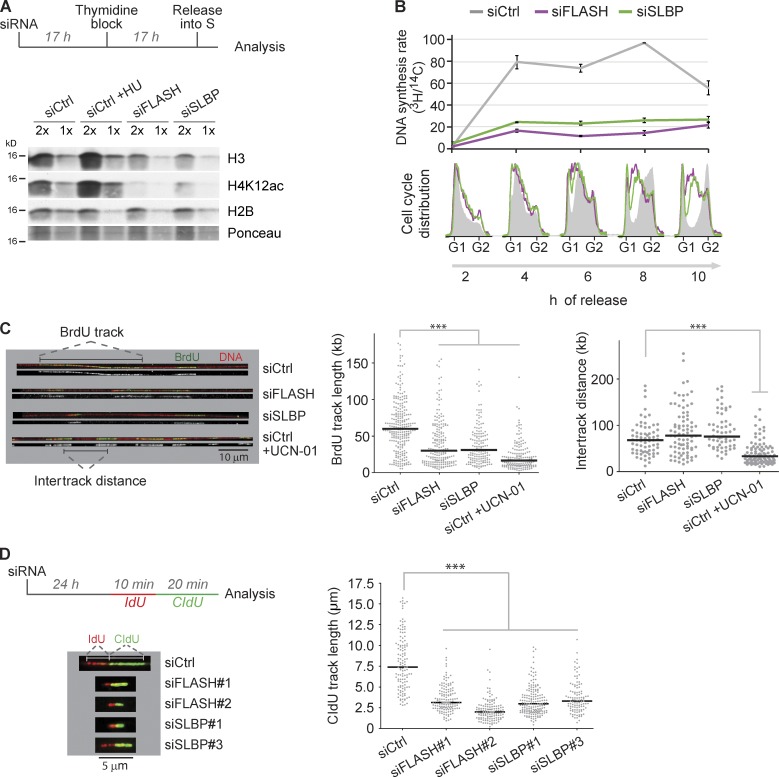
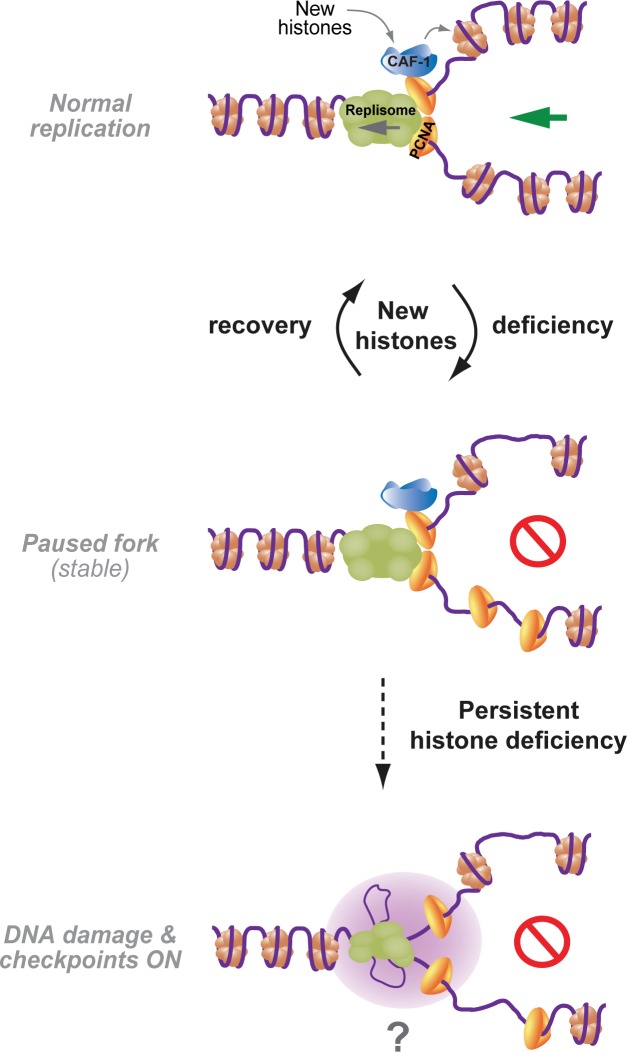
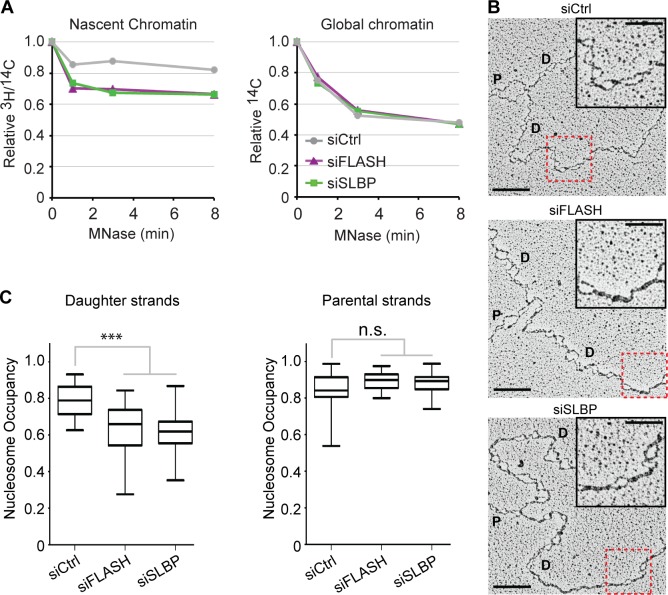
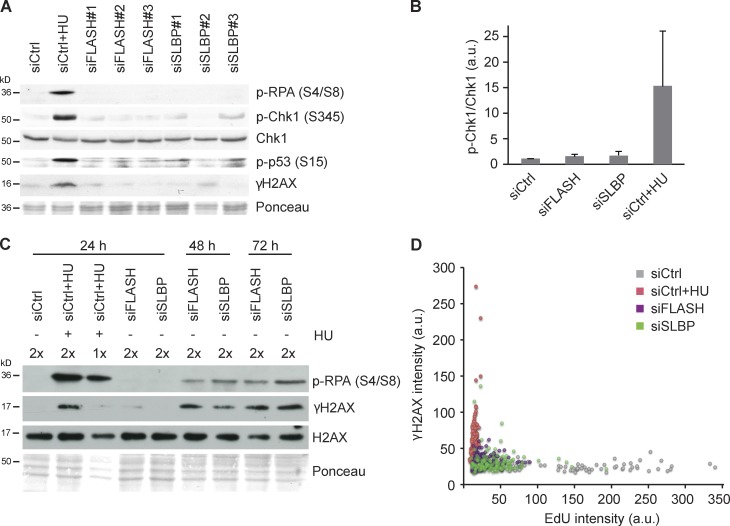
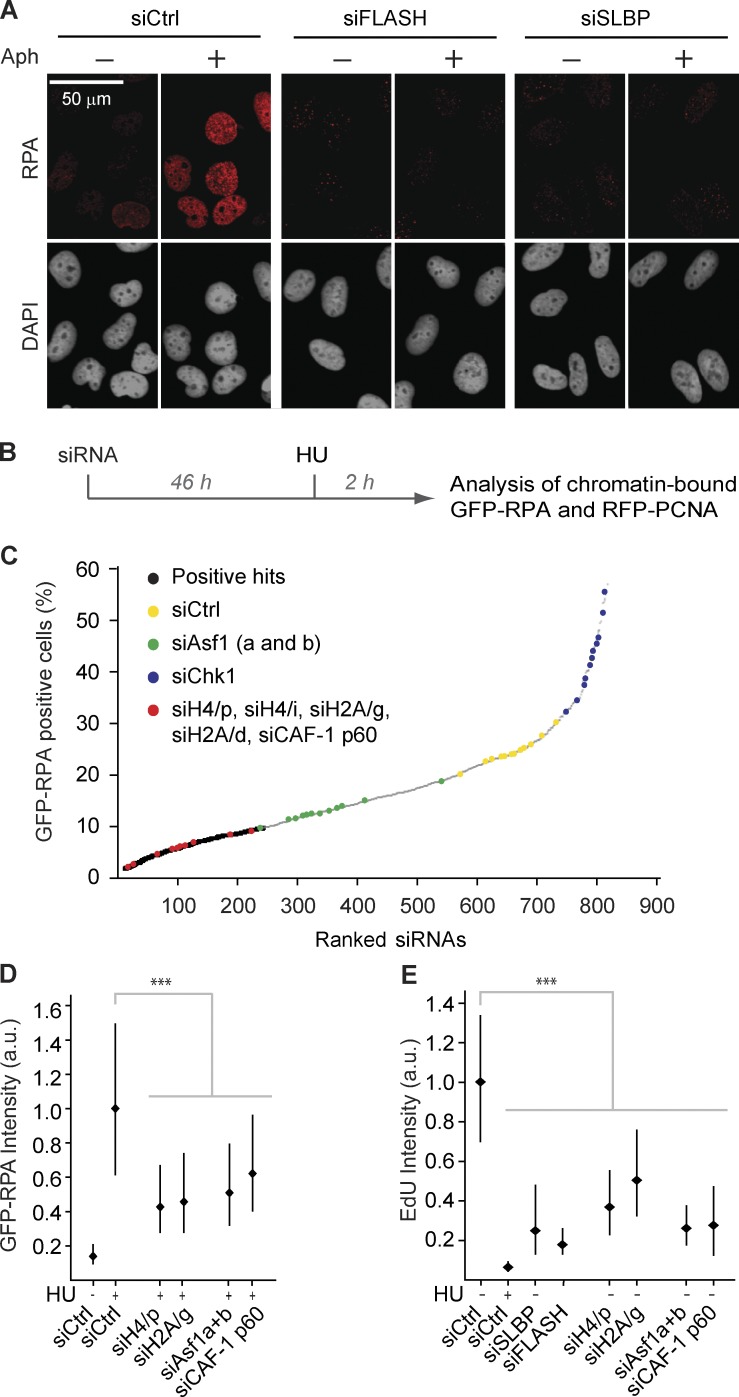
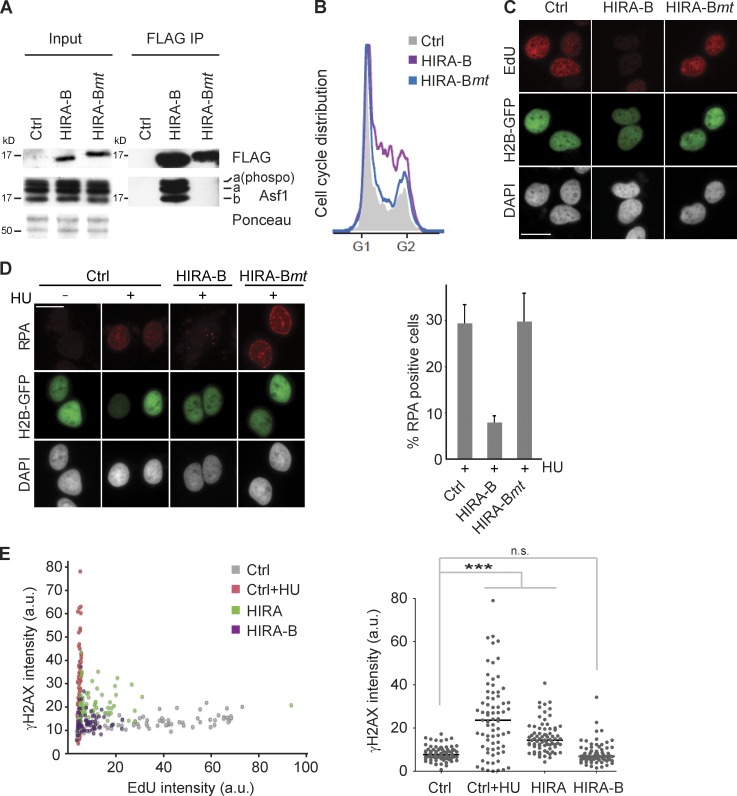
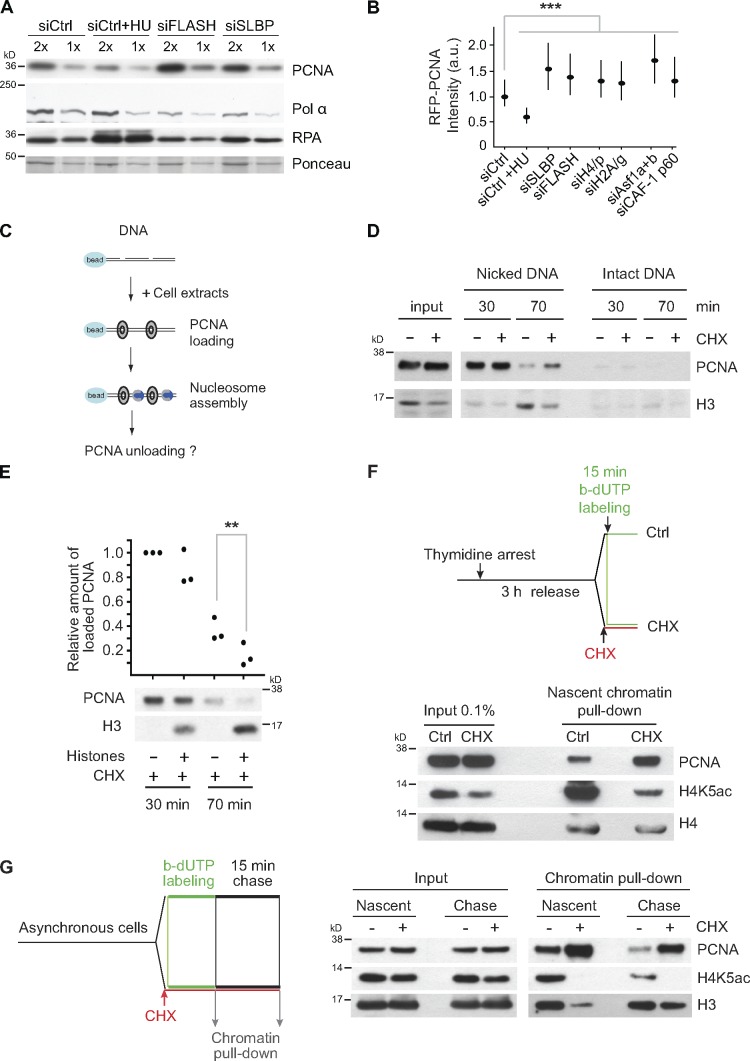
Correct duplication of DNA sequence and its organization into chromatin is central to genome function and stability. However, it remains unclear how cells coordinate DNA synthesis with provision of new histones for chromatin assembly to ensure chromosomal stability. In this paper, we show that replication fork speed is dependent on new histone supply and efficient nucleosome assembly. Inhibition of canonical histone biosynthesis impaired replication fork progression and reduced nucleosome occupancy on newly synthesized DNA. Replication forks initially remained stable without activation of conventional checkpoints, although prolonged histone deficiency generated DNA damage. PCNA accumulated on newly synthesized DNA in cells lacking new histones, possibly to maintain opportunity for CAF-1 recruitment and nucleosome assembly. Consistent with this, in vitro and in vivo analysis showed that PCNA unloading is delayed in the absence of nucleosome assembly. We propose that coupling of fork speed and PCNA unloading to nucleosome assembly provides a simple mechanism to adjust DNA replication and maintain chromatin integrity during transient histone shortage.
正确复制 DNA 序列及其组织成染色质是基因组功能和稳定性的核心。然而,目前尚不清楚细胞如何协调 DNA 合成与为染色质组装提供新组蛋白,以确保染色体稳定性。本文中,我们发现复制叉速度取决于新组蛋白的供应和核小体组装的效率。组蛋白生物合成的抑制会损害复制叉的进展,并降低新合成 DNA 上核小体的占有率。虽然长期的组蛋白缺乏会产生 DNA 损伤,但复制叉最初仍能保持稳定,而不会激活传统的检查点。在缺乏新组蛋白的细胞中,PCNA 会在新合成的 DNA 上积累,这可能是为了维持 CAF-1 募集和核小体组装的机会。体外和体内分析结果一致表明,在没有核小体组装的情况下,PCNA 的卸载会被延迟。我们提出,将叉速度与 PCNA 卸载偶联到核小体组装提供了一种简单的机制,可以在短暂的组蛋白缺乏时调整 DNA 复制并维持染色质完整性。