Brieuc Marine S O, Waters Charles D, Seeb James E, Naish Kerry A
School of Aquatic and Fishery Sciences, University of Washington, Seattle, Washington 98195-5020.
G3 (Bethesda). 2014 Mar 20;4(3):447-60. doi: 10.1534/g3.113.009316.
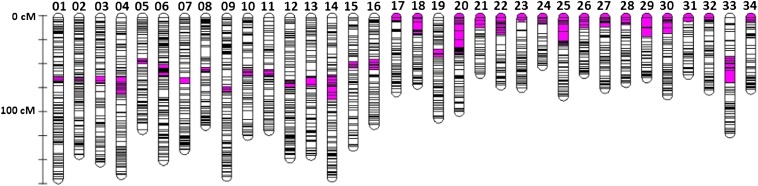
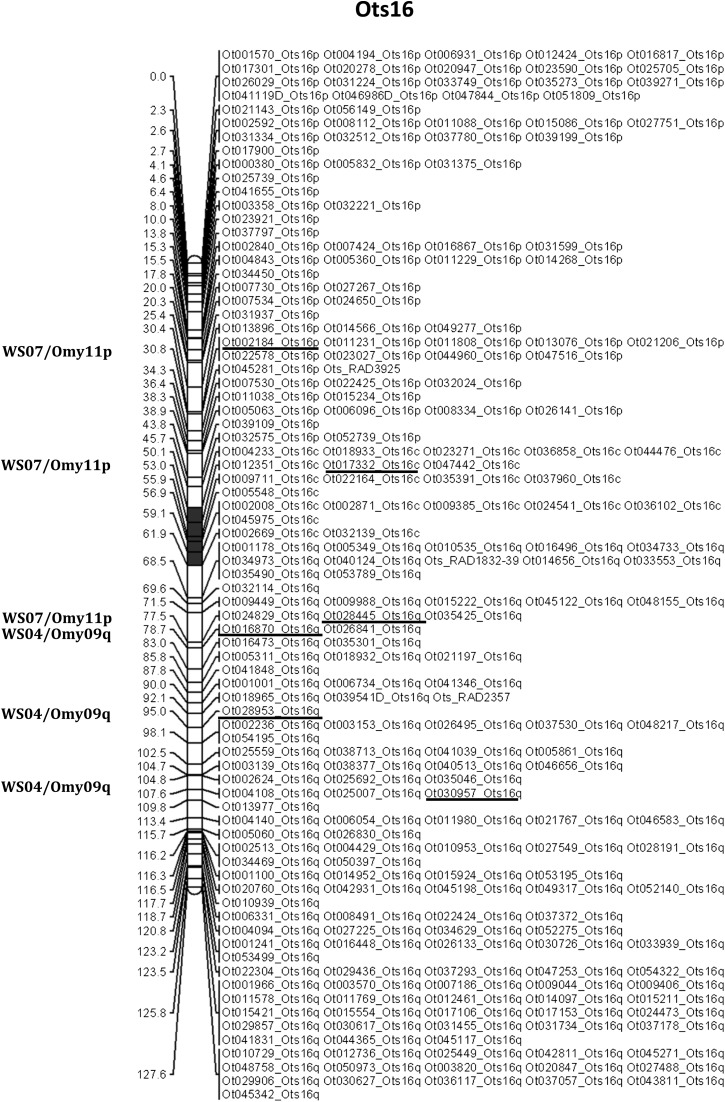
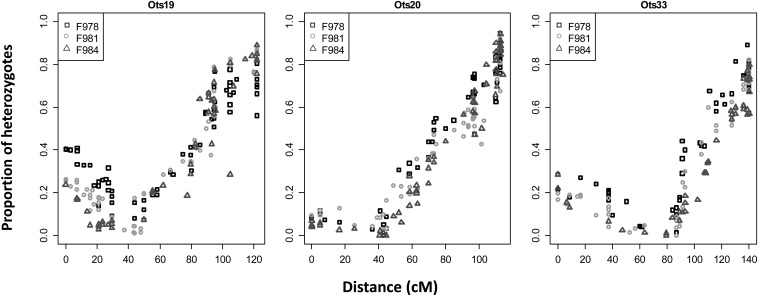
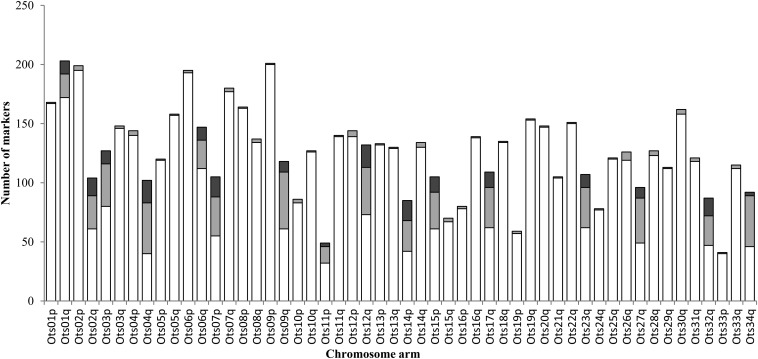
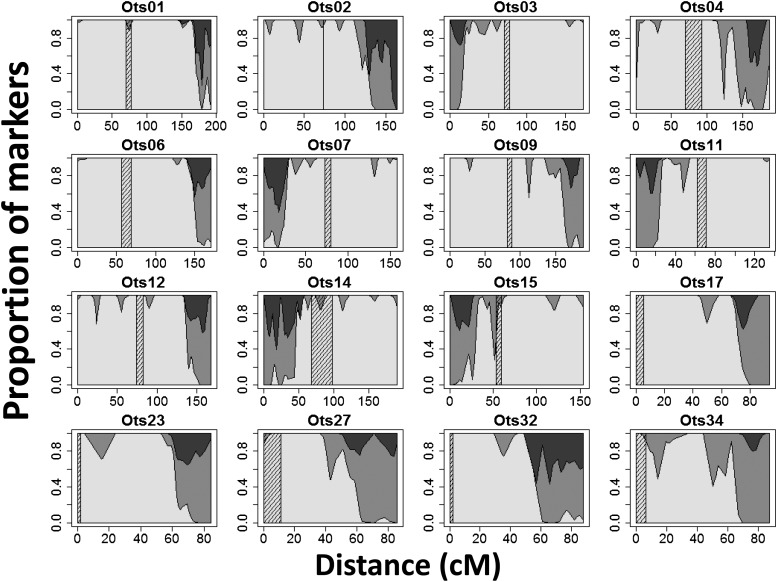
Comparisons between the genomes of salmon species reveal that they underwent extensive chromosomal rearrangements following whole genome duplication that occurred in their lineage 58-63 million years ago. Extant salmonids are diploid, but occasional pairing between homeologous chromosomes exists in males. The consequences of re-diploidization can be characterized by mapping the position of duplicated loci in such species. Linkage maps are also a valuable tool for genome-wide applications such as genome-wide association studies, quantitative trait loci mapping or genome scans. Here, we investigated chromosomal evolution in Chinook salmon (Oncorhynchus tshawytscha) after genome duplication by mapping 7146 restriction-site associated DNA loci in gynogenetic haploid, gynogenetic diploid, and diploid crosses. In the process, we developed a reference database of restriction-site associated DNA loci for Chinook salmon comprising 48528 non-duplicated loci and 6409 known duplicated loci, which will facilitate locus identification and data sharing. We created a very dense linkage map anchored to all 34 chromosomes for the species, and all arms were identified through centromere mapping. The map positions of 799 duplicated loci revealed that homeologous pairs have diverged at different rates following whole genome duplication, and that degree of differentiation along arms was variable. Many of the homeologous pairs with high numbers of duplicated markers appear conserved with other salmon species, suggesting that retention of conserved homeologous pairing in some arms preceded species divergence. As chromosome arms are highly conserved across species, the major resources developed for Chinook salmon in this study are also relevant for other related species.
对鲑鱼物种基因组的比较显示,在其谱系于5800万至6300万年前发生全基因组复制后,它们经历了广泛的染色体重排。现存的鲑科鱼类是二倍体,但雄性中同源染色体之间偶尔会配对。重新二倍体化的后果可以通过绘制此类物种中重复基因座的位置来表征。连锁图谱也是全基因组应用的宝贵工具,如全基因组关联研究、数量性状基因座定位或基因组扫描。在这里,我们通过绘制雌核发育单倍体、雌核发育二倍体和二倍体杂交中的7146个限制性位点相关DNA基因座,研究了奇努克鲑(Oncorhynchus tshawytscha)在基因组复制后的染色体进化。在此过程中,我们开发了一个奇努克鲑限制性位点相关DNA基因座的参考数据库,其中包括48528个非重复基因座和6409个已知的重复基因座,这将有助于基因座鉴定和数据共享。我们为该物种创建了一个非常密集的连锁图谱,该图谱锚定在所有34条染色体上,并且通过着丝粒定位识别了所有染色体臂。799个重复基因座的图谱位置显示,同源染色体对在全基因组复制后以不同速率发生了分化,并且沿染色体臂的分化程度是可变的。许多具有大量重复标记的同源染色体对与其他鲑鱼物种相比显得保守,这表明在某些染色体臂中保守同源配对的保留先于物种分化。由于染色体臂在物种间高度保守,本研究中为奇努克鲑开发的主要资源也与其他相关物种相关。