Zhang Boyan, Wang Ou, Qin Jingchao, Liu Shuaishuai, Sun Sheng, Liu Huitu, Kuang Jian, Jiang Guohua, Zhang Wei
Key Laboratory of Cell Proliferation and Regulation Biology of Ministry of Education, College of Life Sciences, Beijing Normal University, Beijing, China.
Department of Experimental Therapeutics, The University of Texas MD Anderson Cancer Center, Houston, Texas, United States of America.
PLoS One. 2013 Dec 26;8(12):e83097. doi: 10.1371/journal.pone.0083097. eCollection 2013.
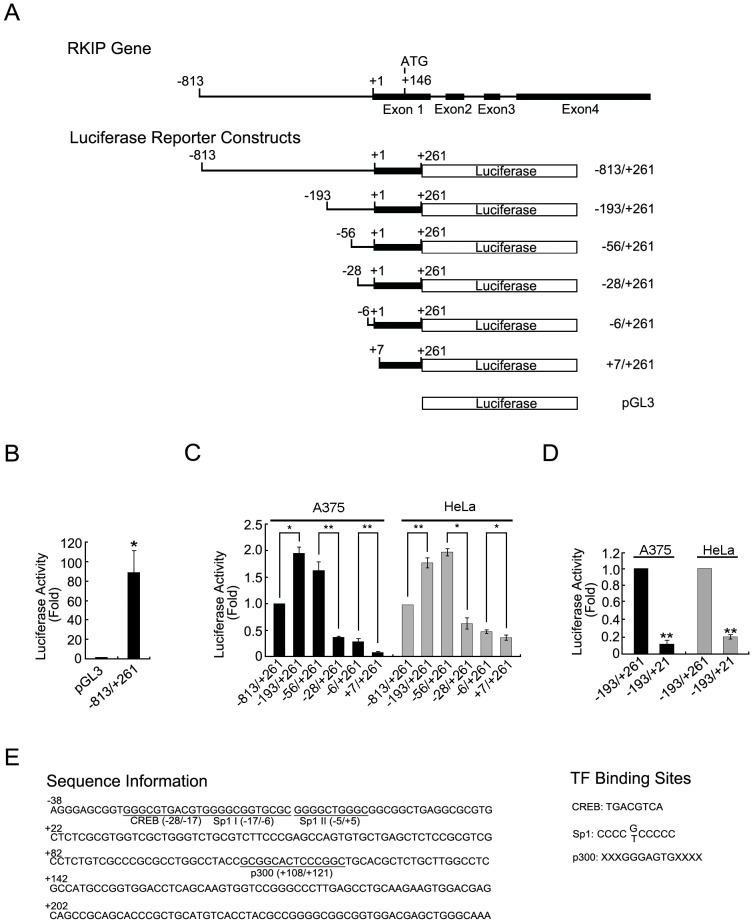
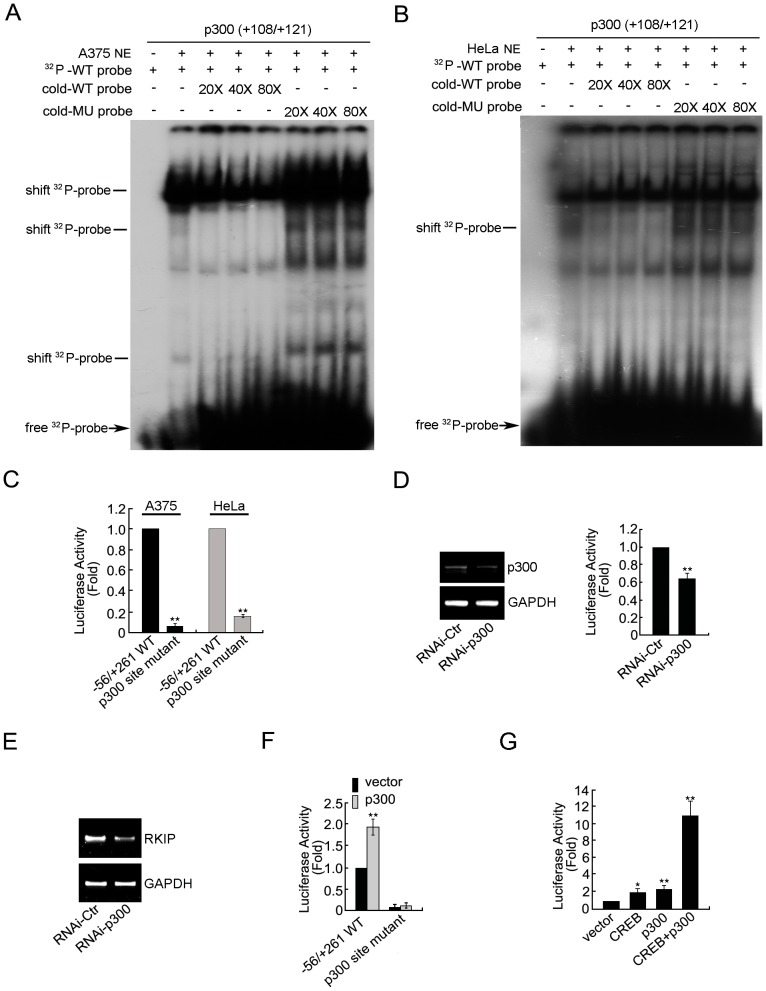
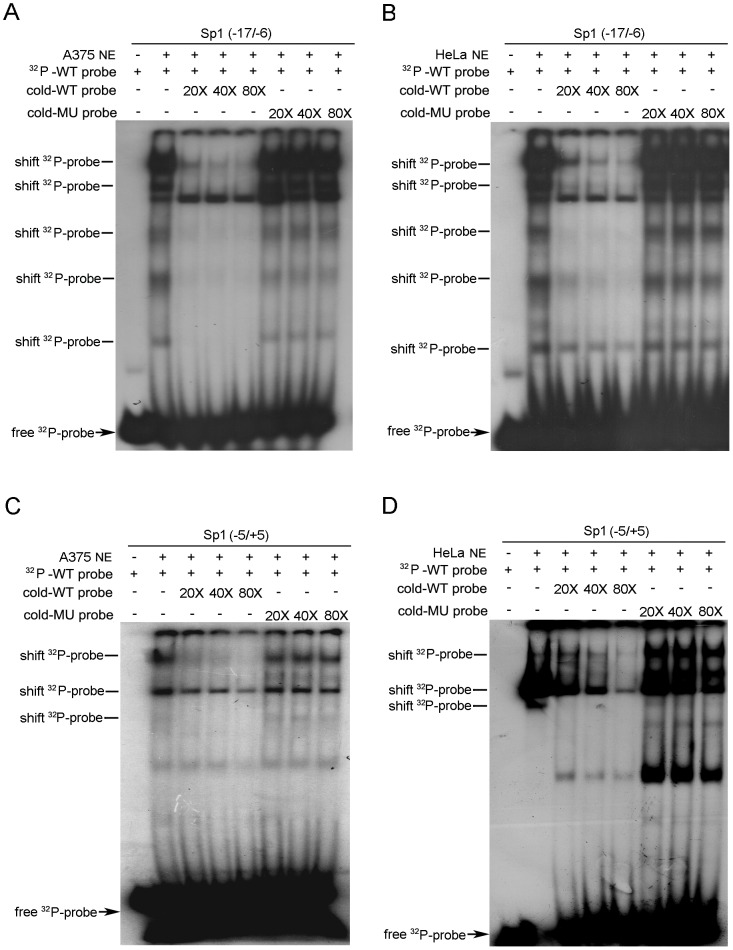
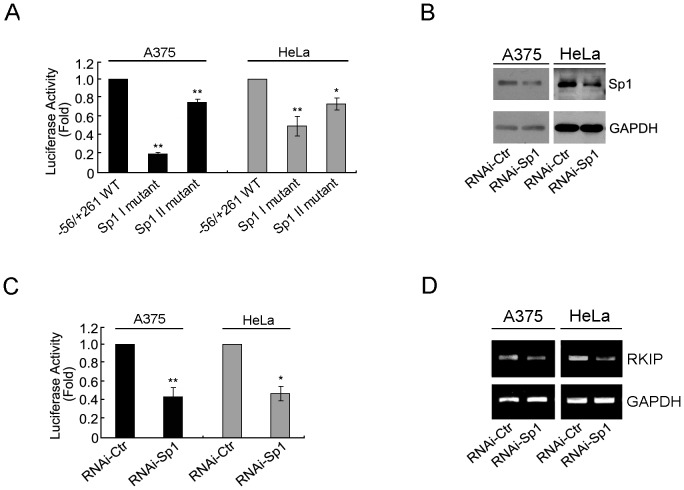
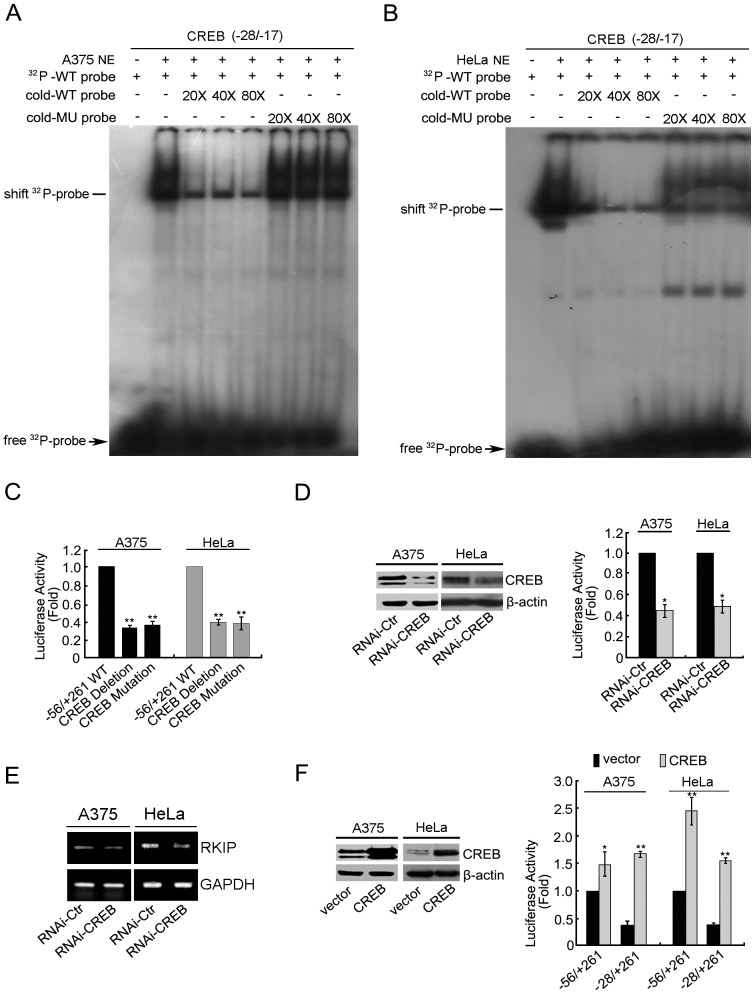
The Raf kinase inhibitory protein (RKIP) is down-regulated in multiple types of human cancers. Decreased RKIP transcription activity may be one of the major mechanisms responsible for the downregulation of RKIP expression in human diseases. To test this hypothesis, we need to gain basic knowledge of the transcriptional regulation of RKIP. To achieve this objective, we made a systematic effort to identify cis-acting elements and trans-acting factors that control RKIP promoter activity. We found that full RKIP promoter activity requires the region -56 to +261 relative to the transcription start site. Within the full promoter region, there are two motifs rich in G/C that responded to transcription factor Sp1, one cAMP-responsive element that responded to the transcription factor CREB, and one docking site for the histone acetylase p300. In human melanoma A375 cells and human cervical cancer HeLa cells, mutation or deletion of each of these cis-acting elements decreased promoter activity. In A375 cells, knockdown of the corresponding transcription factors Sp1, CREB, or p300 decreased RKIP promoter activity, whereas overexpression of CREB and p300 increased RKIP promoter activity. The results obtained with HeLa cells also supported the idea that Sp1 and CREB play positive roles in the regulation of RKIP transcription. These findings suggest that regulators of the expression or activity of Sp1, CREB, and p300 are involved in regulating RKIP transcription.
Raf激酶抑制蛋白(RKIP)在多种人类癌症中表达下调。RKIP转录活性降低可能是人类疾病中RKIP表达下调的主要机制之一。为了验证这一假设,我们需要了解RKIP转录调控的基础知识。为实现这一目标,我们系统地努力鉴定调控RKIP启动子活性的顺式作用元件和反式作用因子。我们发现,相对于转录起始位点,完整的RKIP启动子活性需要-56至+261区域。在完整的启动子区域内,有两个富含G/C的基序对转录因子Sp1有反应,一个cAMP反应元件对转录因子CREB有反应,还有一个组蛋白乙酰转移酶p300的对接位点。在人黑色素瘤A375细胞和人宫颈癌HeLa细胞中,这些顺式作用元件中的每一个发生突变或缺失都会降低启动子活性。在A375细胞中,敲低相应的转录因子Sp1、CREB或p300会降低RKIP启动子活性,而CREB和p300的过表达会增加RKIP启动子活性。HeLa细胞获得的结果也支持Sp1和CREB在RKIP转录调控中起积极作用的观点。这些发现表明,Sp1、CREB和p300表达或活性的调节因子参与调控RKIP转录。