Downes Kevin J, Hahn Andrea, Wiles Jason, Courter Joshua D, Vinks Alexander A
Division of Infectious Diseases, Cincinnati Children's Hospital Medical Center, Cincinnati, OH, USA.
Division of Neonatology, Cincinnati Children's Hospital Medical Center, Cincinnati, OH, USA.
Int J Antimicrob Agents. 2014 Mar;43(3):223-30. doi: 10.1016/j.ijantimicag.2013.11.006. Epub 2013 Dec 17.
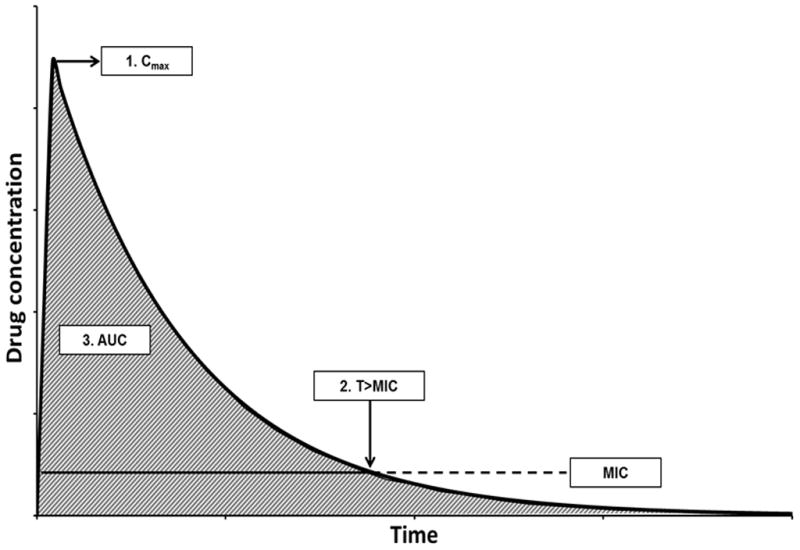
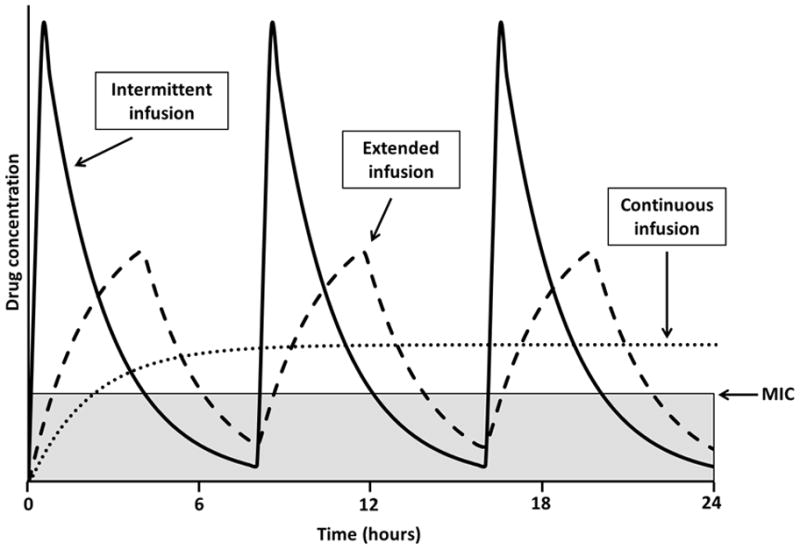
The judicious use of antibiotics to combat infections in children relies upon appropriate selection of an agent, dose and duration to maximise efficacy and to minimise toxicity. Critical to dose optimisation is an understanding of the pharmacokinetics and pharmacodynamics of available drugs. Optimal dosing strategies may take advantage of pharmacokinetic/pharmacodynamic (PK/PD) principles so that antibiotic dosing can be individualised to assure effective bacterial killing in patients who have altered pharmacokinetics or who have infections with less susceptible or resistant organisms. This review will outline the fundamentals of antimicrobial pharmacokinetics/pharmacodynamics through discussion of antibacterial agents most often used in children. We aim to highlight the importance of dose optimisation in paediatrics and describe non-conventional dosing strategies that can take advantage of PK/PD principles at the bedside.
明智地使用抗生素来对抗儿童感染,依赖于合理选择药物、剂量和疗程,以实现疗效最大化并使毒性最小化。剂量优化的关键在于了解现有药物的药代动力学和药效动力学。最佳给药策略可利用药代动力学/药效动力学(PK/PD)原理,从而使抗生素给药能够个体化,以确保在药代动力学改变的患者或感染了较难敏感或耐药病原体的患者中有效杀灭细菌。本综述将通过讨论儿童最常用的抗菌药物来概述抗菌药物药代动力学/药效动力学的基本原理。我们旨在强调儿科剂量优化的重要性,并描述可在床边利用PK/PD原理的非常规给药策略。