a Center for Radiological Research, Columbia University College of Physicians and Surgeons, New York, New York 10032.
Radiat Res. 2014 Feb;181(2):111-30. doi: 10.1667/RR13515.1. Epub 2014 Jan 7.
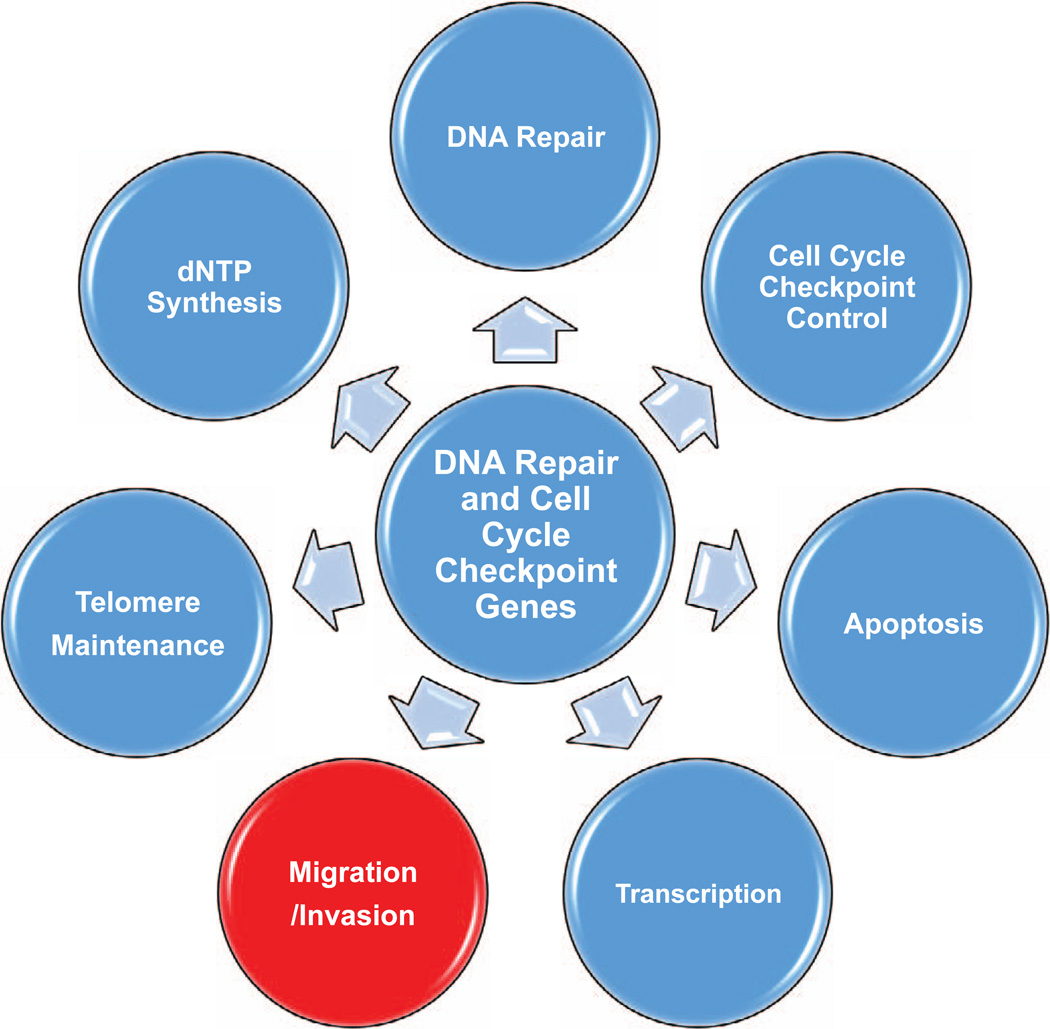
DNA damage response genes play vital roles in the maintenance of a healthy genome. Defects in cell cycle checkpoint and DNA repair genes, especially mutation or aberrant downregulation, are associated with a wide spectrum of human disease, including a predisposition to the development of neurodegenerative conditions and cancer. On the other hand, upregulation of DNA damage response and repair genes can also cause cancer, as well as increase resistance of cancer cells to DNA damaging therapy. In recent years, it has become evident that many of the genes involved in DNA damage repair have additional roles in tumorigenesis, most prominently by acting as transcriptional (co-)factors. Although defects in these genes are causally connected to tumor initiation, their role in tumor progression is more controversial and it seems to depend on tumor type. In some tumors like melanoma, cell cycle checkpoint/DNA repair gene upregulation is associated with tumor metastasis, whereas in a number of other cancers the opposite has been observed. Several genes that participate in the DNA damage response, such as RAD9, PARP1, BRCA1, ATM and TP53 have been associated with metastasis by a number of in vitro biochemical and cellular assays, by examining human tumor specimens by immunohistochemistry or by DNA genome-wide gene expression profiling. Many of these genes act as transcriptional effectors to regulate other genes implicated in the pathogenesis of cancer. Furthermore, they are aberrantly expressed in numerous human tumors and are causally related to tumorigenesis. However, whether the DNA damage repair function of these genes is required to promote metastasis or another activity is responsible (e.g., transcription control) has not been determined. Importantly, despite some compelling in vitro evidence, investigations are still needed to demonstrate the role of cell cycle checkpoint and DNA repair genes in regulating metastatic phenotypes in vivo.
DNA 损伤反应基因在维持健康基因组方面发挥着重要作用。细胞周期检查点和 DNA 修复基因的缺陷,特别是突变或异常下调,与广泛的人类疾病有关,包括神经退行性疾病和癌症的易感性。另一方面,DNA 损伤反应和修复基因的上调也会导致癌症,并增加癌细胞对 DNA 损伤治疗的耐药性。近年来,越来越明显的是,许多参与 DNA 损伤修复的基因在肿瘤发生中具有额外的作用,最突出的是作为转录(共)因子。虽然这些基因的缺陷与肿瘤起始有因果关系,但它们在肿瘤进展中的作用更具争议性,似乎取决于肿瘤类型。在一些肿瘤中,如黑色素瘤,细胞周期检查点/DNA 修复基因的上调与肿瘤转移有关,而在许多其他癌症中则观察到相反的情况。一些参与 DNA 损伤反应的基因,如 RAD9、PARP1、BRCA1、ATM 和 TP53,通过许多体外生化和细胞测定、免疫组织化学检查人类肿瘤标本或通过全基因组 DNA 基因表达谱分析,与转移有关。许多这些基因作为转录效应因子作用,调节其他与癌症发病机制有关的基因。此外,它们在许多人类肿瘤中异常表达,与肿瘤发生有因果关系。然而,这些基因的 DNA 损伤修复功能是否需要促进转移,或者另一种活动(例如转录控制)负责,尚未确定。重要的是,尽管有一些令人信服的体外证据,但仍需要进行研究,以证明细胞周期检查点和 DNA 修复基因在调节体内转移表型中的作用。