Nephrology Research Center, Tehran University of Medical Sciences, Tehran 1417614411, Iran.
Daru. 2014 Jan 7;22(1):11. doi: 10.1186/2008-2231-22-11.
Anemia is a common complication among hemodialysis (HD) patients. Although intravenous iron and erythropoiesis-stimulating agents revolutionized anemia treatment, about 10% of HD patients show suboptimal response to these agents. Systemic inflammation and increased serum hepcidin level may contribute to this hyporesponsiveness. Considering the anti-inflammatory properties of omega-3 fatty acids, this study aimed to evaluate potential role of these fatty acids in improving anemia and inflammation of chronic HD patients.
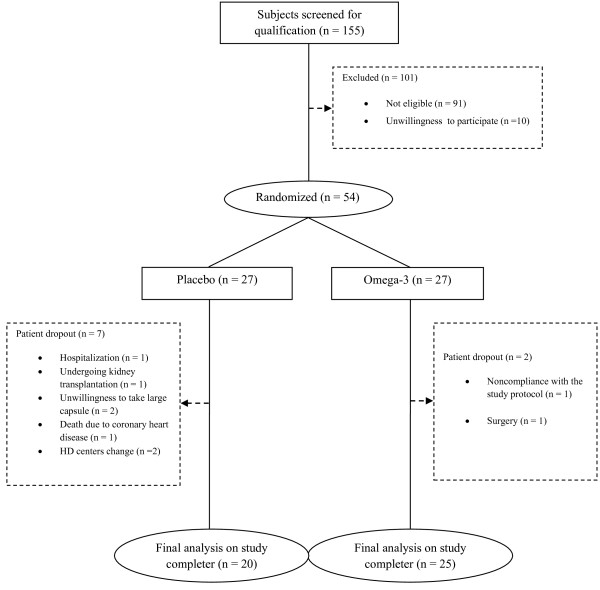
In this randomized, placebo-controlled trial, 54 adult patients with HD duration of at least 3 months were randomized to ingest 1800 mg of either omega-3 fatty acids or matching placebo per day for 4 months. Anemia parameters including blood hemoglobin, serum iron, transferrin saturation (TSAT), erythropoietin resistance index, and required dose of intravenous iron and erythropoietin, and serum concentrations of inflammatory/anti-inflammatory markers including interleukin (IL)-6, tumor necrosis factor (TNF)-α, IL-10, C-reactive protein (CRP), hepcidin, ferritin, intact parathyroid hormone (iPTH), and ratios of IL-10 to IL-6 and IL-10 to TNF-α were measured at baseline and after 4 months of the intervention.
45 subjects (25 in the omega-3 and 20 in the placebo group) completed the study. No significant changes were observed in blood hemoglobin, serum iron, TSAT, and required dose of intravenous iron in either within or between group comparisons. Additionally, erythropoietin resistance index as well as required dose of intravenous erythropoietin showed no significant change in the omega-3 group compared to the placebo group. Although a relative alleviation in inflammatory state appeared in the omega-3 group, the mean differences of inflammatory and anti-inflammatory markers between the two groups did not reach statistically significant level except for IL-10-to-IL-6 ratio and serum ferritin level which showed significant changes in favor of omega-3 treatment (P <0.001 and P = 0.003, respectively).
Omega-3 fatty acids relatively improved systemic inflammation of chronic HD patients without any prominent benefits on anemia. However, future well-designed studies on larger number of patients may determine utility of omega-3 fatty acids in HD patients with respect to inflammation and anemia.
贫血是血液透析(HD)患者常见的并发症。尽管静脉铁和促红细胞生成素刺激剂彻底改变了贫血的治疗方法,但仍有约 10%的 HD 患者对这些药物的反应不佳。全身炎症和血清铁调素水平升高可能导致这种低反应性。鉴于 ω-3 脂肪酸的抗炎特性,本研究旨在评估这些脂肪酸在改善慢性 HD 患者贫血和炎症中的潜在作用。
在这项随机、安慰剂对照试验中,54 名 HD 时间至少 3 个月的成年患者被随机分为每天服用 1800 毫克 ω-3 脂肪酸或匹配的安慰剂,持续 4 个月。贫血参数包括血血红蛋白、血清铁、转铁蛋白饱和度(TSAT)、促红细胞生成素抵抗指数以及静脉铁和促红细胞生成素的需要剂量,以及炎症/抗炎标志物包括白细胞介素(IL)-6、肿瘤坏死因子(TNF)-α、IL-10、C 反应蛋白(CRP)、铁调素、铁蛋白、完整甲状旁腺激素(iPTH)和 IL-10 与 IL-6 和 IL-10 与 TNF-α的比值在基线和干预 4 个月后进行测量。
45 名受试者(ω-3 组 25 名,安慰剂组 20 名)完成了研究。无论在组内还是组间比较,血红蛋白、血清铁、TSAT 和静脉铁需要剂量均无明显变化。此外,与安慰剂组相比,ω-3 组的促红细胞生成素抵抗指数以及静脉注射促红细胞生成素的需要剂量也没有明显变化。尽管 ω-3 组的炎症状态有所缓解,但两组之间的炎症和抗炎标志物的平均差异没有达到统计学显著水平,除了 IL-10 与 IL-6 的比值和血清铁蛋白水平,这两个指标都有利于 ω-3 治疗(P<0.001 和 P=0.003)。
ω-3 脂肪酸相对改善了慢性 HD 患者的全身炎症,而对贫血没有明显益处。然而,未来对更多患者进行的设计良好的研究可能会确定 ω-3 脂肪酸在 HD 患者的炎症和贫血方面的应用价值。