Chair of Medical Engineering (mediTEC), Helmholtz-Institute for Biomedical Engineering, RWTH Aachen University, Pauwelsstraße 20, 52074 Aachen, Germany.
J Neuroeng Rehabil. 2014 Jan 9;11:3. doi: 10.1186/1743-0003-11-3.
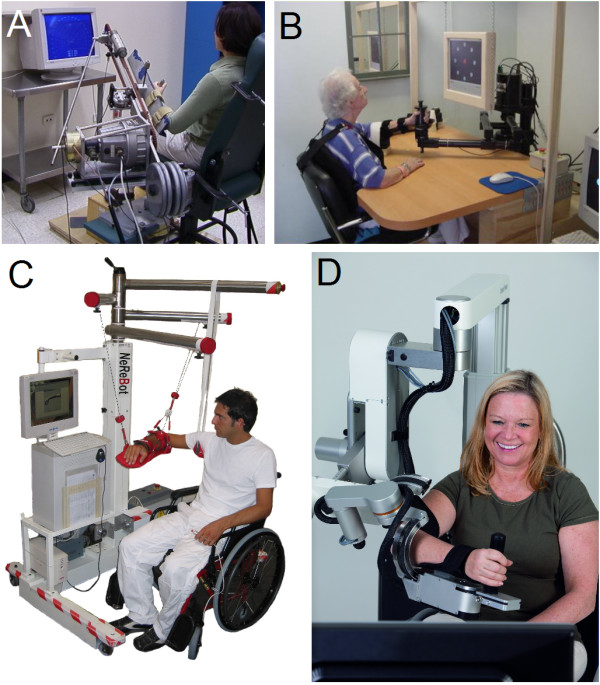
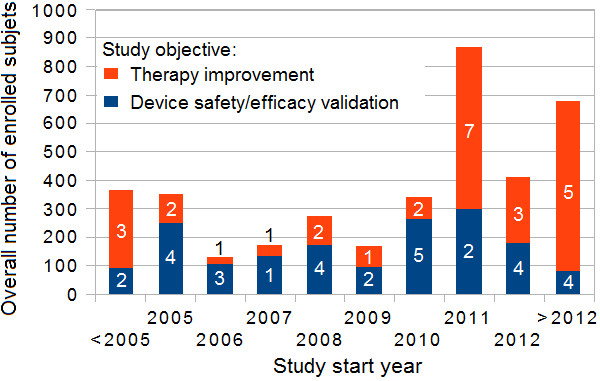
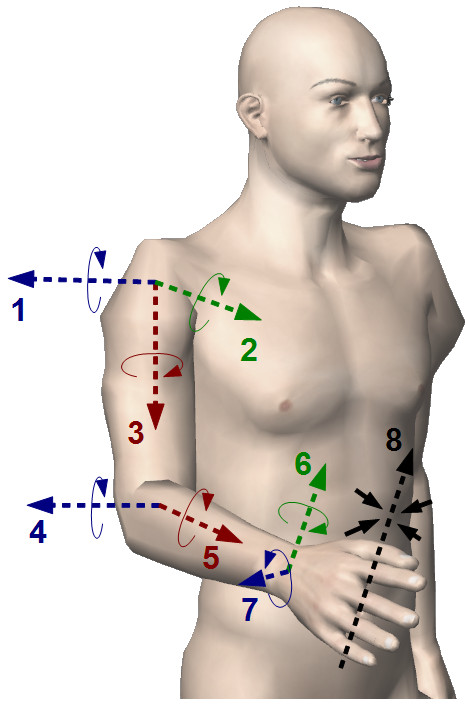
The existing shortage of therapists and caregivers assisting physically disabled individuals at home is expected to increase and become serious problem in the near future. The patient population needing physical rehabilitation of the upper extremity is also constantly increasing. Robotic devices have the potential to address this problem as noted by the results of recent research studies. However, the availability of these devices in clinical settings is limited, leaving plenty of room for improvement. The purpose of this paper is to document a review of robotic devices for upper limb rehabilitation including those in developing phase in order to provide a comprehensive reference about existing solutions and facilitate the development of new and improved devices. In particular the following issues are discussed: application field, target group, type of assistance, mechanical design, control strategy and clinical evaluation. This paper also includes a comprehensive, tabulated comparison of technical solutions implemented in various systems.
目前,家庭中协助身体残障人士的治疗师和护理人员短缺,预计这一问题在不久的将来会加剧并变得更加严重。需要进行上肢物理康复的病患群体也在不断增加。正如最近的研究结果所指出的,机器人设备具有解决这一问题的潜力。然而,这些设备在临床环境中的应用有限,仍有很大的改进空间。本文的目的是记录对上肢康复机器人设备的综述,包括处于开发阶段的设备,以便为现有解决方案提供全面的参考,并促进新的和改进的设备的开发。本文特别讨论了以下问题:应用领域、目标群体、辅助类型、机械设计、控制策略和临床评估。本文还包括对各个系统中实施的技术解决方案的全面、表格化比较。